Introduction
Few animals carry as much meaning in a single silhouette as the elephant. Across cultures it stands for strength that does not need to shout, wisdom earned over a long life, and loyalty to family that runs deeper than almost any other creature on earth. No surprise, then, that elephant tattoos are a lasting favourite: they look striking at any size, and they mean something to the person wearing them.
In Hindu tradition, the elephant-headed god Ganesha is associated with removing obstacles and bringing good fortune, which is one reason elephant tattoos are often chosen as symbols of luck and new beginnings. In many African cultures, the elephant is respected as a symbol of power, patience and long memory. That memory matters too — elephants are known for remembering watering holes and migration routes for decades, so the animal has become a quiet tribute to people and moments we never want to forget.
The best part is how flexible the design is. An elephant can fill a whole back piece in rich black-and-grey detail, or shrink to a few clean lines on the wrist and still be instantly recognisable. The ten ideas below cover both ends of that range, so whether you want a bold statement or something small and personal, there is a version here worth taking to your artist.
10 Elephant Tattoo Ideas
1. Realistic Elephant Head
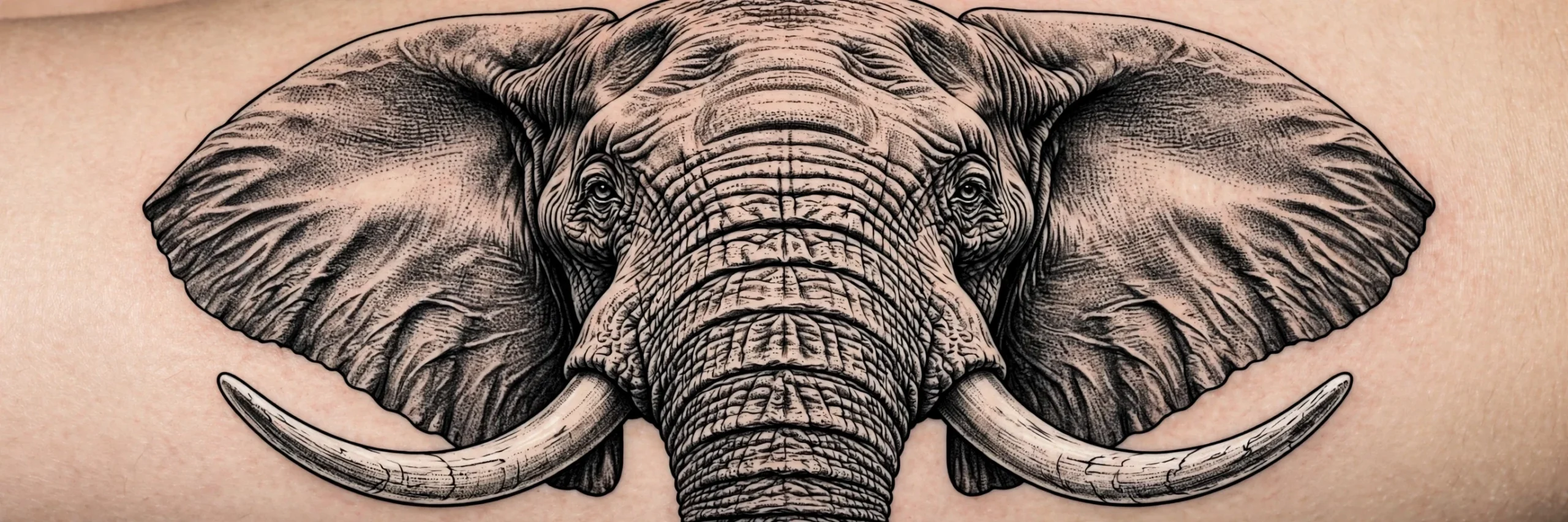
A realistic elephant head is the classic choice, and it works because the animal’s face does so much of the work on its own. Deep-set eyes, heavy wrinkled skin and long curved tusks give an artist plenty of texture to build with, and a skilled tattooist can make the portrait feel almost photographic. Most people place it large, on the upper arm, thigh or chest, where the detail has room to breathe.
The key is choosing an artist who specialises in realism and has healed examples of animal portraits in their portfolio. Fine detail softens over the years, so a realistic elephant needs to be big enough for the wrinkles and shading to hold. Done well, it is less a decoration and more a portrait — calm, heavy and full of character.
Placement: Upper arm, thigh or chest, large scale.
2. Geometric Elephant
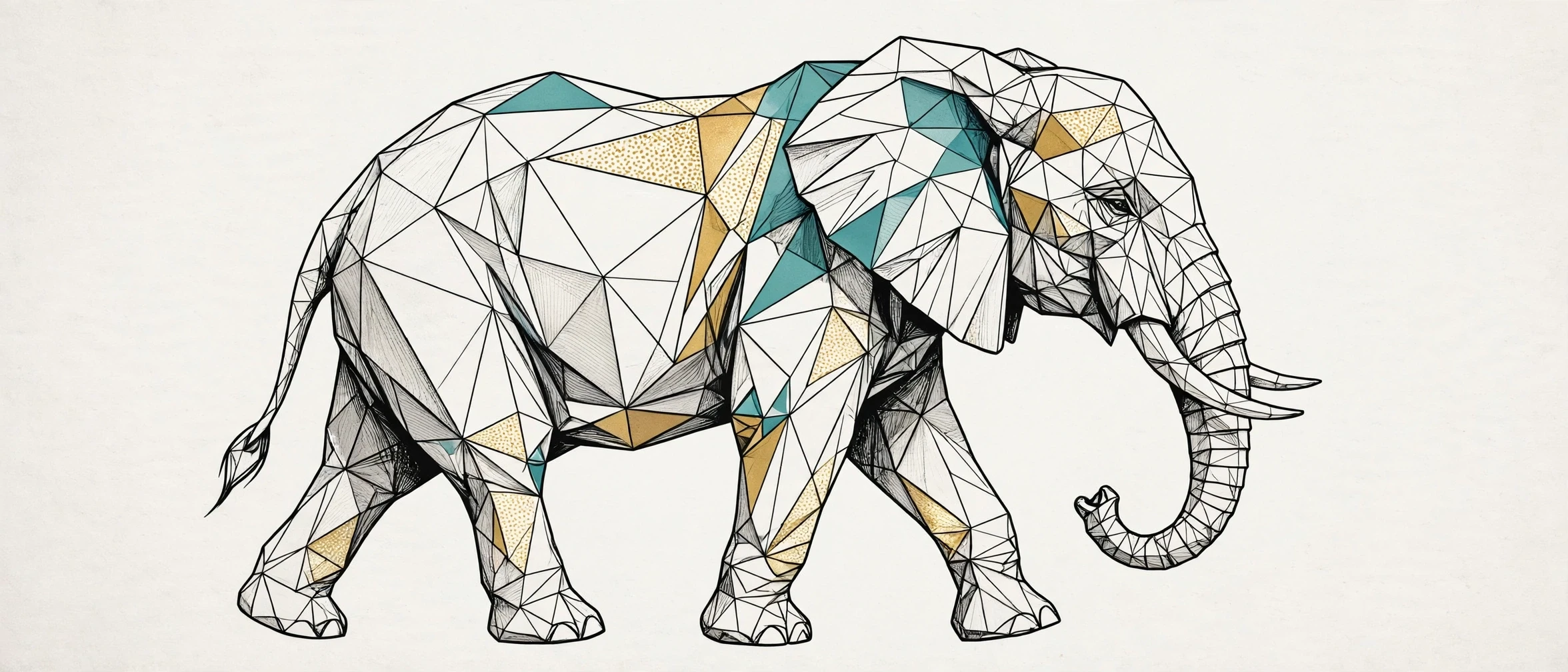
A geometric elephant breaks the animal down into triangles, lines and polygons, giving it a modern, almost architectural feel. The outline stays true to the elephant’s shape — high back, big ears, trunk — but the body is filled with sharp facets, like a sculpture made of cut stone. Some versions stay neat and symmetrical; others let one half dissolve into scattered shards.
This style suits people who like clean design that reads clearly from a distance. It also ages well, because bold lines and flat shapes hold their edges better than soft shading. A touch of colour in one or two facets — a deep teal or a warm gold — can lift the whole piece without breaking the geometric discipline.
Placement: Forearm, calf or shoulder blade.
3. Baby Elephant
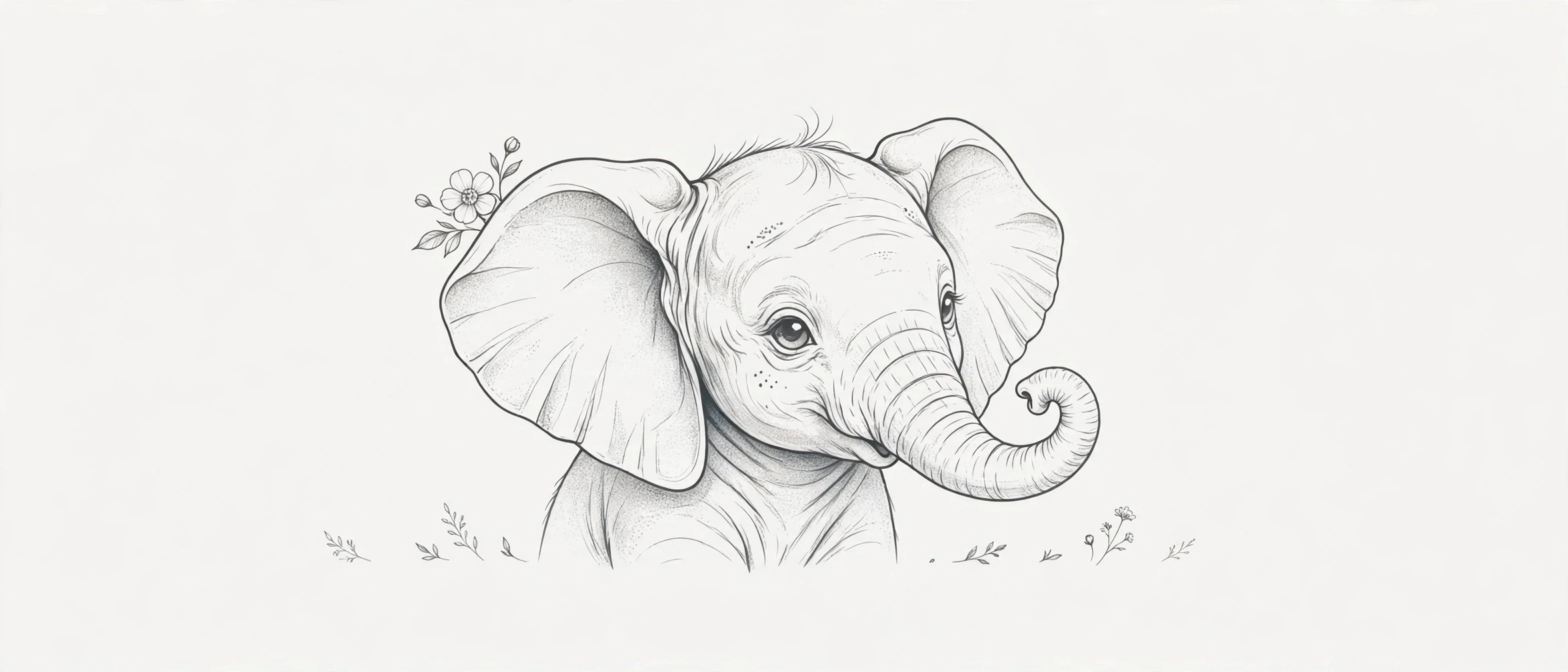
A baby elephant tattoo trades grandeur for charm. Oversized ears, a short trunk, round proportions and sometimes a playful pose — a calf mid-step, or one sitting with its trunk curled — make this the warmest design on the list. Often chosen by parents, or by anyone who wants their tattoo to say something about gentleness rather than power.
Small details make the difference: a tiny flower behind the ear, a butterfly near the trunk, or a soft watercolour wash behind the calf can turn a cute design into a personal one. Keep the linework soft and the shading light; heavy black will flatten the softness that makes a baby elephant work.
Placement: Forearm, ankle, wrist or just below the collarbone.
4. Elephant with Mandala
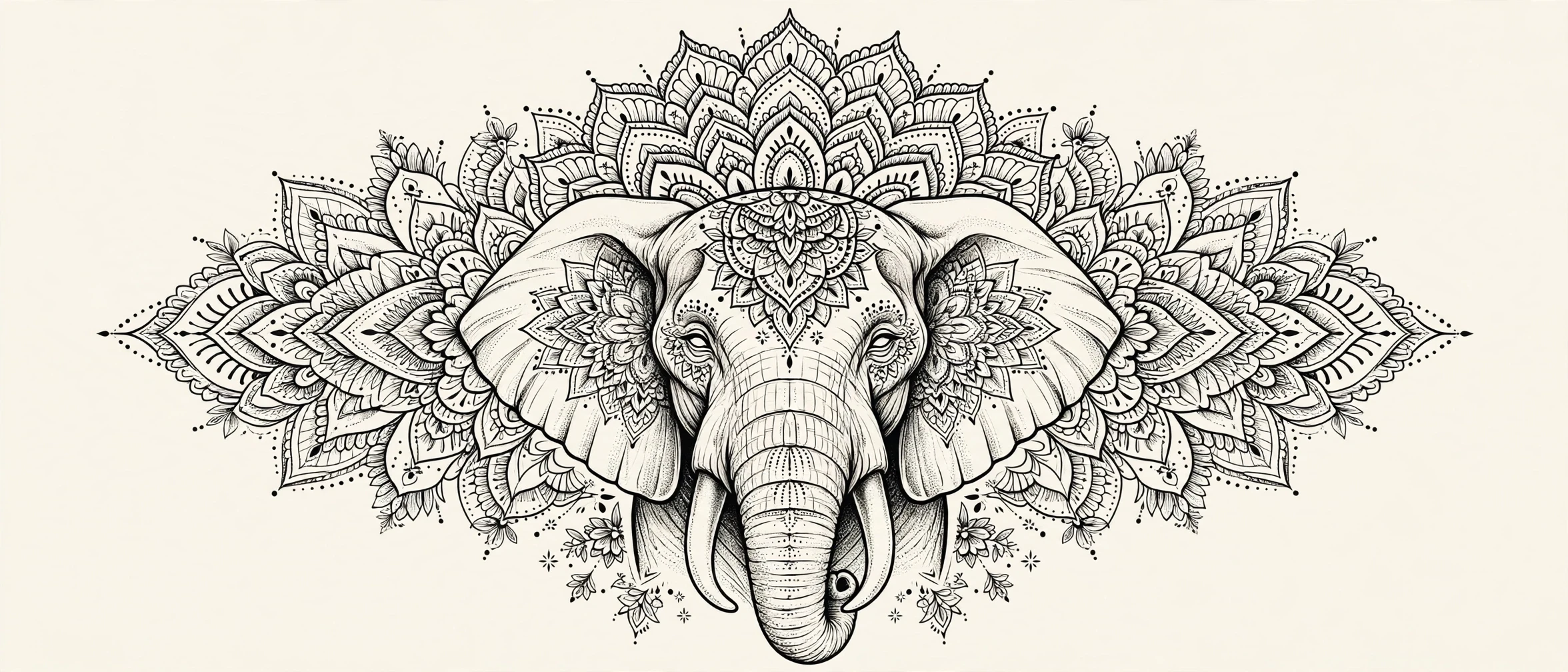
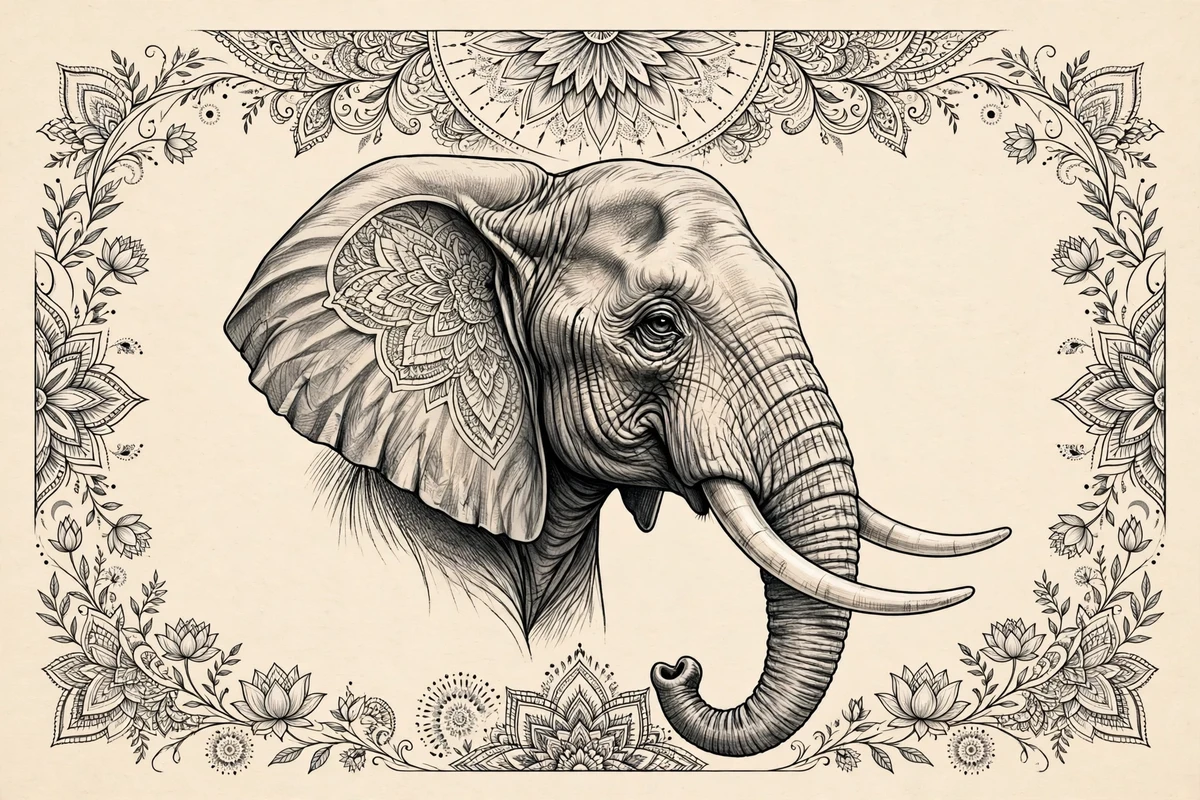
Pairing an elephant with a mandala brings two rich traditions together. The elephant’s head or body becomes the centre, framed by the mandala’s repeating petals, dots and arches. In many versions the mandala grows out of the elephant’s ears or spreads across its forehead like a crown, turning the animal into something calm and ceremonial.
This design rewards patience, in the chair and in the planning. Mandalas need symmetry, so placement matters — a flat area like the upper arm, thigh or back gives the artist the even surface the pattern needs. If you love detailed, decorative work, it is also a good starting point for exploring other patterned designs, like the mandala tattoos in our 21 mandala tattoo ideas.
Placement: Upper arm, thigh or upper back, medium to large scale.
5. Watercolour Elephant
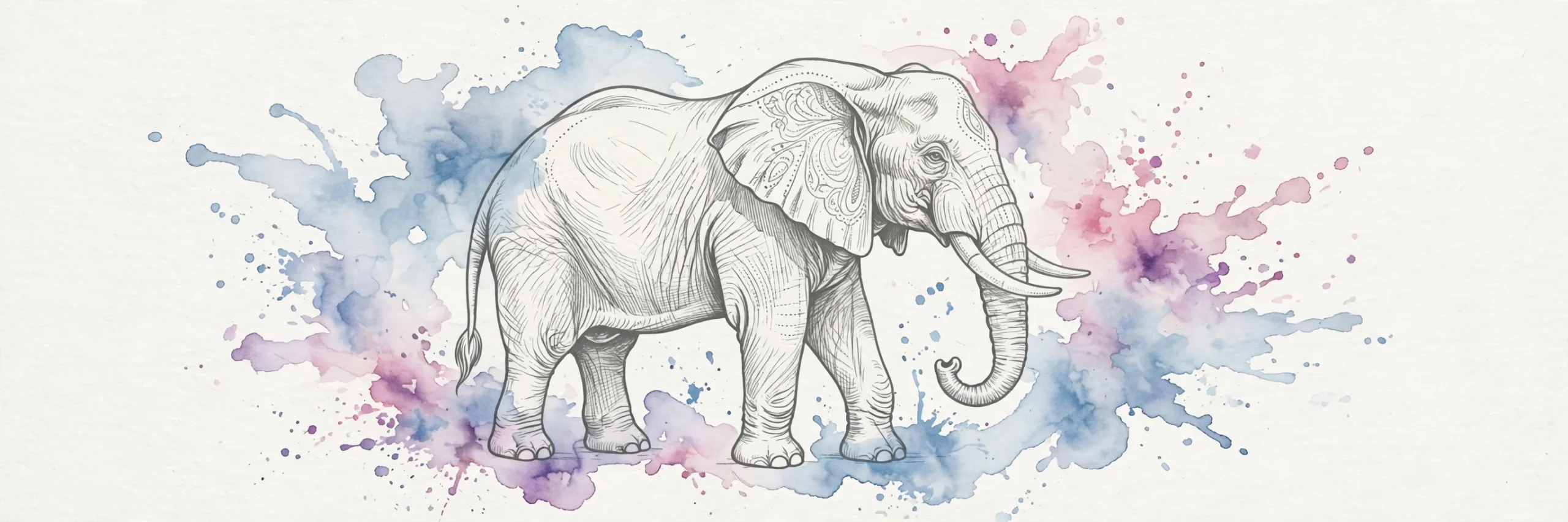
A watercolour elephant skips the hard outline and lets colour do the talking. The elephant is usually drawn in soft grey or black linework, then washed with splashes of blue, pink, purple or green that bleed gently beyond the edges, as if painted straight onto the skin.
Watercolour needs an artist who genuinely works in the style — not every tattooist does. Light washes also fade faster than solid black, so a good artist will anchor the design with enough dark linework to keep the elephant readable for years. A touch-up every few years keeps the colours fresh.
Placement: Shoulder, upper arm or thigh, where the colour has space to spread.
6. Minimalist Line Elephant
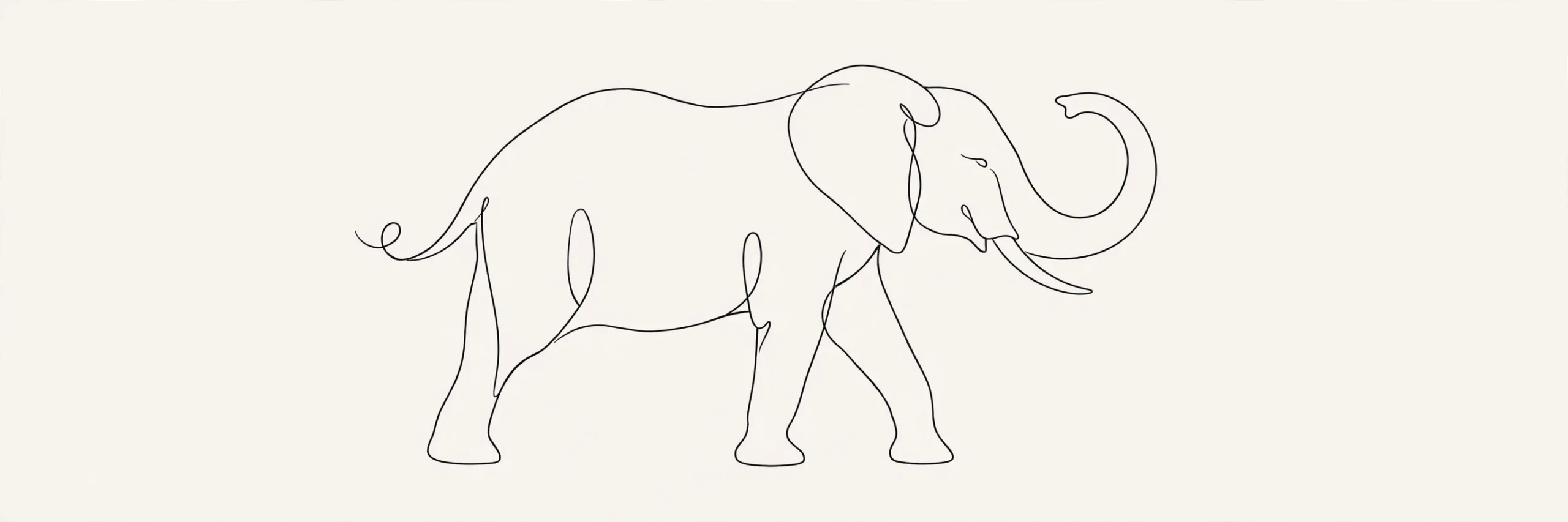
A minimalist line elephant is the whole animal reduced to a single flowing line, or a handful of clean strokes. No shading, no colour, just the outline — the curve of the back, the sweep of the trunk, the shape of the ear. It sounds simple, and that is exactly the point: the design trusts the elephant’s silhouette to be recognisable on its own.
It is the best choice for a first tattoo, a matching tattoo with someone close, or something that sits quietly on the skin. It heals quickly, hurts less than a large shaded piece, and works almost anywhere. The risk is a wobbly line, so look for an artist with a steady hand and a portfolio full of clean fine-line work.
Placement: Wrist, inner forearm, ankle, behind the ear or collarbone.
7. Elephant and Lotus
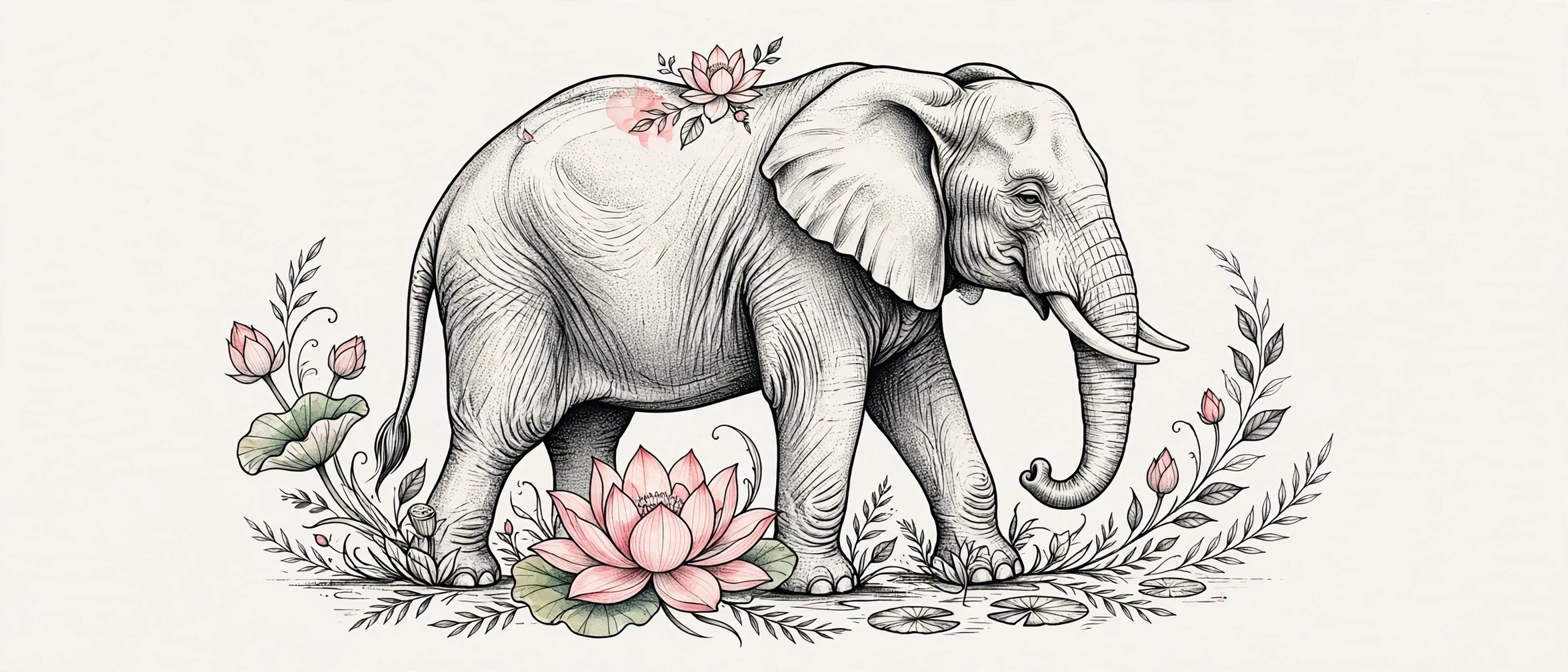
The elephant and lotus pairing is one of the most meaningful combinations in tattooing. The lotus grows out of muddy water and opens clean above the surface, so it has long stood for resilience, purity and new beginnings. Set beside an elephant — tied to wisdom, family and good luck — the two symbols reinforce each other rather than competing.
Artists usually place the lotus at the elephant’s feet, blooming from the trunk, or resting on its back like a small crown. Soft pink and white petals against grey skin make a natural palette, but the design works just as well in pure black and grey. A thoughtful choice for marking a fresh start, or honouring a hard chapter that ended well.
Placement: Forearm, upper arm, calf or side of the ribs.
8. Tribal Elephant
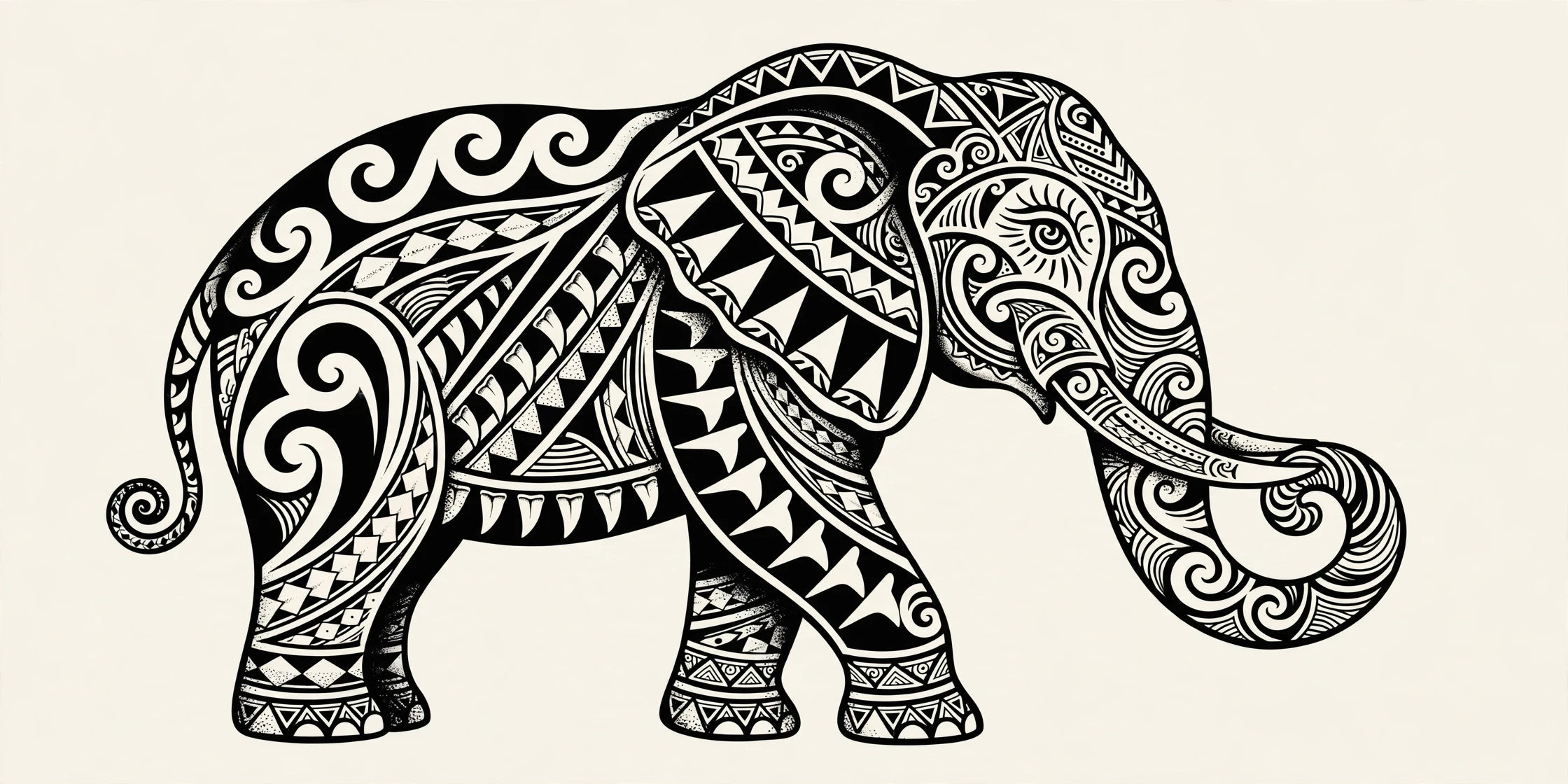
A tribal elephant draws on the bold blackwork traditions of Polynesian and other tribal tattooing, turning the animal into sweeping curves, spirals and solid black shapes. The elephant is still recognisable — trunk, tusks, ears — but the detail is replaced by rhythm: thick black lines that flow with the muscle underneath.
This style looks strongest as a larger piece, where the curves have room to move. Because tribal patterns are tied to specific cultures, take time to understand what the motifs you choose mean, and work with an artist who knows the tradition rather than copying shapes at random. Done with respect and care, a tribal elephant is bold, timeless and full of movement.
Placement: Upper arm, shoulder, chest or calf, large scale.
9. Black-and-Grey Elephant
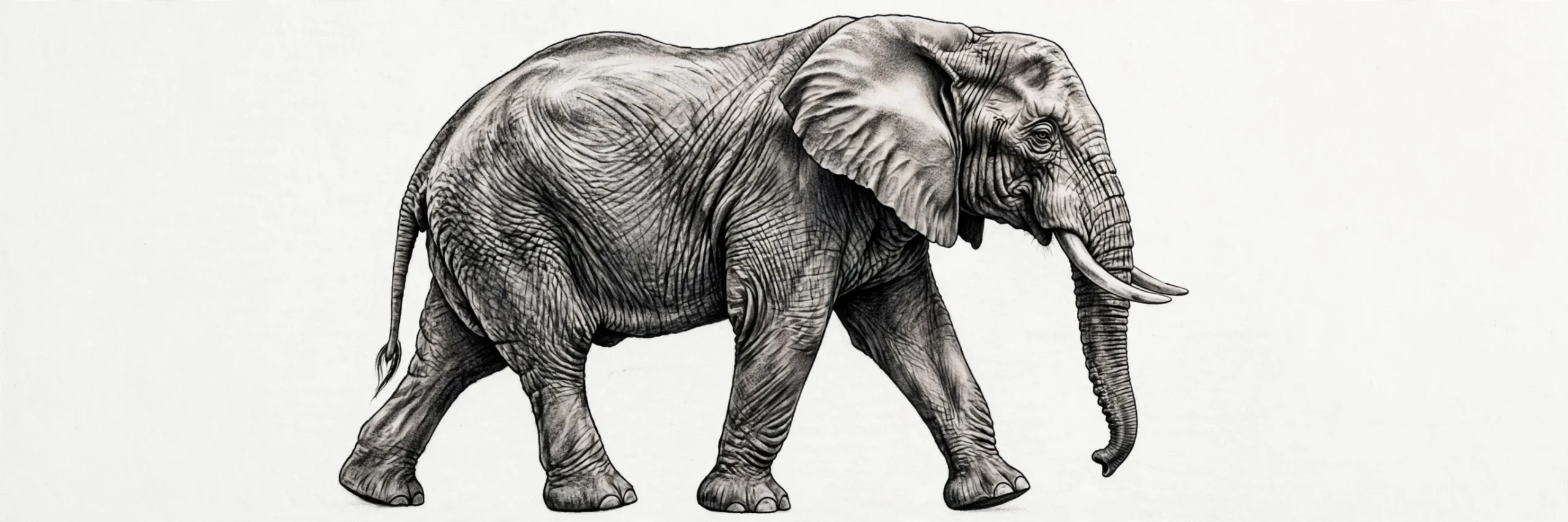
Black-and-grey is the workhorse of elephant tattooing. Using only black ink diluted into greys, the artist builds the elephant’s wrinkled skin, the softness of its ears and the shine of its tusks through shading alone. Without colour to lean on, the design depends on contrast — deep blacks against pale skin, soft gradients in between — and the result can look like a charcoal drawing.
It suits almost any elephant subject, from a full-body walking elephant to a close portrait, and it ages better than most colour work because black ink holds its depth longest. It also photographs beautifully and pairs well with other black-and-grey pieces, an easy choice if you plan to build a sleeve or a larger collection over time.
Placement: Forearm, thigh, back or chest, medium to large scale.
10. Small Ankle Elephant
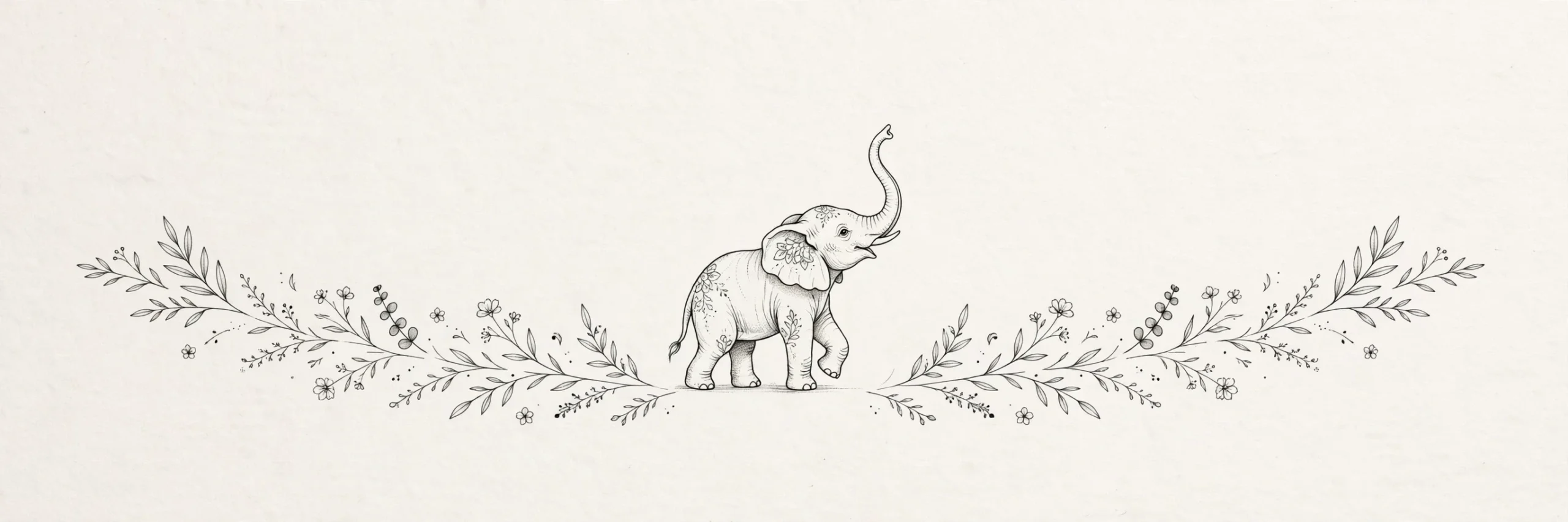
A small ankle elephant proves a tattoo does not need to be big to mean something. A tiny elephant — a simple outline, a small shaded calf, or a miniature elephant with its trunk raised — sits neatly on the ankle, visible when you want it and easy to cover when you do not. A popular first tattoo, and a common choice for a quiet tribute to family or a loved one.
The ankle is bony, so expect a sharper sting than on fleshier areas, and keep the design simple: fine detail disappears fast at this size. A small elephant also pairs well with a matching piece — a second tiny elephant for a sibling or parent — and if you like patterned detail at a small scale, the mandala designs in our 21 mandala tattoo ideas show how fine linework can carry a lot of meaning in a small space.
Placement: Ankle, just above the ankle bone or on the inner ankle.
Closing
Elephant tattoos work because they carry their meaning openly. Strength, wisdom, loyalty, family, good luck and memory are not abstract ideas when attached to an animal everyone recognises — they are qualities people want to carry with them. Whether you choose a large realistic portrait or a tiny line drawing on your ankle, the design will say something true about what matters to you.
Take your time. Save the designs you like, show them to an artist whose style matches the one you picked, and talk through size and placement before the needle comes out. A good elephant tattoo is one you will still be glad to see in the mirror ten years from now — so choose the version that feels like yours, not just the one that looks good today.