Introduction
The ladybug is one of the smallest creatures you can tattoo, and one of the most loved. Its round red shell and neat black spots are instantly recognisable even at the size of a fingernail, which is why it works so well as a tattoo: the design is already finished by nature, and a good artist only has to translate it onto skin. It suits first-timers and collectors alike, because it can be a tiny, almost hidden mark or the centrepiece of a larger floral piece.
Ladybugs also carry a gentle kind of symbolism that people genuinely connect with. In many cultures they are seen as a sign of good luck, and farmers have valued them for centuries because they eat the aphids that damage crops — a small protector, in other words. The ladybug is also linked to love and new beginnings, and in some traditions it is said that if one lands on you, a wish will come true. Whether you believe any of that or simply love how they look, the meaning gives the tattoo a story worth telling.
This list covers ten distinct ways to wear the ladybug, from lifelike realism to fine-line minimalism, watercolour splashes, and geometric patterns. Each idea comes with a placement suggestion, so you can picture how it would sit on real skin. Take the design that matches your style, show it to your artist, and let them adapt the size and colours to your body.
10 Ladybug Tattoo Ideas
1. Realistic Ladybug on a Leaf
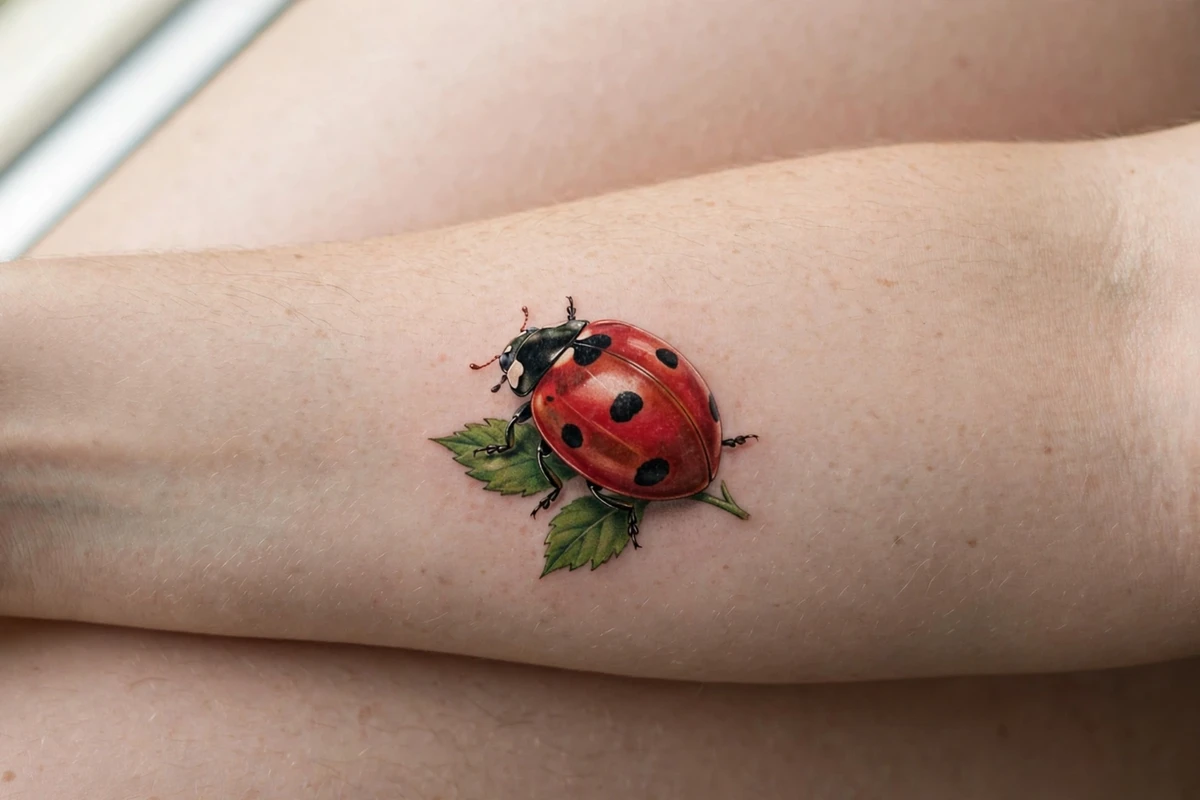
This is the ladybug at its most lifelike: a glossy red shell with crisp black spots, fine legs, and delicate antennae, perched on a small green leaf. The realism comes from the details — a highlight across the shell to suggest its shine, subtle shading under the body so it looks like it is really sitting on the leaf, and a leaf drawn with just enough veins to feel natural without stealing attention from the insect itself.
A realistic design needs a steady hand and a little space, because the legs and antennae are thin lines that can blur if they are packed too tightly. Ask your artist to keep the leaf simple and let the ladybug carry the detail, and the piece will read clearly even from a distance. It is the closest thing to carrying a real ladybug with you, minus the risk of it flying away.
Placement: Forearm or calf, where the leaf has room to sit flat and the detail can be seen clearly.
2. Watercolour Ladybug
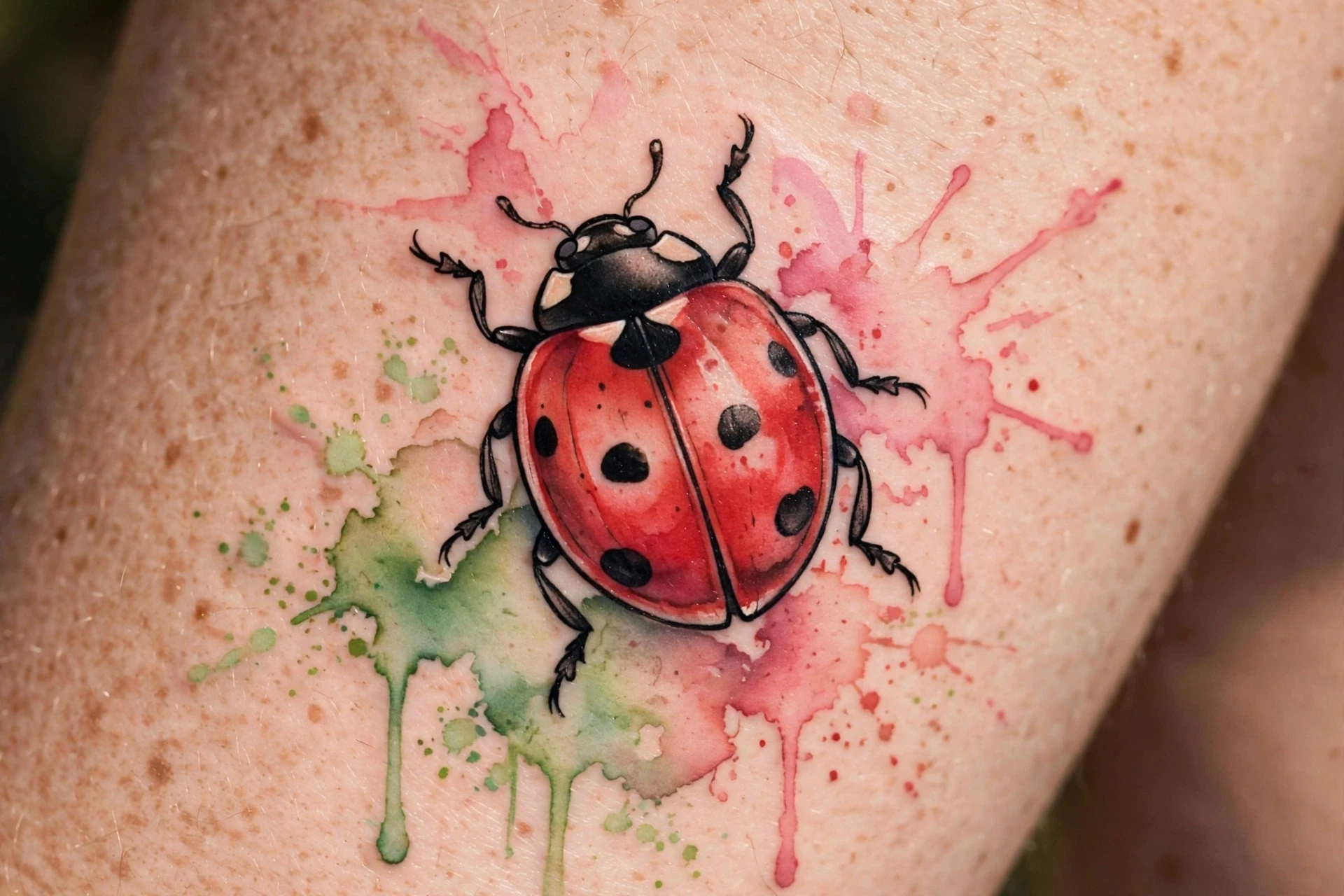
Watercolour style turns the ladybug into a small painting. The insect is drawn in clean black line work, then washed with loose splashes of red, pink, and green that bleed softly past the outlines, as if the colour were still wet on paper. It is a natural match for this subject: the ladybug’s shell is already a bold splash of red, and the watercolour technique makes that colour feel alive rather than flat.
Because the colour sits in soft washes rather than solid blocks, placement matters. Choose flatter skin where the washes can spread evenly, and expect your artist to use a light black outline to hold the design together as the softer colour settles. Sunscreen becomes non-negotiable with this style — faded watercolour loses its magic fast, and reds are among the first colours to soften in the sun.
Placement: Shoulder blade, upper arm, or the side of the ribcage.
3. Minimalist Ladybug Outline
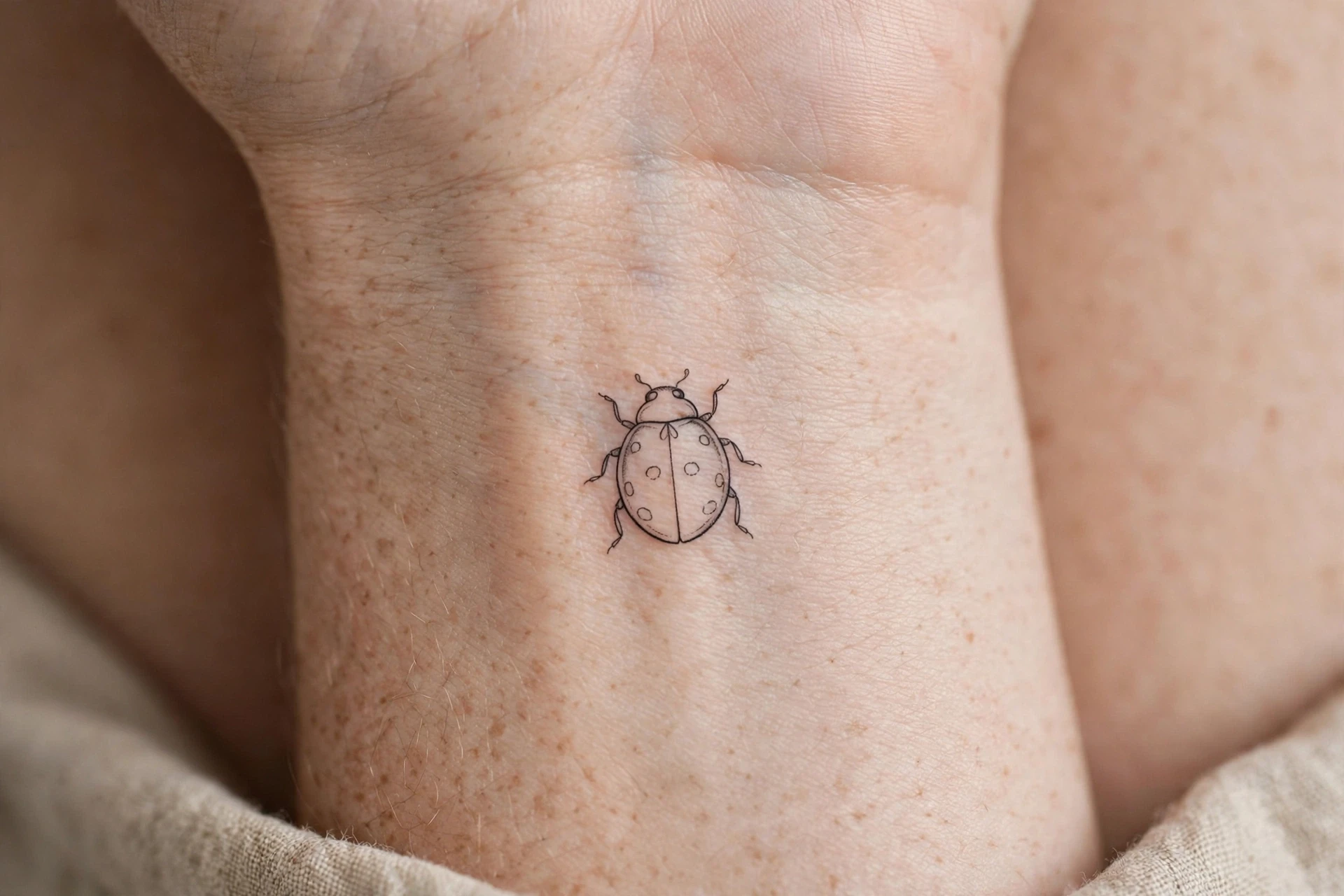
Minimalist ladybug tattoos strip the insect down to a few confident lines: the round shell, the centre line down its back, and a handful of small dots. No shading, no colour, just the shape. The effect is quiet and modern, and it suits people who love the ladybug’s silhouette but do not want a bright red tattoo, or who want a first tattoo that feels easy to live with.
The risk with fine-line work is going too small. Lines that are too thin or dots that sit too close together can soften and spread over time, so give the design a little breathing room and choose an artist who specialises in fine line. A slightly bolder outline than you first imagine usually heals into exactly the delicate look you wanted.
Placement: Inner forearm, ankle, or behind the ear for a truly subtle version.
4. Geometric Ladybug
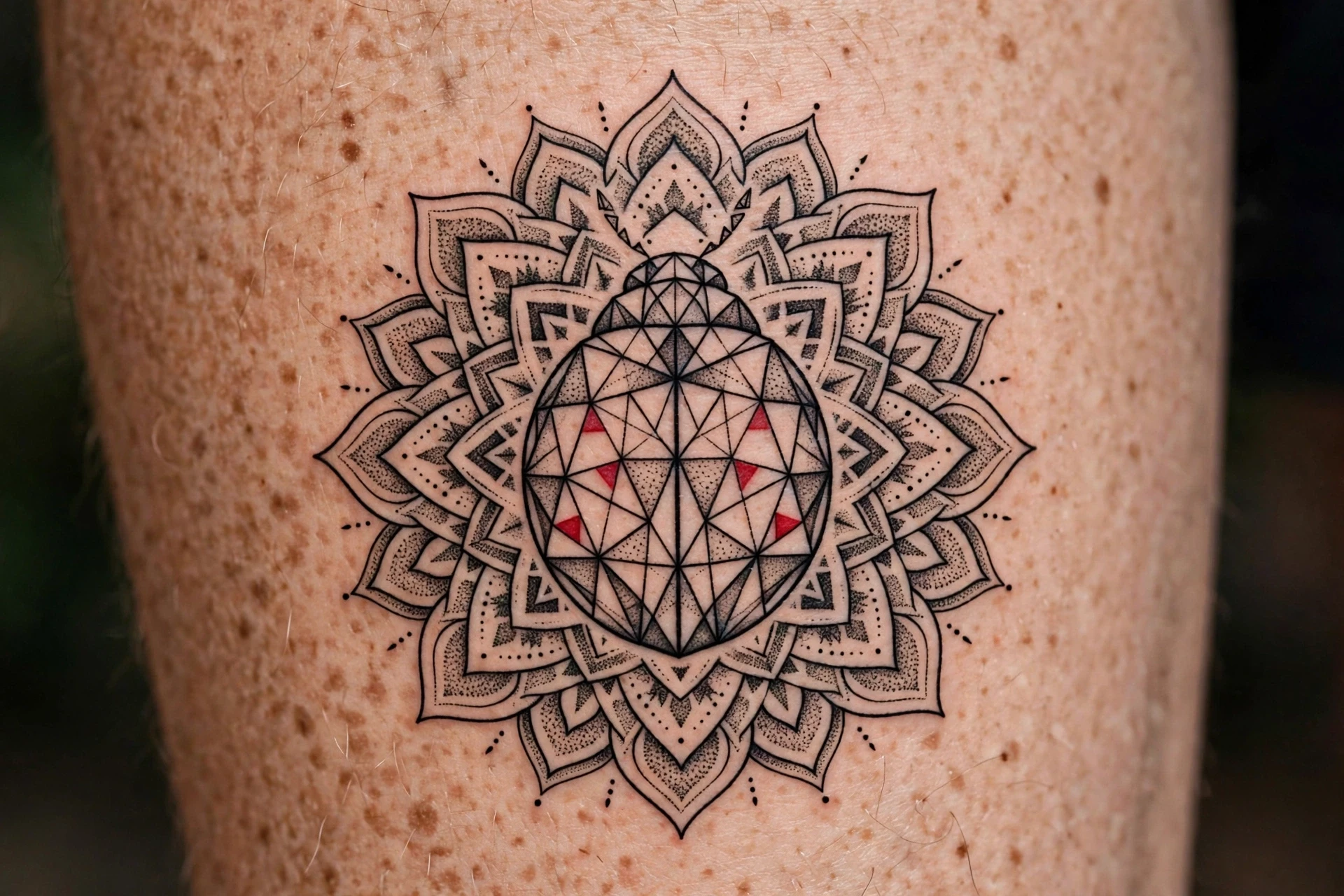
Geometric ladybug tattoos rebuild the insect from triangles, clean lines, and dots, often inside a symmetrical pattern that frames the shell. The round body becomes a set of concentric shapes, the spots turn into precise circles, and the legs are reduced to a few sharp angles. The style suits people who like structure and symmetry, and it photographs beautifully because the pattern is so deliberate.
Symmetry is the whole point here, so the design must be planned carefully. A geometric piece that is even slightly off-centre will show it forever, so a good artist will stencil it, step back, and check the alignment against your body’s own lines before a single needle touches skin. Keep the colour restrained — black with a touch of red — and the geometry stays the star.
Placement: Centre of the upper back, chest, or outer thigh, where symmetry can be kept true.
5. Ladybug and Daisies
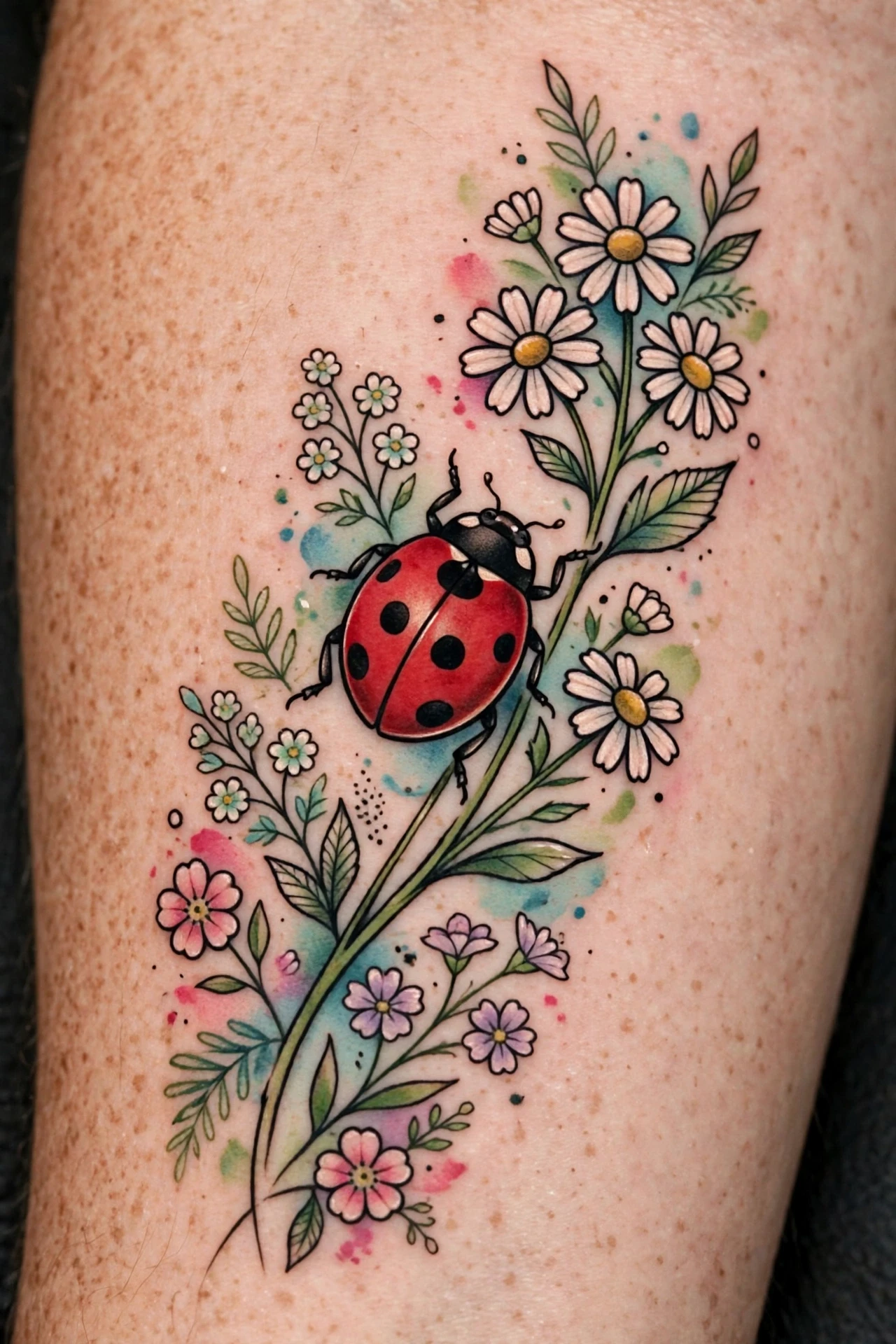
Pairing a ladybug with daisies is a natural combination: the insect lives among flowers, and the white petals make the red shell stand out even more. The usual arrangement sets a ladybug crawling along a daisy stem, with one or two blooms in full flower and a bud or two to balance the composition. Daisies bring their own meaning — innocence and new beginnings — which sits comfortably beside the ladybug’s luck. If you love flower tattoos generally, our 10 daisy tattoo ideas have plenty more in the same spirit.
This is a generous design that rewards a little more space, because both the insect and the flowers need room to breathe. Ask for the daisies to be drawn at a similar scale to the ladybug so neither element overpowers the other, and keep the colour palette limited to red, white, and green so the piece stays fresh rather than busy.
Placement: Thigh, upper arm, or as a side piece running from hip to ribs.
6. Black-and-Grey Ladybug
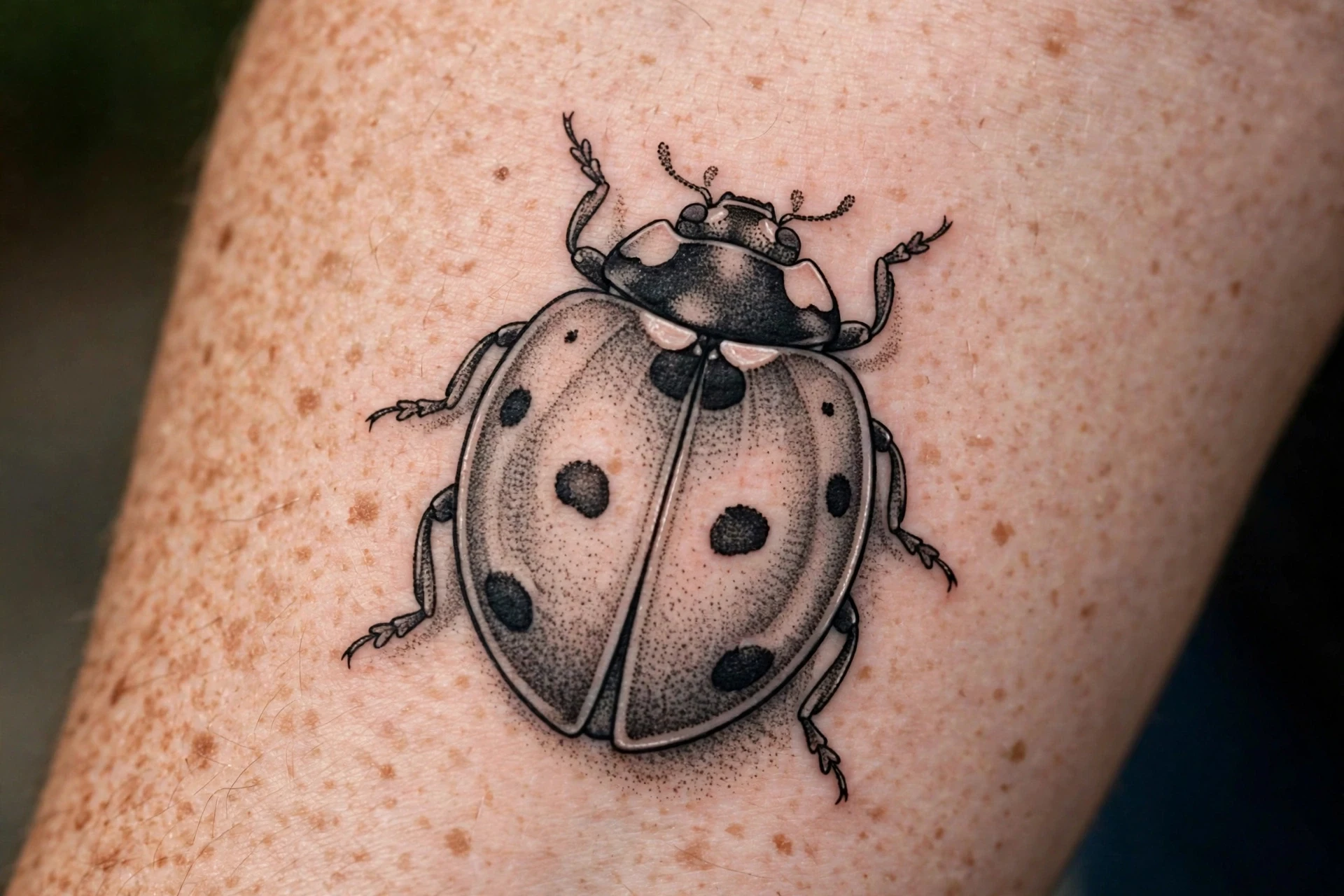
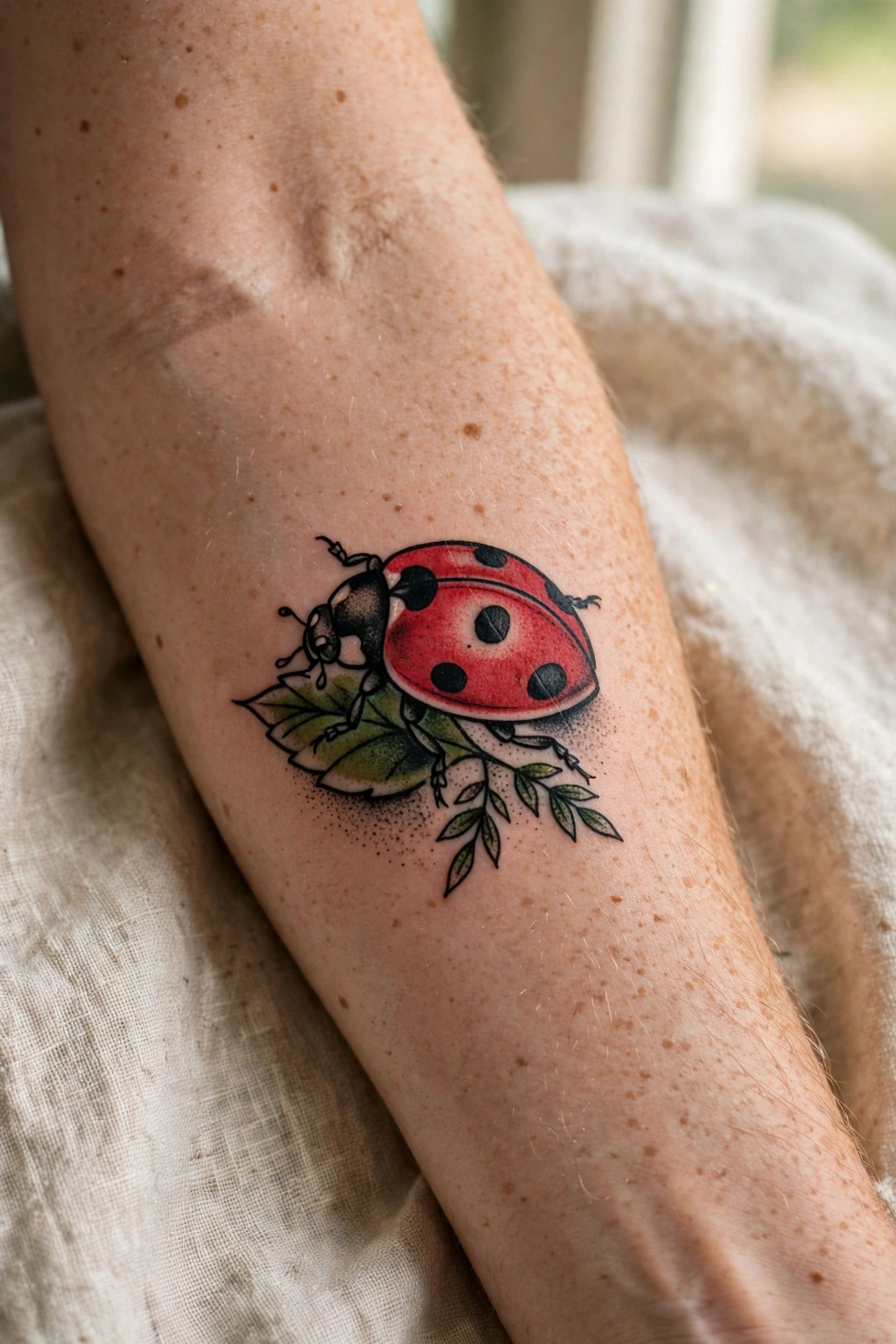
A ladybug does not need red to be recognisable. In black and grey, the design leans on shading instead: smooth gradients across the shell, fine dotwork in the spots, and deep black in the head and legs to make them stand out. The result is elegant and understated, closer to an engraving than a painting, and it suits anyone who wants the ladybug’s charm without a bright, colourful tattoo.
The challenge is keeping the shell distinct without colour to separate it from the spots. Your artist needs strong shading skills and a light touch — too much solid black and the body turns into a dark mass; too little contrast and the spots disappear into the shell. Look at healed black-and-grey work in your artist’s portfolio, not just fresh photos, before you commit.
Placement: Forearm, calf, or shoulder, where the shading can be seen clearly in natural light.
7. Tiny Ladybug on the Wrist
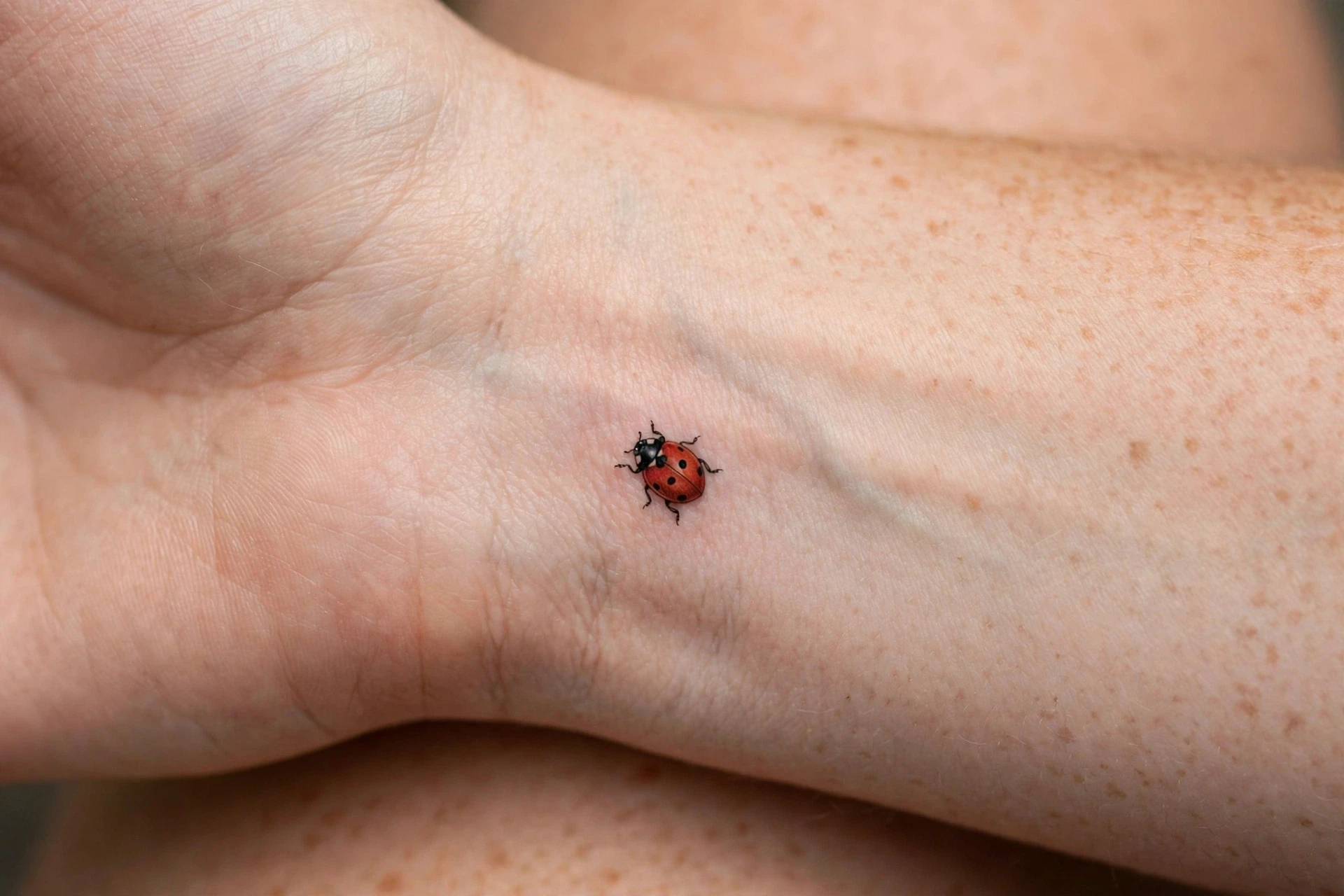
A tiny ladybug on the wrist is the design at its most wearable. The whole insect is usually no bigger than a fingernail: a small red dome, a few black spots, and the suggestion of legs. It reads as a piece of jewellery, catches the eye when you move your hand, and carries the same symbolism as a large ladybug — luck, love, and protection — in a form that fits everyday life and most workplaces.
Small tattoos demand a steady hand. At wrist size there is no room for a wobbly line or a spot that drifts out of place, so choose an artist with proven fine-detail work and resist the urge to shrink the design further than they advise. A touch of red is what makes it read as a ladybug rather than a dot, so do not let anyone talk you into an all-black version at this size.
Placement: Inner or outer wrist, or just above it on the lower forearm.
8. Ladybug with Heart-Shaped Wings
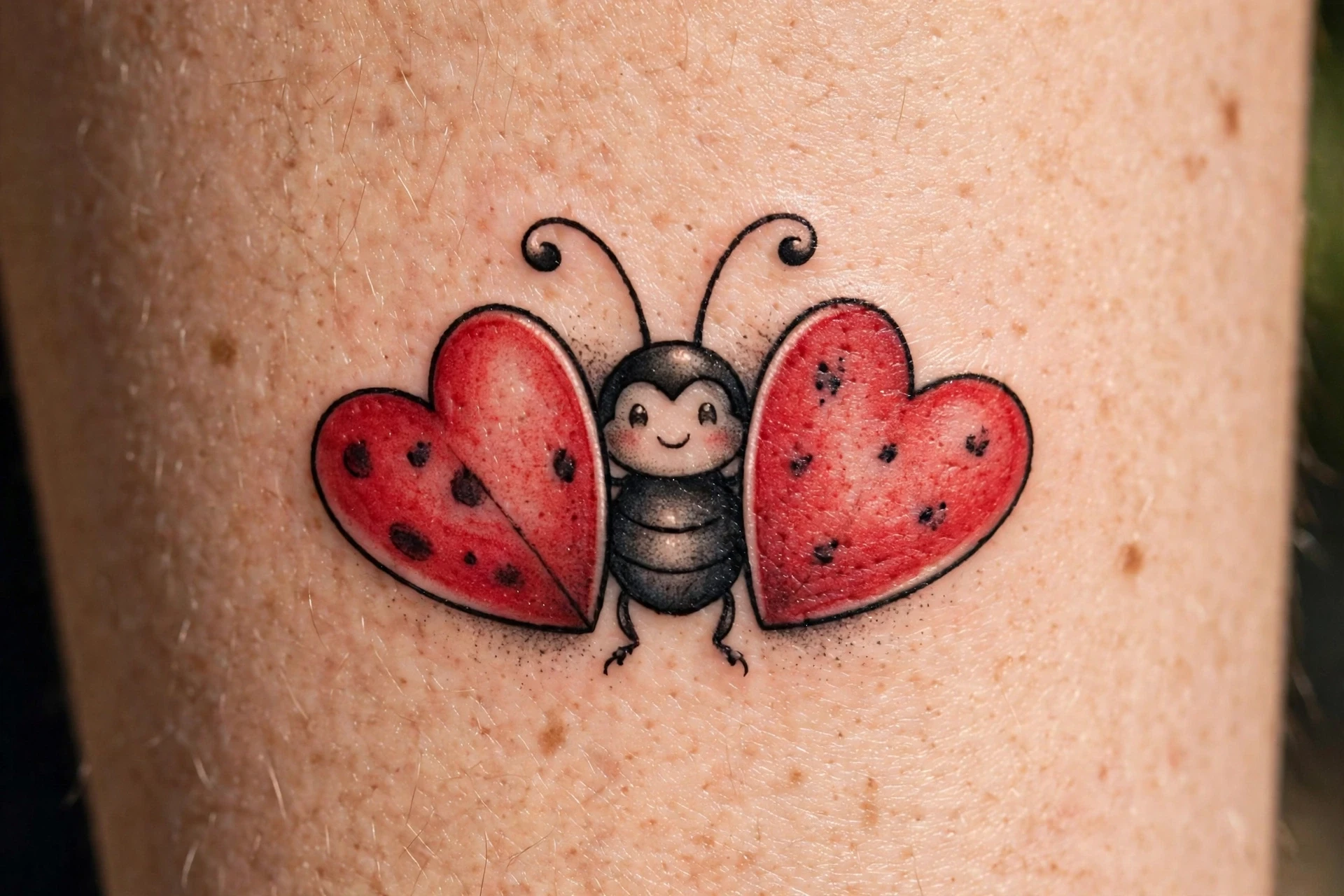
This is the ladybug at its sweetest: the shell drawn open into two red heart shapes, as if the insect were about to take flight. It turns a nature design into a love tattoo without needing words, names, or dates, which makes it a popular choice for marking a relationship, a child, or simply a romantic streak. The hearts give the piece a softness that a plain ladybug does not have, while the spots and little head keep it clearly a ladybug.
Keep the hearts simple and symmetrical, and let the red do the talking. Too much extra detail — extra flowers, swirls, or shading — can crowd a design that works because it is clean. A single small heart-winged ladybug, done well, says more than a busy piece twice its size.
Placement: Ankle, collarbone, or the back of the shoulder, where the hearts sit neatly on a gentle curve.
9. Ladybug on a Four-Leaf Clover
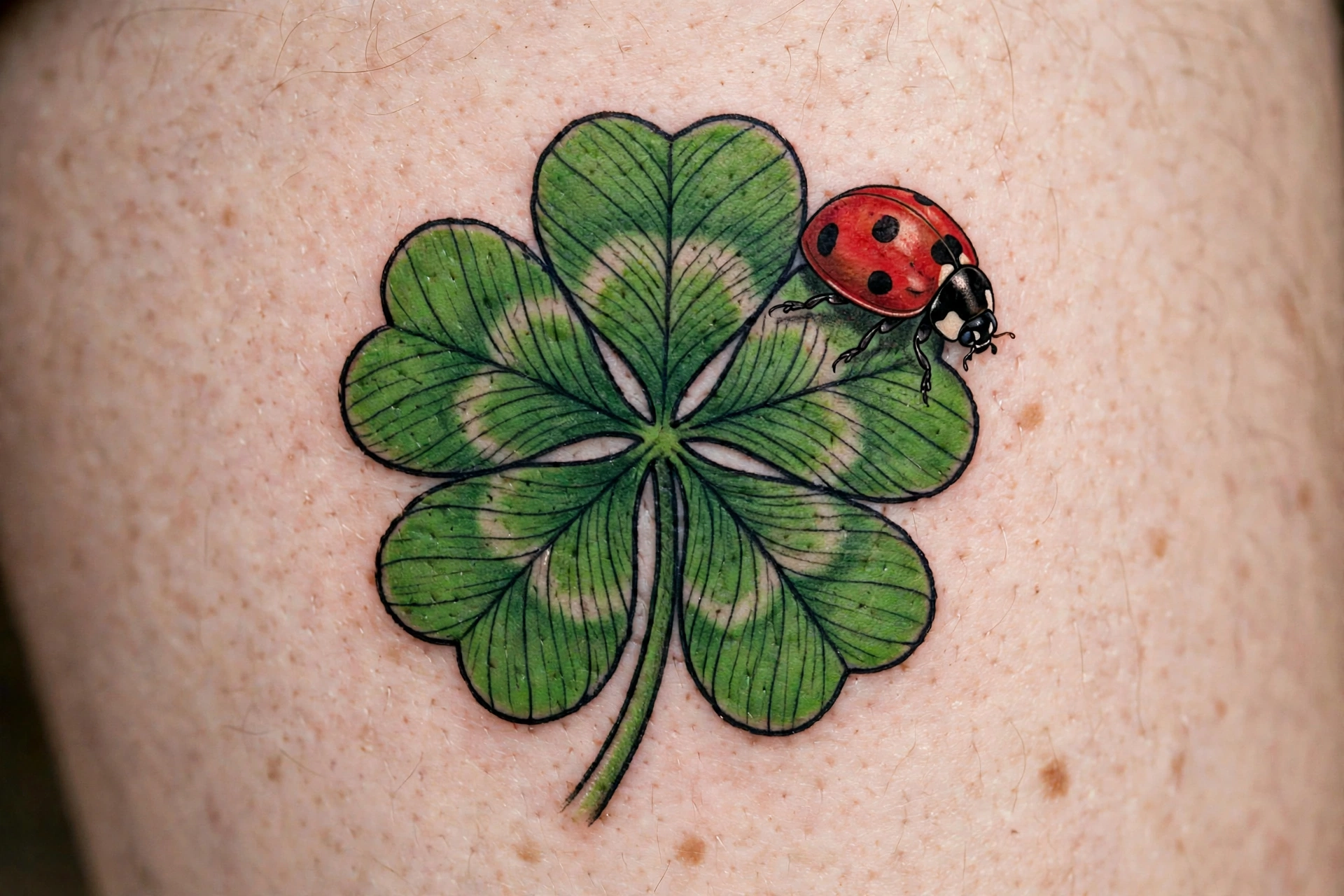
If one lucky symbol is good, two are better. The ladybug on a four-leaf clover doubles down on good fortune: the insect long seen as a bringer of luck, resting on the rarest leaf in the field. The green clover also solves a design problem, giving the red ladybug a background colour that makes it pop without needing extra elements. It is a cheerful, optimistic tattoo, and one of the few designs where the meaning is obvious to everyone who sees it.
The trick is balance. The clover should be large enough to read as four distinct leaves, not a green blob, and the ladybug should sit slightly off-centre so the composition feels natural rather than stamped. A few fine lines for the clover’s veins and a small stem are all the extra detail this design needs.
Placement: Ankle, forearm, or the back of the neck, where the clover can sit flat and the luck stays visible.
10. Ladybug and Sunflower
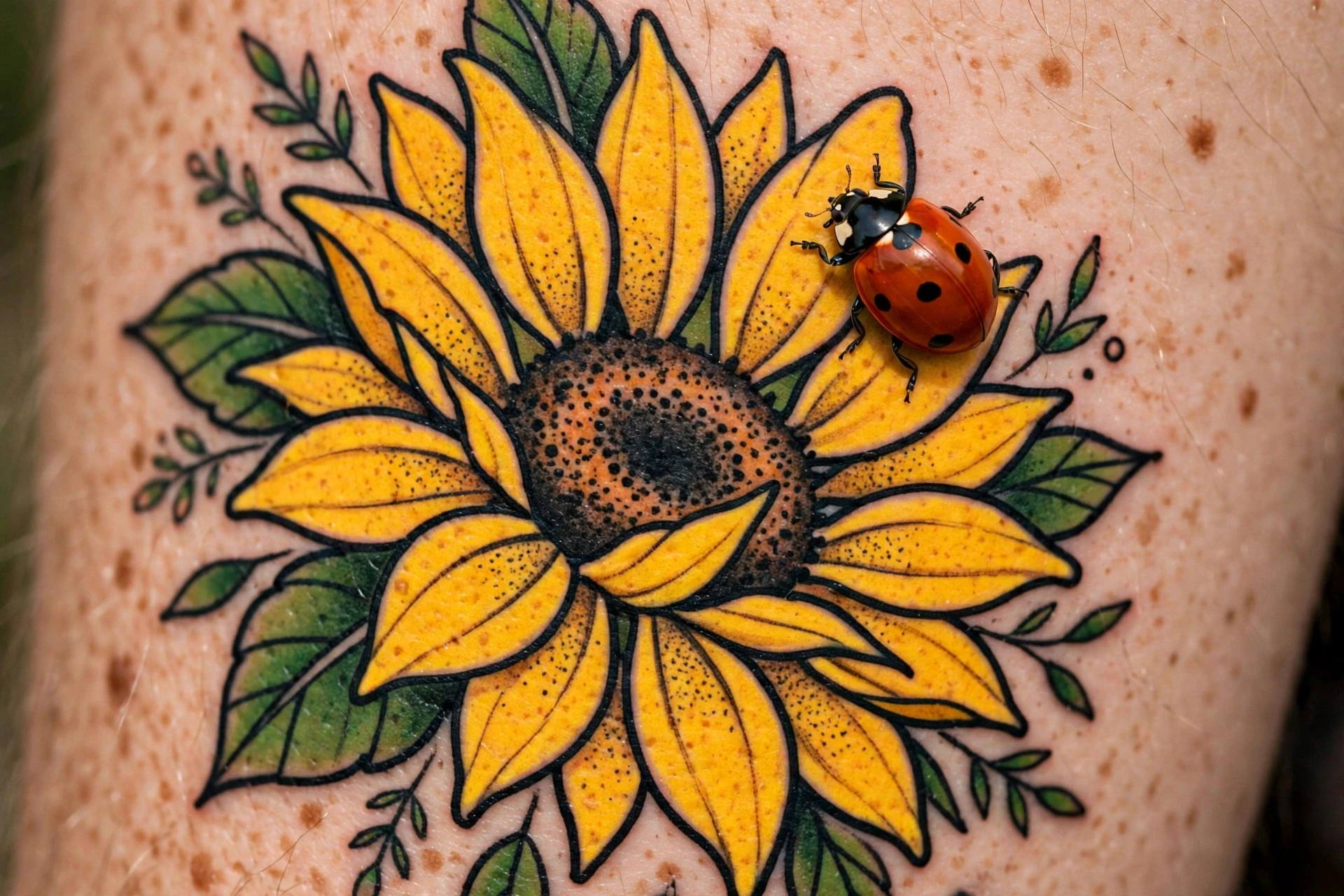
A ladybug on a sunflower is a small scene rather than a single symbol: the insect crawling across a broad yellow petal, the flower’s dark centre behind it, and the whole piece glowing with summer colour. Sunflowers stand for warmth, loyalty, and adoration, which gives the design a sunny, hopeful feeling that suits a larger, more visible placement. Nature lovers often pair insects with flowers this way — our 9 bee tattoo ideas show the same idea with a different garden visitor.
This design needs room, because a sunflower drawn too small loses its petals and turns into a yellow circle. Give the flower a proper span and let the ladybug sit on one petal rather than in the centre, so the eye finds the insect after taking in the flower. The yellow and red together are bold, so keep the line work clean and let the two colours carry the piece.
Placement: Thigh, upper arm, or shoulder blade, where the sunflower has space to open fully.
Closing
Ladybug tattoos work because the insect does half the artist’s job: the shape is simple, the colours are already decided, and the symbolism gives the design a meaning worth carrying. Whether you choose a tiny wrist mark or a full sunflower scene, the key is the same — give the design enough space, pick an artist whose strength matches the style, and let the ladybug’s own lines lead.