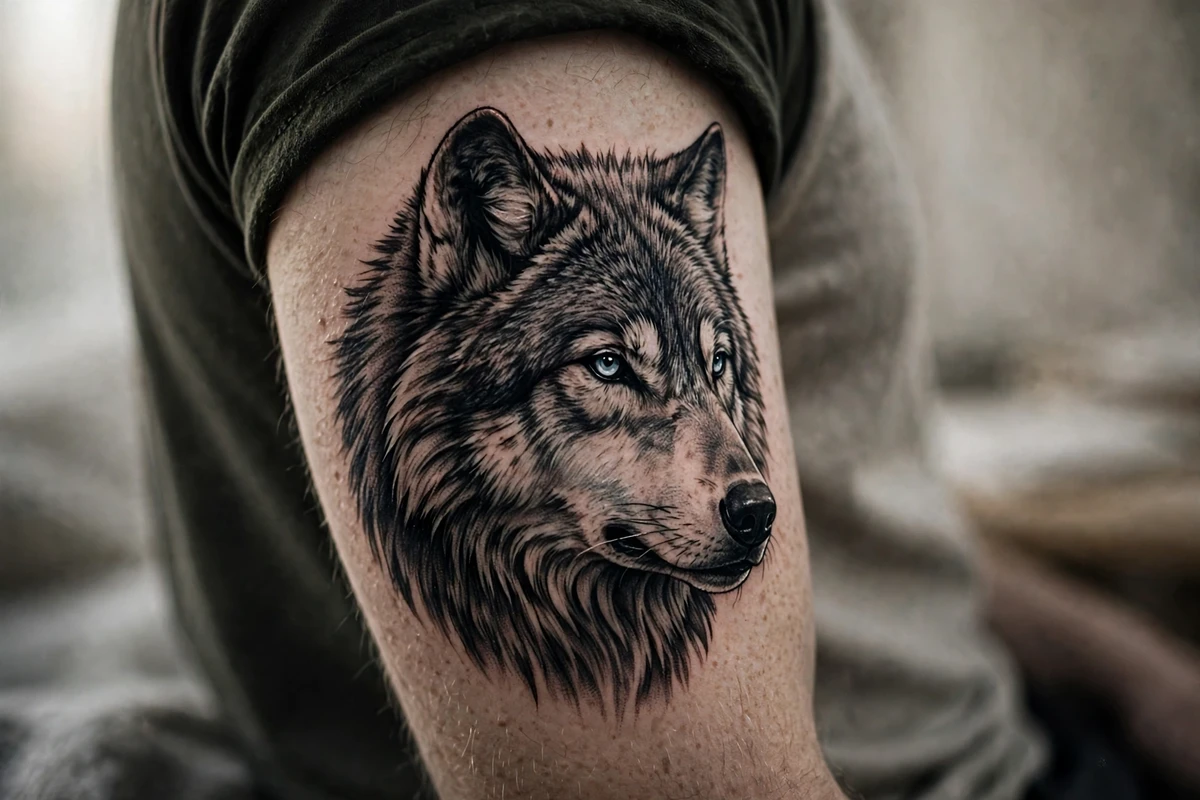
Wolves have been part of human stories for as long as anyone can remember. They show up in old legends, in family crests, and in the tales people tell around a fire. A wolf tattoo carries that weight with it. It can stand for loyalty to the people you love, the freedom to walk your own path, or the quiet strength it takes to keep going when things get hard.
That is why wolf tattoos suit so many people. The design can be big and detailed or small and simple. It can be a fierce portrait, a lone wolf on a ridge, or a whole pack running together. Black and grey work looks sharp and timeless, while a splash of watercolour or a geometric pattern gives the same animal a completely different feel.
Below you will find 21 wolf tattoo ideas, each with its own style, meaning, and best placement. Whether this is your first tattoo or one more piece in a growing collection, there is something here worth taking to your artist. If you enjoy animal and nature designs, you may also like our 21 sunflower tattoo ideas.
21 Wolf Tattoo Ideas
1. Realistic Wolf Portrait
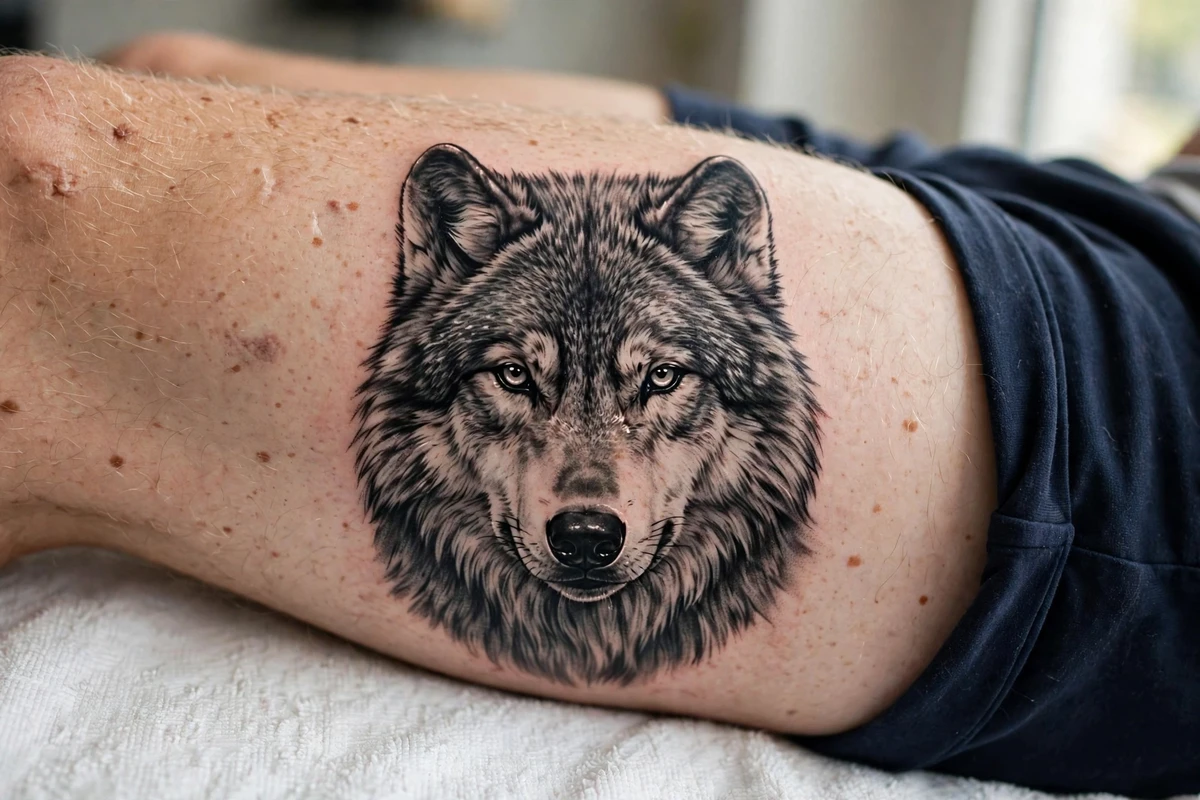
A realistic wolf portrait is the closest you can get to carrying the animal itself on your skin. The fur, the eyes, the shape of the muzzle — a skilled artist can make it look like the wolf is about to step out of the frame. This style works best in black and grey, where shading does all the work.
It is a serious piece, and it needs an artist who knows animal portraits well. Take your time finding one, look through their healed work, and be ready to sit for a longer session. The result is a tattoo that stops people in their tracks.
A realistic portrait suits someone who wants their tattoo to feel alive rather than decorative. It reads as strength and watchfulness, and it ages well when the shading is done with care.
Placement: Upper arm or thigh, where there is enough flat space for the detail.
2. Howling Wolf Under the Moon
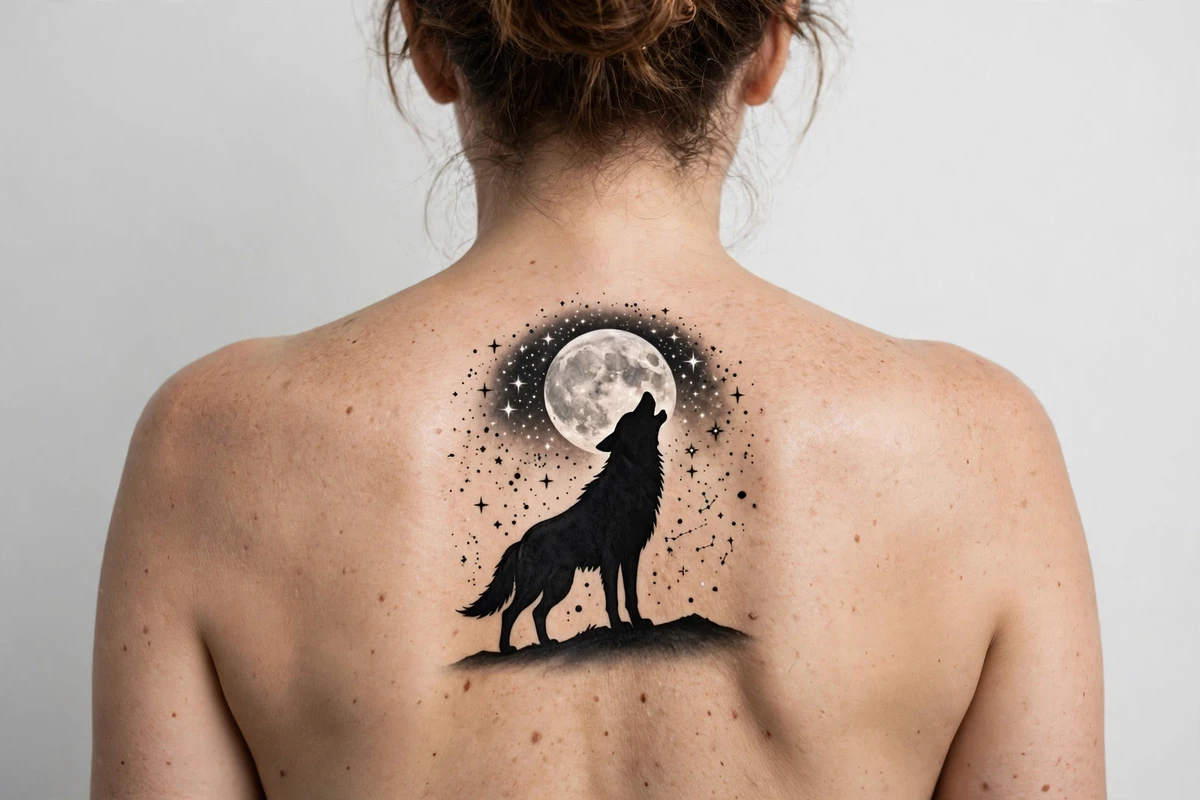
Few images are as well known as a wolf howling at the moon. It speaks of wildness, of calling out to your own kind, and of not being afraid to be heard. Done well, it has a moody, almost cinematic feel.
The moon gives the design a natural focal point. Some people keep it simple — a dark silhouette against a pale full moon — while others add clouds, stars, or a treeline along the bottom. Either way, the contrast between the dark wolf and the light moon is what makes it work.
This one is a good pick if you want a tattoo with a story in it. It feels untamed and free, and it looks great at a larger size where the sky and the wolf both have room to breathe.
Placement: Back or chest, where the scene has room to spread out.
3. Fine-Line Lone Wolf
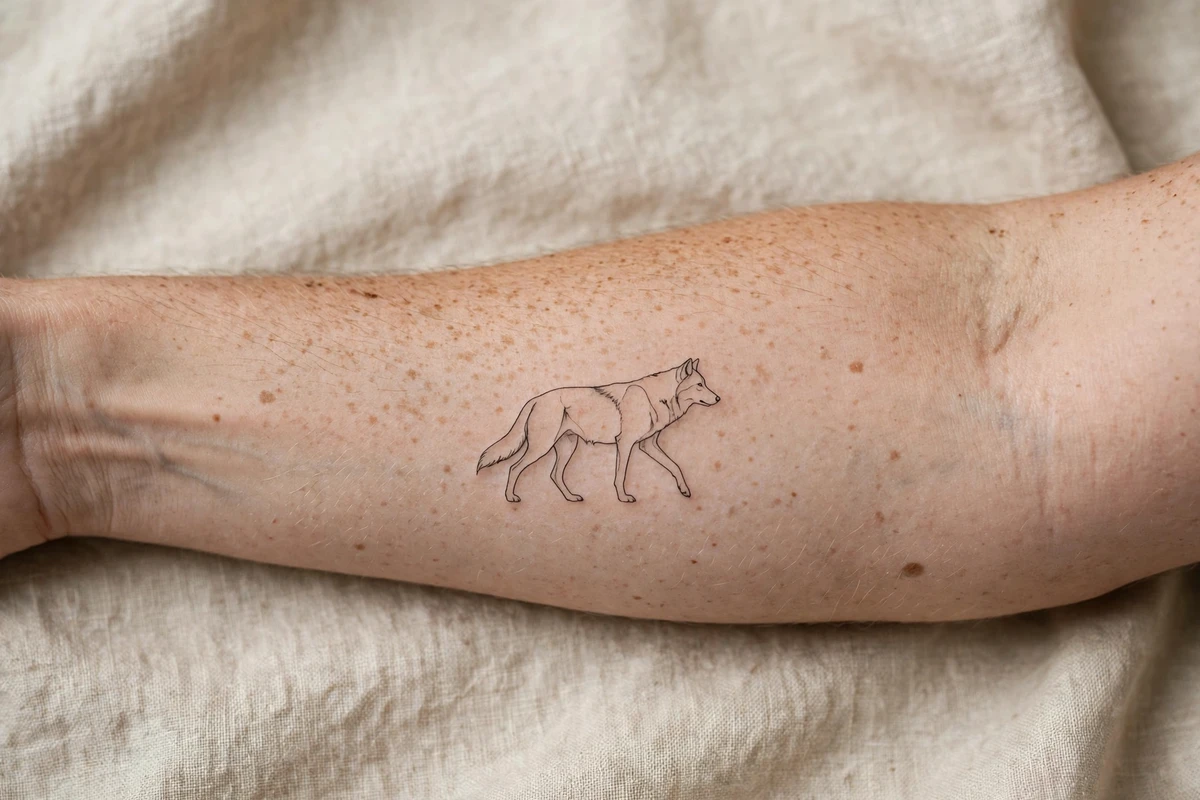
A fine-line lone wolf is all about restraint. Thin, clean lines trace the shape of a wolf walking alone, with no heavy shading and no clutter around it. The effect is quiet and elegant, and it suits people who prefer subtle tattoos.
Because the lines are so delicate, this style depends on a steady hand. Fine lines can soften as they heal, so the design needs to be drawn with that in mind — not too tiny, and with enough space between the lines to hold up over the years.
A lone wolf fits anyone who values their independence. It says you are comfortable on your own path, without needing a crowd around you.
Placement: Forearm or inner wrist, where the clean lines stay visible.
4. Blackwork Wolf Head
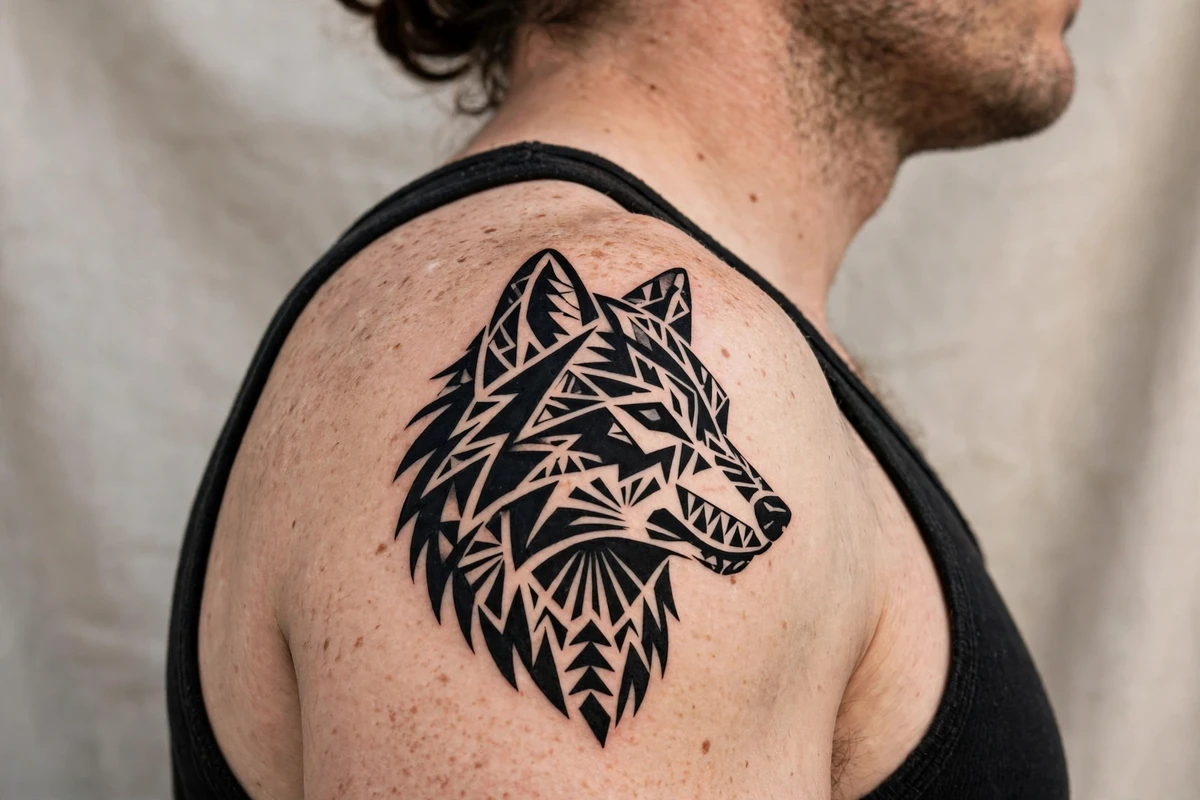
Blackwork takes the wolf head and strips it down to bold black shapes. There is no grey wash, no colour, just strong contrast and sharp edges. The result is striking from across a room and still clear up close.
This style comes from a long tradition of bold tattooing, and it holds up well over time because solid black ages better than fine detail. It also covers well, which makes it a smart choice if you are working over an older piece.
A blackwork wolf head suits someone who wants a tattoo with presence. It is not shy, and it does not try to be. It reads as power and confidence, plain and simple.
Placement: Shoulder or calf, where the bold shape can sit flat and strong.
5. Watercolour Wolf
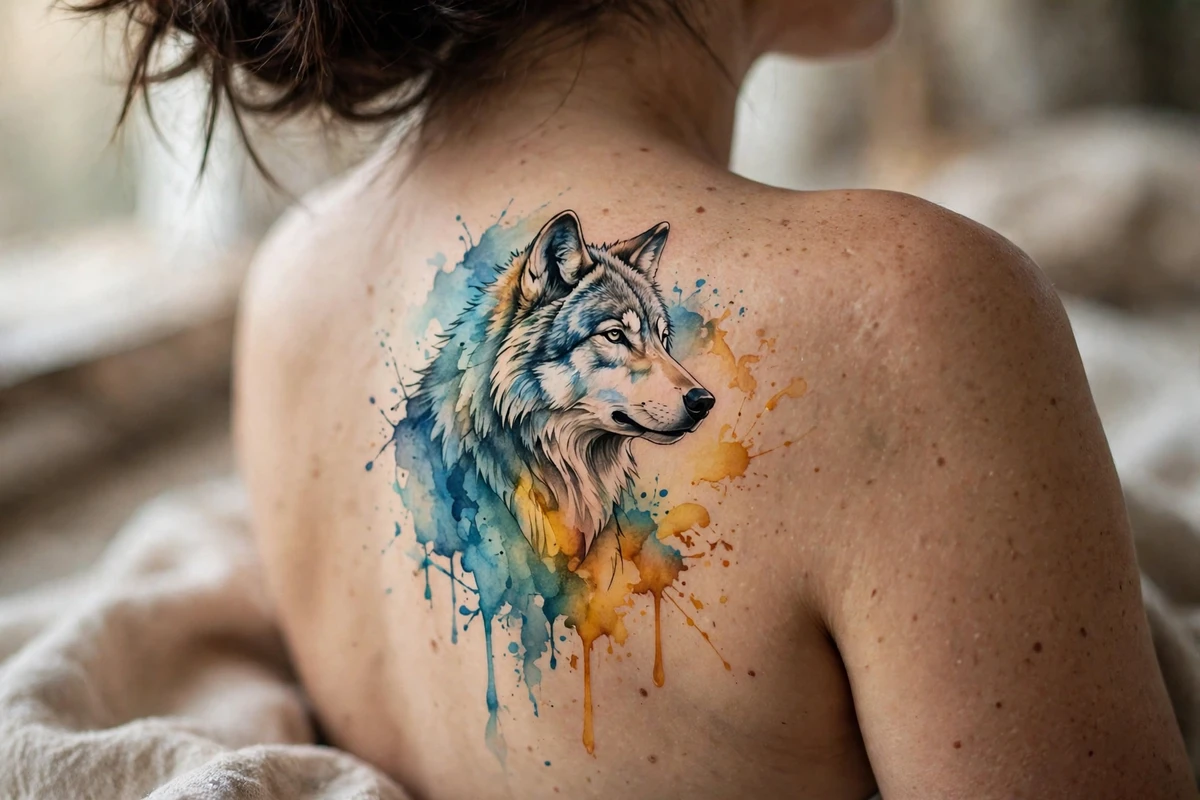
A watercolour wolf looks like it was painted straight onto the skin. Soft washes of blue, teal, or warm amber bleed out from the wolf’s outline, with no hard border to hold the colour in. It is one of the most eye-catching styles you can choose.
The trick with watercolour is balance. Too much colour and the wolf disappears; too little and it just looks unfinished. A good artist will let the colour fade naturally around the edges while keeping the wolf itself clear and readable.
This design is for someone who wants their tattoo to feel like art first and a symbol second. It keeps the wolf’s meaning — freedom, instinct, wildness — but wears it in colour.
Placement: Shoulder blade or thigh, where the colour wash has space to spread.
6. Geometric Wolf
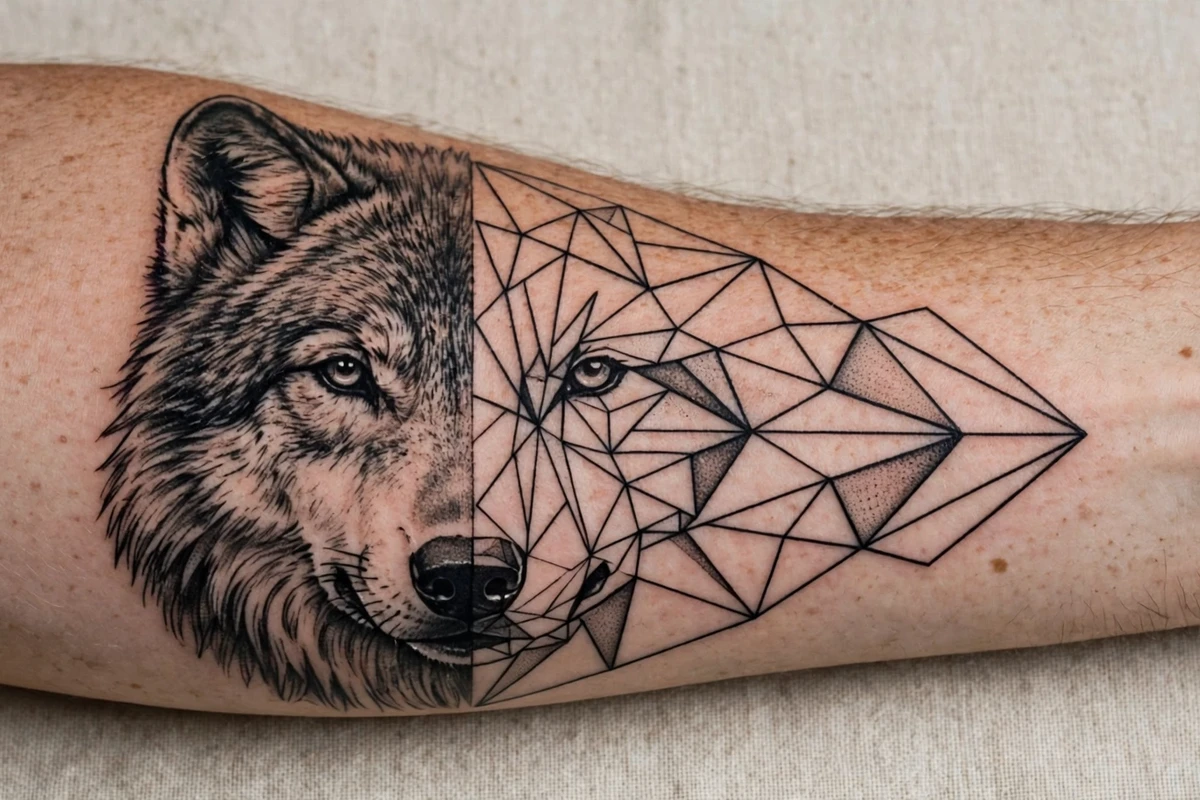
A geometric wolf is built from triangles, lines, and clean angles. Half the head might be a realistic portrait while the other half breaks apart into shapes, or the whole wolf might be drawn as a pattern of facets. It looks modern and deliberate, like a design that was planned rather than just drawn.
This style appeals to people who like order and structure. The wolf is wild, but the geometry tames it into something precise. It also photographs beautifully, which is part of why it has become so popular in recent years.
If you like the idea of a wolf tattoo but want something that feels current rather than classic, the geometric route is a strong choice. It works in black alone, or with one accent colour to pick out a single facet.
Placement: Forearm or chest, where the straight lines sit cleanly.
7. Traditional Wolf Flash
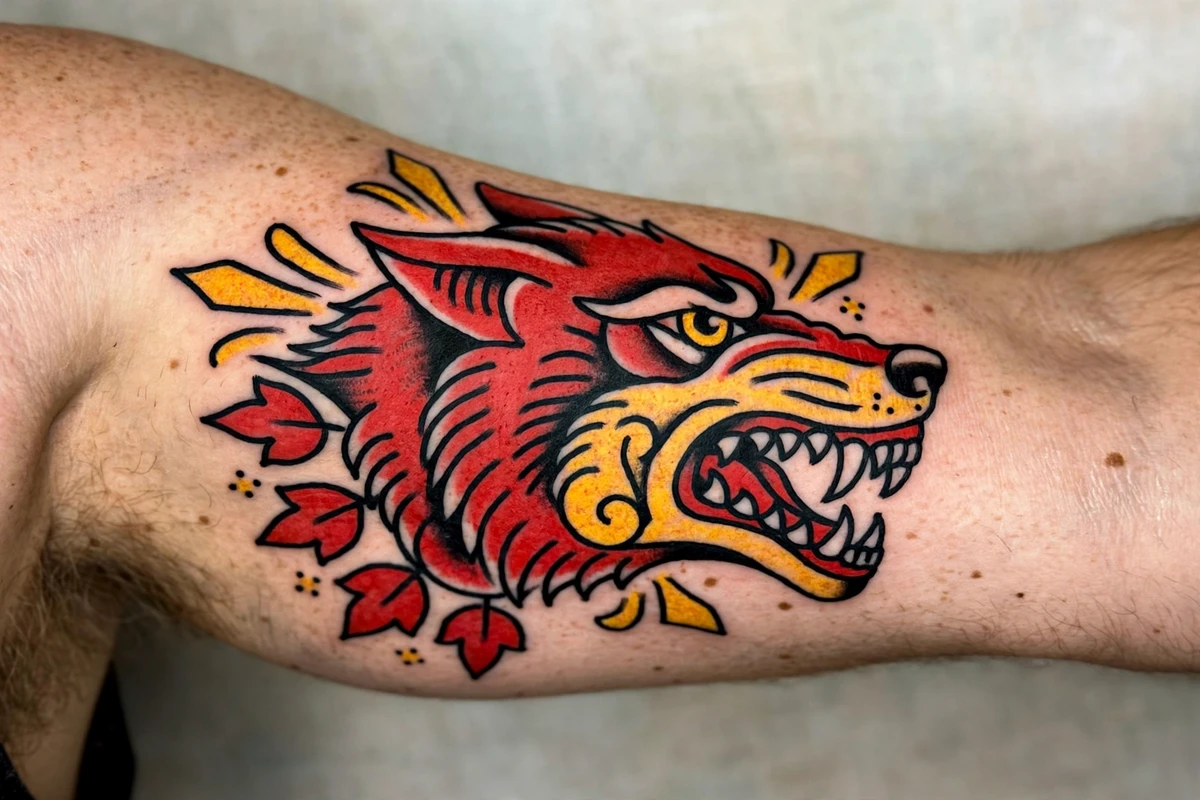
Traditional tattooing — bold outlines, limited colours, solid fills — gives the wolf a vintage feel. Think of the old flash sheets: a snarling wolf head in black, red, and a touch of yellow, drawn to be read from a distance.
There is something honest about this style. It does not pretend to be a photograph or a painting. It is a tattoo, made to be a tattoo, and the wolf’s snarl gives it an edge that softer styles do not have.
A traditional wolf suits someone who loves the history of tattooing. It pairs well with other classic pieces, and the bold lines mean it will still look sharp many years down the road.
Placement: Upper arm or calf, classic spots for traditional work.
8. Dotwork Wolf
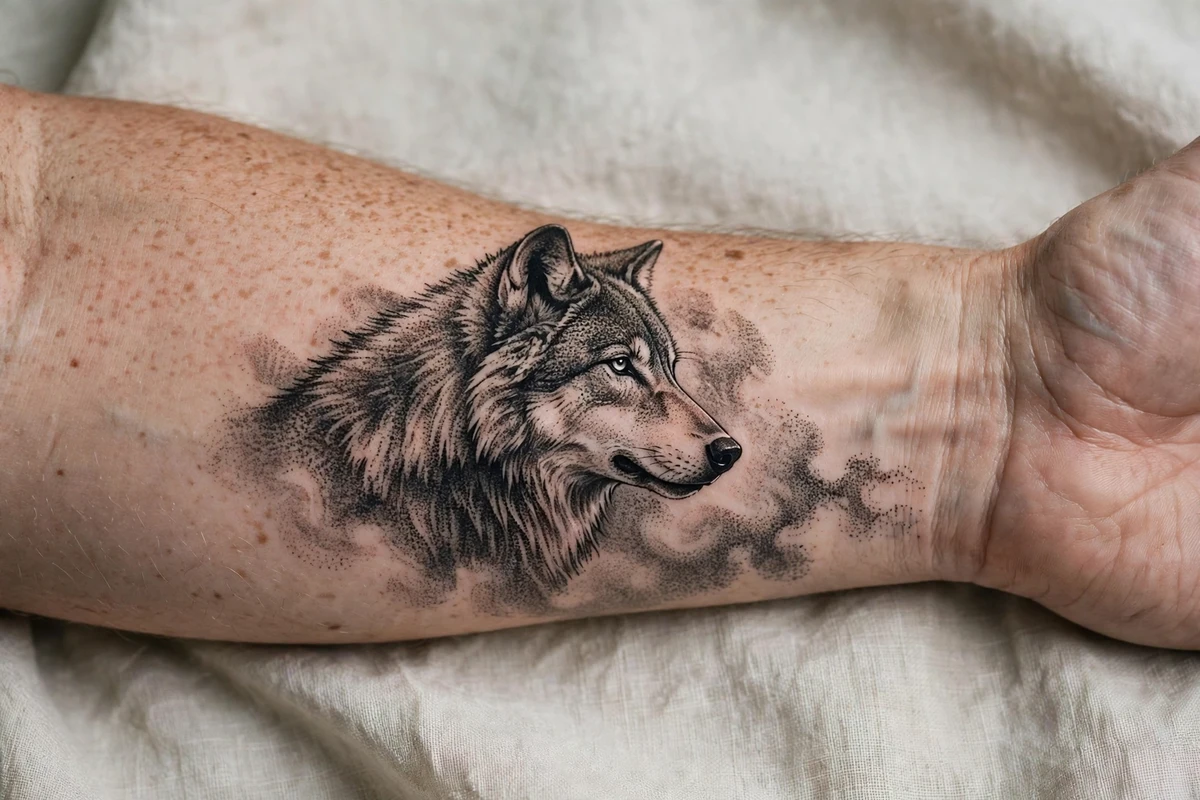
Dotwork builds the wolf out of thousands of tiny dots. Shading comes from how close together the dots sit, so the wolf seems to fade in and out of the skin like mist. Up close it is painstaking work; from a step back, it looks soft and almost smoky.
This style takes patience — from the artist and from you, since dotwork sessions run long. The payoff is a tattoo with a texture no other style can match. It is gentle where blackwork is loud, and detailed without being busy.
A dotwork wolf fits someone who likes craft and quiet detail. It carries the same meaning as any wolf tattoo — strength, loyalty, instinct — but says it in a whisper instead of a shout.
Placement: Forearm or back of the shoulder, where the dot shading can be seen up close.
9. Wolf and Moon Phases
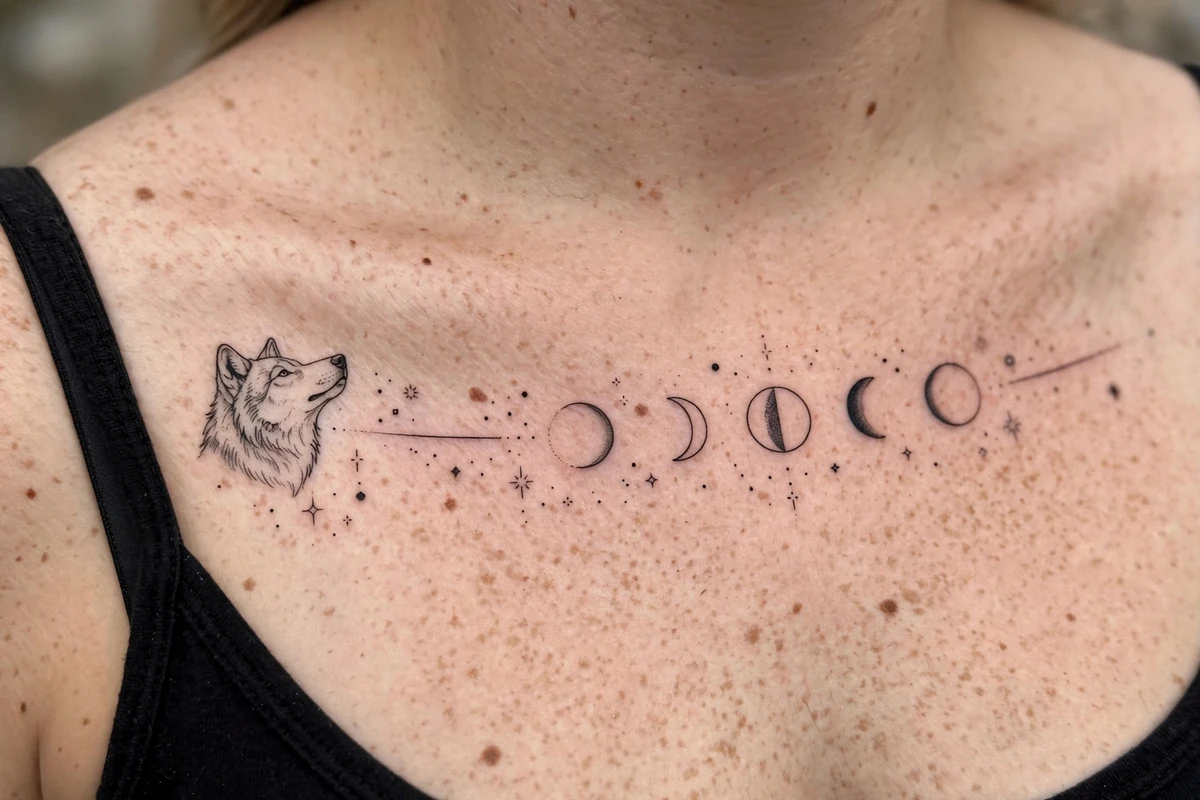
A wolf with the phases of the moon is a design with a built-in story. The moon changes, the wolf stays the same — a reminder that you can grow and change without losing who you are. The row of moons, from new to full, gives the piece a rhythm that draws the eye along it.
Artists often place the wolf’s head at one end, looking up at the full moon, with the smaller phases trailing behind. It can be done small and neat, or stretched out into a longer piece with stars and fine linework filling the gaps.
This is a thoughtful choice, and it suits someone who likes a tattoo with layers of meaning. It is also one of the easier wolf designs to size up or down without losing its shape.
Placement: Collarbone or along the forearm, following the line of the moons.
10. Wolf Pack Silhouette
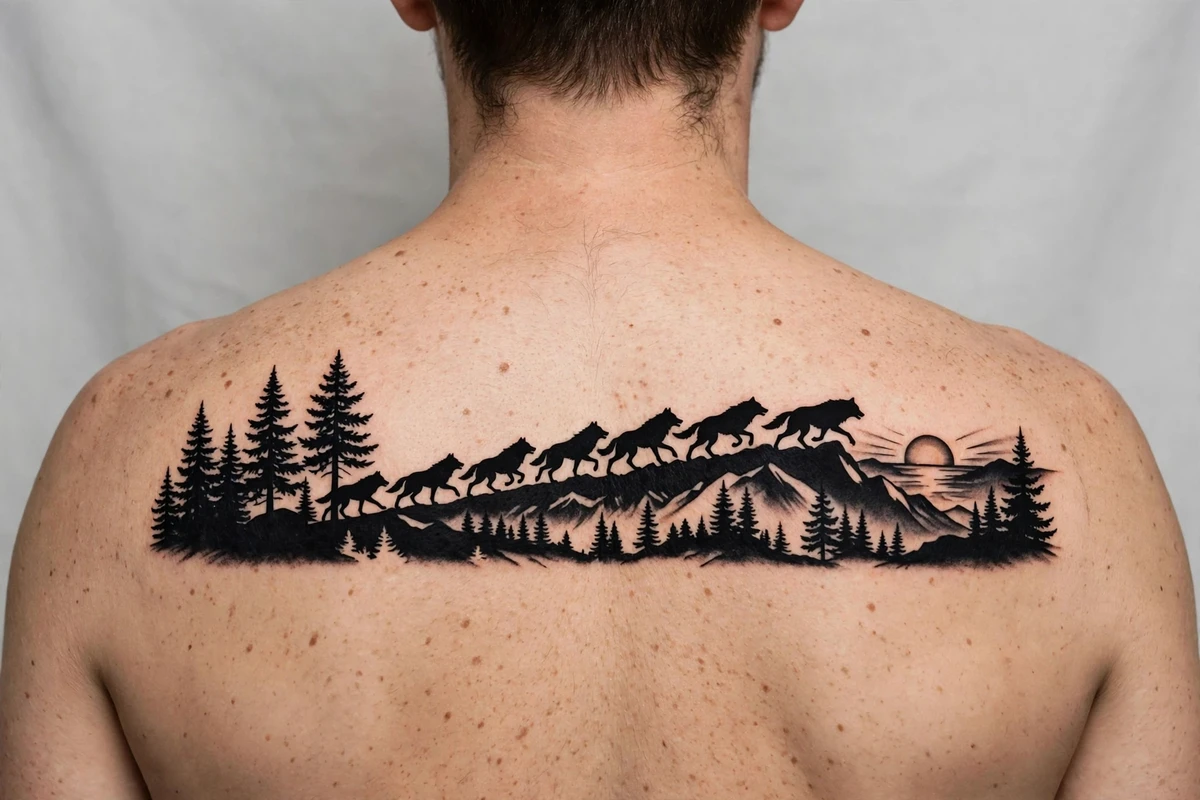
A lone wolf is about independence, but a pack is about family. A pack silhouette — several wolves running or standing together against a sunset or a forest edge — is a way to carry your people with you.
The design works best as a scene rather than a portrait. The wolves stay dark and simple, and the background does the talking: a ridge line, a row of pines, a low sun. Keeping the wolves as silhouettes means the piece reads clearly even at a smaller size.
If your family or your closest friends are the reason you want this tattoo, the pack is the honest choice. Each wolf in the group can stand for someone you would run with, no matter what.
Placement: Upper back or across the shoulder blades, wide enough for the whole pack.
11. Wolf and Rose
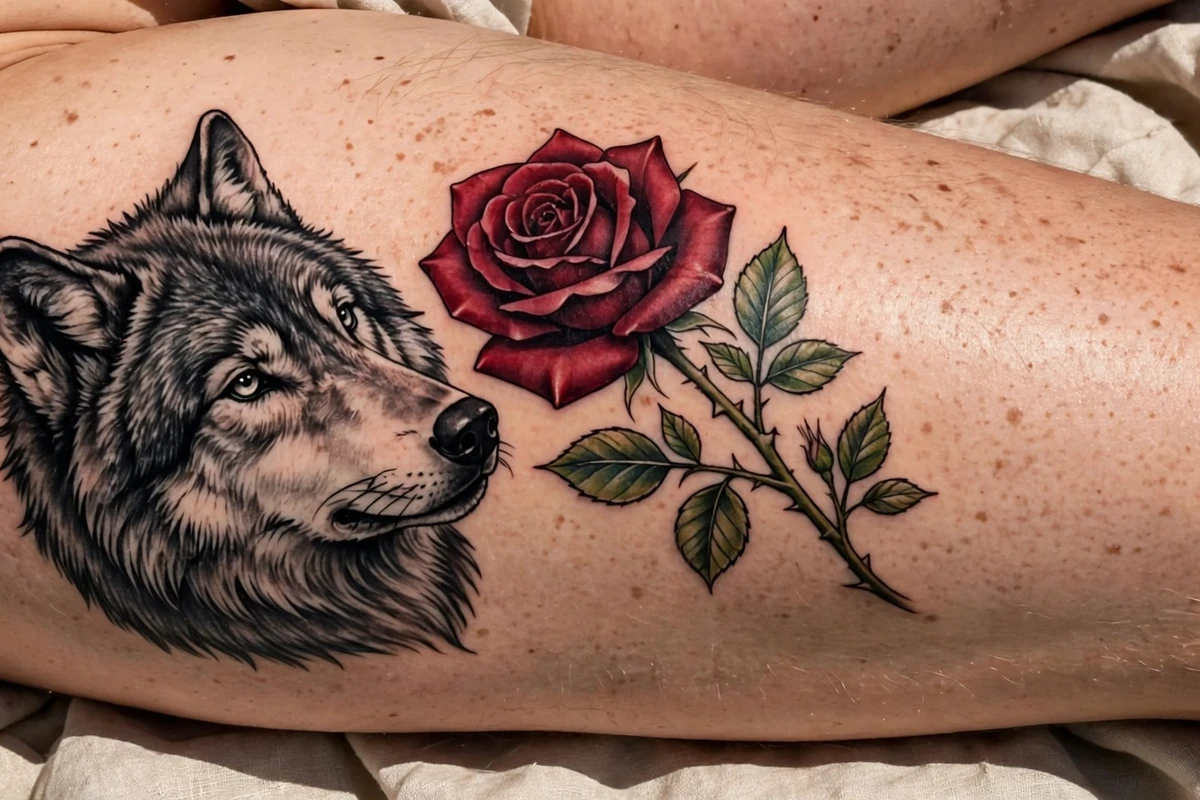
A wolf and a rose put two opposite ideas side by side: wildness and tenderness, teeth and petals. The contrast is the whole point. The rose softens the wolf, and the wolf keeps the rose from feeling sweet or sentimental.
Most versions keep the wolf in black and grey and let the rose carry the only colour — a deep red that pulls the eye straight to it. Others draw both in fine line, which makes the piece feel more like an illustration than a portrait.
This design suits someone who wants a wolf tattoo with a softer side. It works well as a piece about love that is fierce rather than gentle, or about beauty that can look after itself.
Placement: Thigh or upper arm, where both elements have room.
12. Small Minimalist Wolf
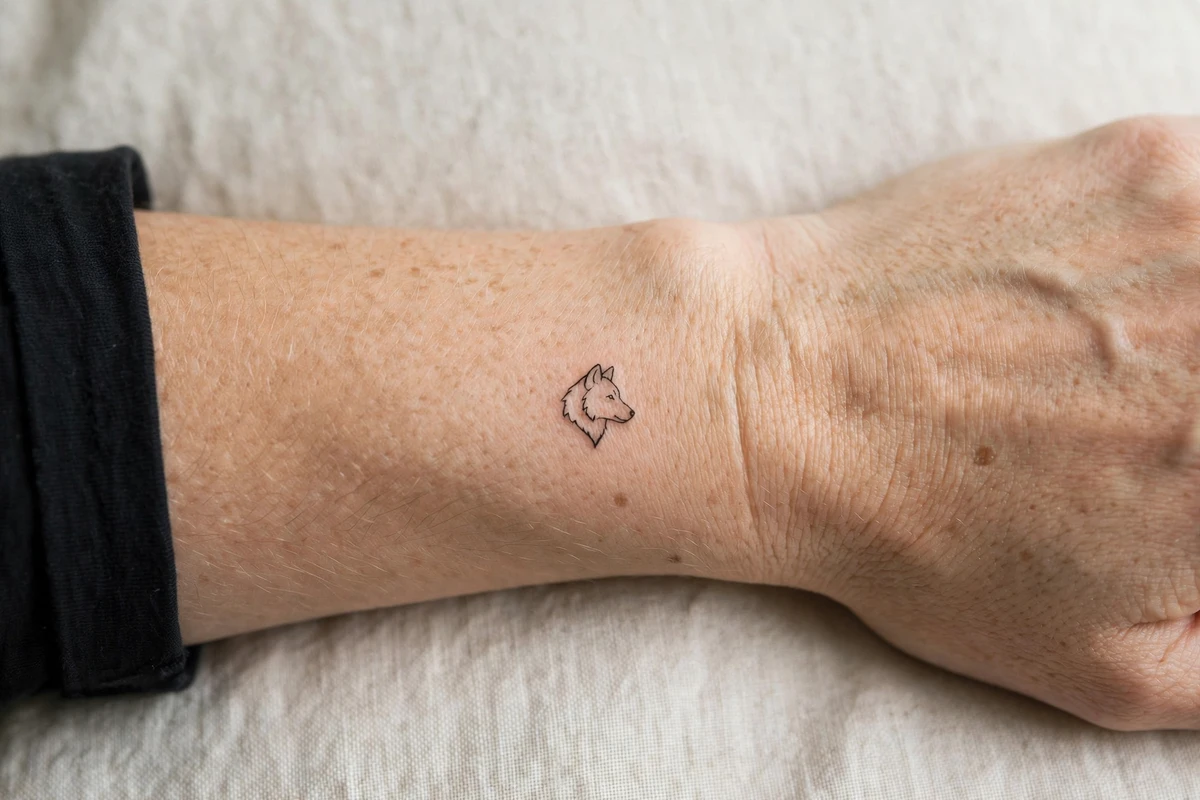
Not every wolf tattoo needs to be big. A small minimalist wolf — just the head, or just the outline of a sitting wolf — can say everything the large versions say, in a space no bigger than a coin. It is clean, quick to get, and easy to place almost anywhere.
The key is simplicity. One clear shape, no background, no extra detail. A good artist will strip the design back to its strongest lines so it stays readable as it heals and ages. Tiny detail is the enemy here; bold simplicity is what lasts.
This is a great first tattoo, or a small addition for someone who already has larger work. It is also easy to hide when you need to, and easy to show off when you do not.
Placement: Wrist, ankle, or behind the ear.
13. Wolf Forearm Wrap
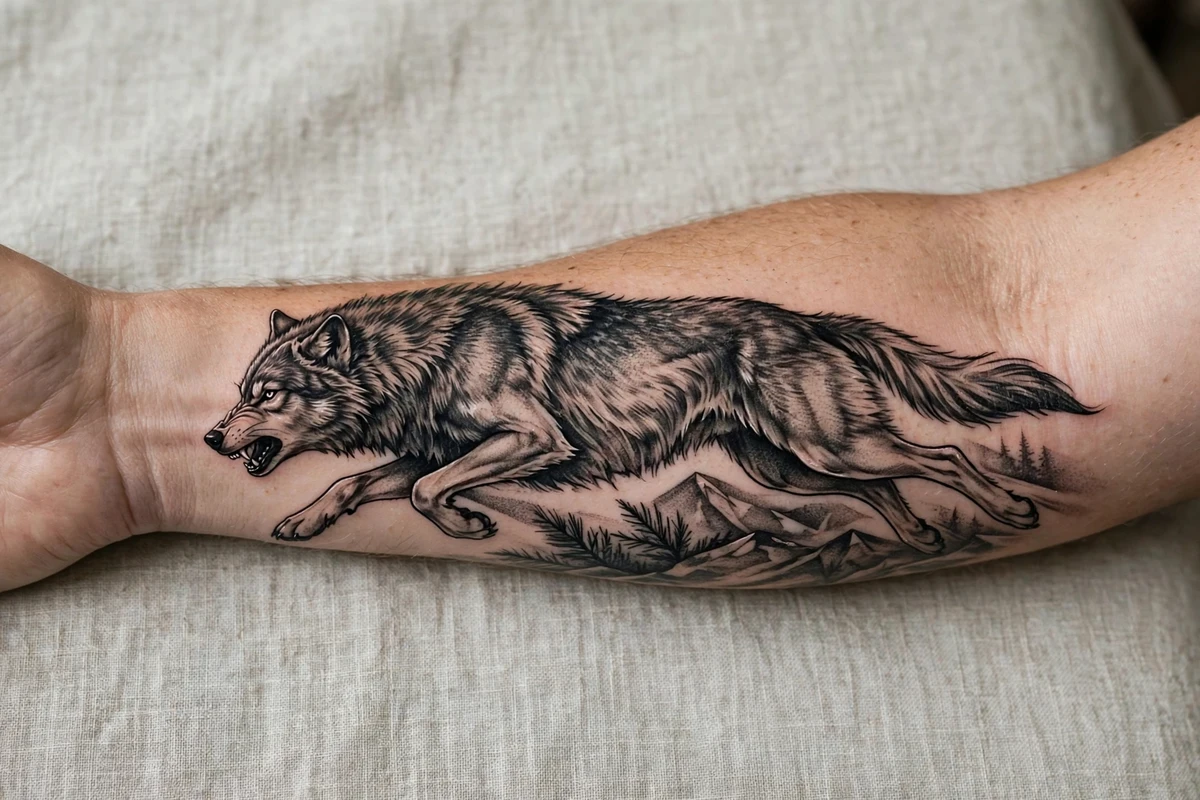
A wolf that wraps around the forearm turns your arm into part of the design. The wolf might run along the length of the arm, or its head might sit on the outer forearm with the body curving underneath. Either way, it moves with you, and it is on show most of the time.
Forearm tattoos are popular for a reason: they are easy to see and enjoy, they hurt less than many other spots, and they give the artist a long, fairly flat surface to work with. A wolf suits that shape well, since its body is long and lean.
This is a confident choice. A forearm wolf is not a tattoo you get and forget about — you will see it every day, which is exactly why people love it.
Placement: Outer forearm, running from wrist toward elbow.
14. Wolf Shoulder Piece
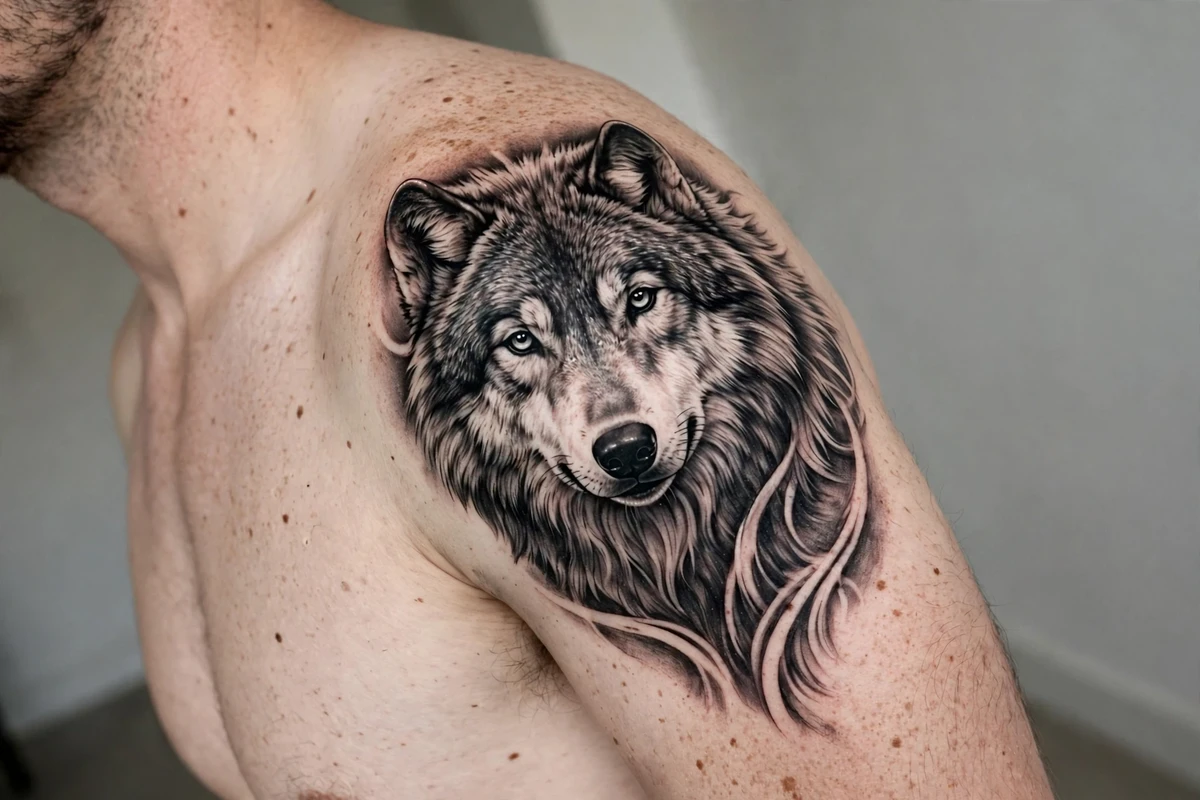
The shoulder is one of the classic places for a wolf. The curve of the muscle suits the shape of the animal, and the piece can flow down onto the upper arm or across the chest if you want it bigger. A wolf head on the shoulder looks like it is watching over you.
Shoulder tattoos also age well. The skin there does not stretch and shift as much as in other places, and the area is easy to protect from the sun. That matters for a design with fine shading or detail.
A shoulder wolf is a solid, timeless choice. It is visible in a vest or a sleeveless top, and covered the rest of the time — the best of both worlds for a lot of people.
Placement: Shoulder cap, flowing onto the upper arm.
15. Wolf and Forest Back Piece
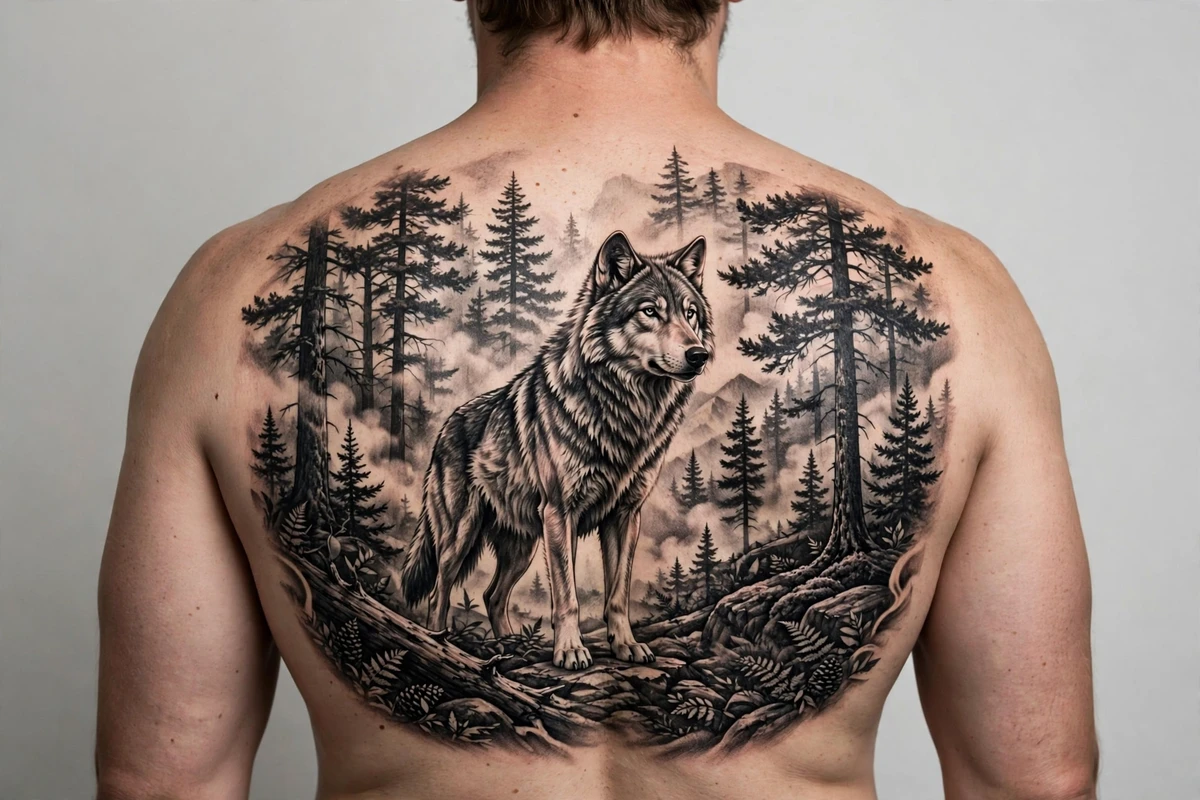
A full back piece with a wolf in a forest is a commitment, and it shows. Pine trees rise around the wolf, mist sits between the trunks, and the whole scene feels like a place you could walk into. It is less a tattoo and more a landscape that happens to be on skin.
Back pieces take several sessions, and they are not cheap in time or money. But they give the artist the largest canvas on the body, and a wolf in a forest is one of the designs that truly earns that space. The scale is what makes it feel wild.
This one is for someone who knows exactly what they want and is ready to see it through. Done well, it is the kind of tattoo people remember.
Placement: Full back or upper back, depending on how large you want the scene.
16. Wolf Chest Piece
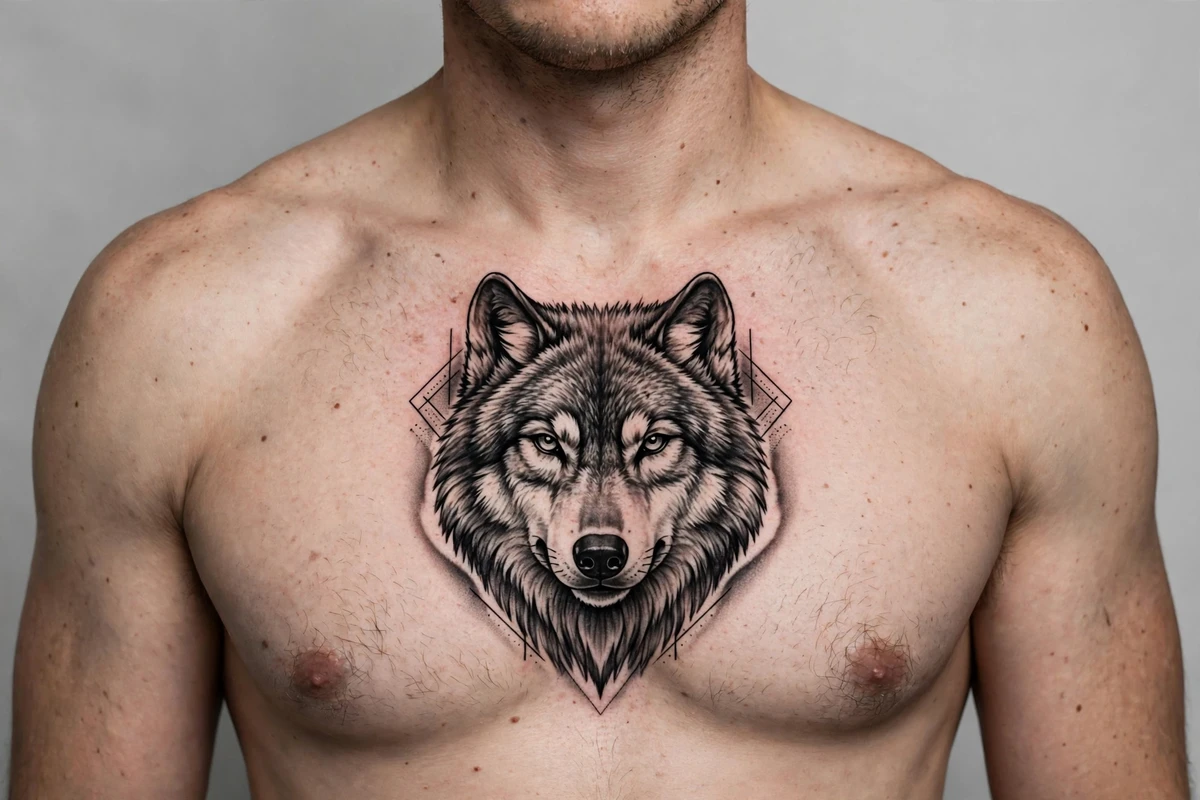
A chest piece puts the wolf right over your heart, and the meaning is hard to miss. It is a tattoo about what you carry closest to you — loyalty, family, courage — worn where it matters most.
Chest tattoos are symmetrical by nature, so many people choose a wolf head in the centre, or two wolves facing each other. The wide, flat space suits a portrait, and the design can spread toward the shoulders if you want it larger.
Be honest with yourself about the pain: the chest is one of the more tender spots to tattoo, especially near the collarbone and sternum. Most people say it is worth it, but it is not a gentle first session.
Placement: Centre of the chest, or spread across the upper chest.
17. Wolf Thigh Tattoo
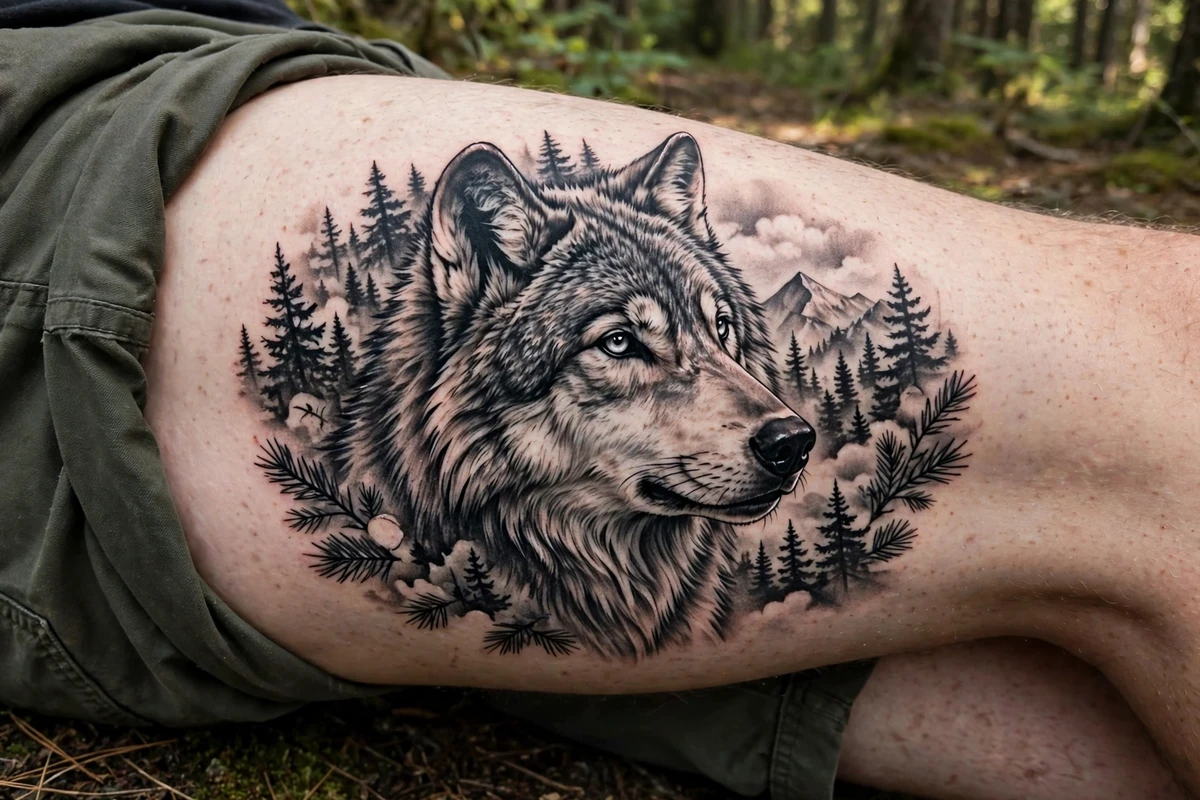
The thigh gives you a big, private canvas. A wolf here can be as large and detailed as you like, and you choose who sees it. That privacy is part of the appeal — it is a tattoo for you first, and for everyone else second.
Thigh pieces also tend to heal well and hold their detail, since the skin is less exposed to sun and friction than arms or hands. That makes the thigh a good home for a realistic portrait or a detailed scene with a forest or moon behind the wolf.
If you want a large wolf tattoo but you are not ready to wear it on show every day, the thigh is the natural choice.
Placement: Outer or front thigh, large enough for full detail.
18. Wolf Calf Tattoo
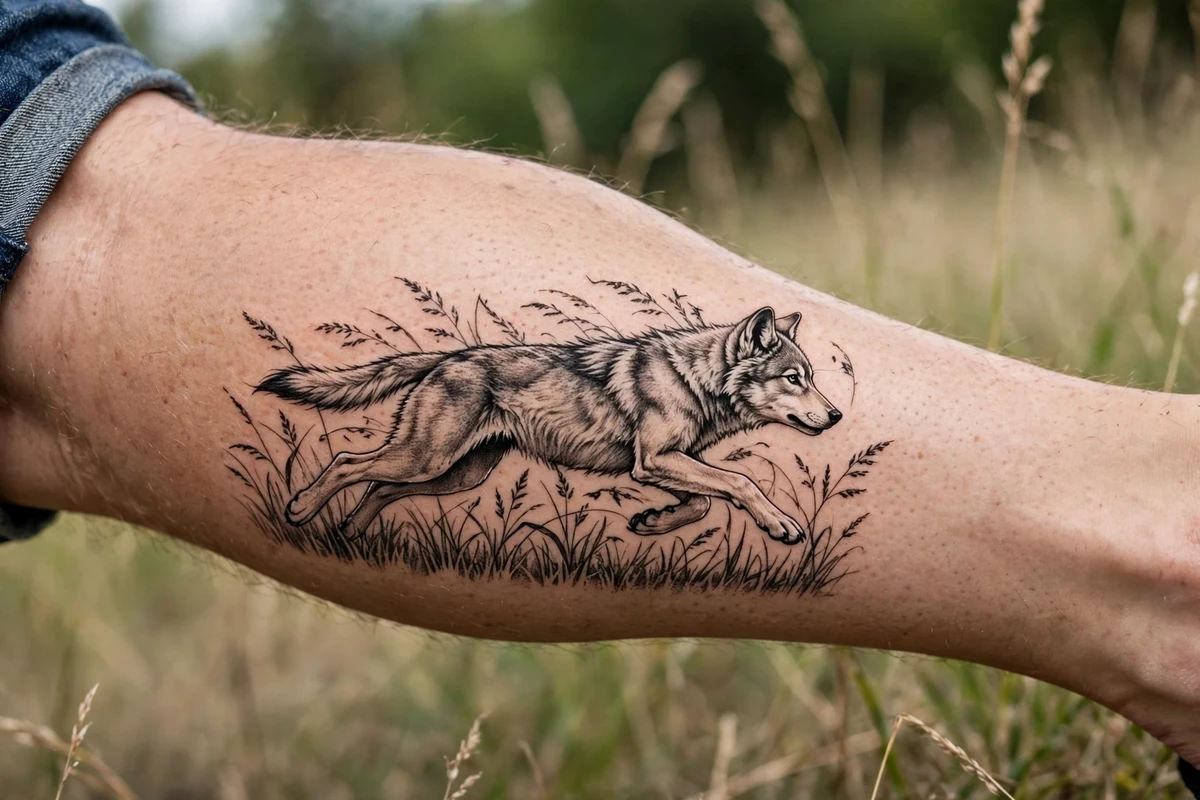
The calf is a great spot for a wolf that is long rather than wide — a running wolf, a howling wolf with its head raised, or a wolf standing in tall grass. The shape of the muscle carries the design well, and it looks strong from every angle.
Calf tattoos are also practical. They are easy to show off in shorts and easy to cover for work, they sit on fairly flat skin, and they tend to hold up well over time. The pain is moderate, and healing is usually straightforward.
A calf wolf suits someone active, or someone who wants a bold piece that is not on display all day. It has the presence of a large tattoo without the commitment of a full sleeve or back piece.
Placement: Outer calf, following the line of the muscle.
19. Wolf and Cub
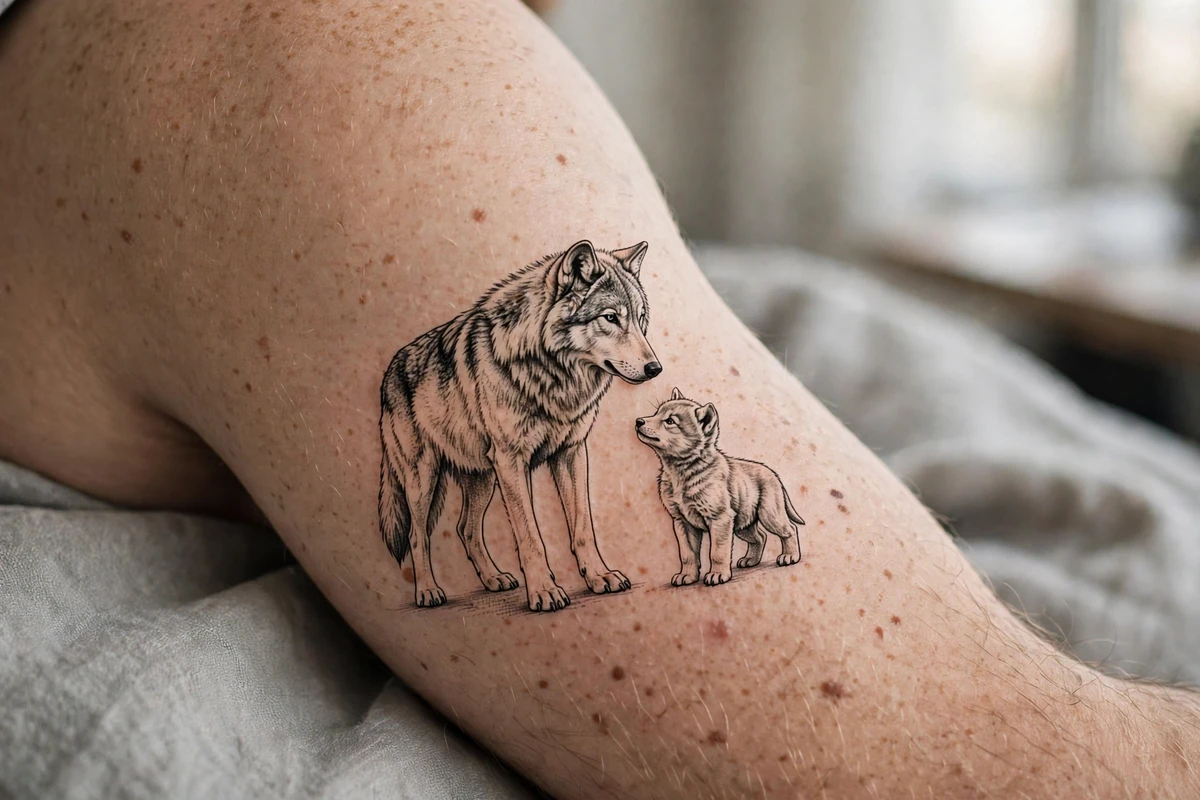
A wolf with its cub is a tattoo about family and protection. The adult wolf stands watch while the cub stays close, and the whole design says what words often cannot: I will look after mine. It is one of the most personal wolf designs you can choose.
Artists usually keep this piece soft rather than fierce — the adult wolf calm, the cub small and curious. Fine line or black and grey both work, and a little greenery or a few wildflowers can frame the pair without crowding them.
This design is often chosen by parents, but it fits anyone whose family is the centre of their life. It is a reminder, worn on the skin, of who you would stand in front of without thinking twice.
Placement: Upper arm or thigh, where the two figures fit together naturally.
20. Wolf Eye Close-Up
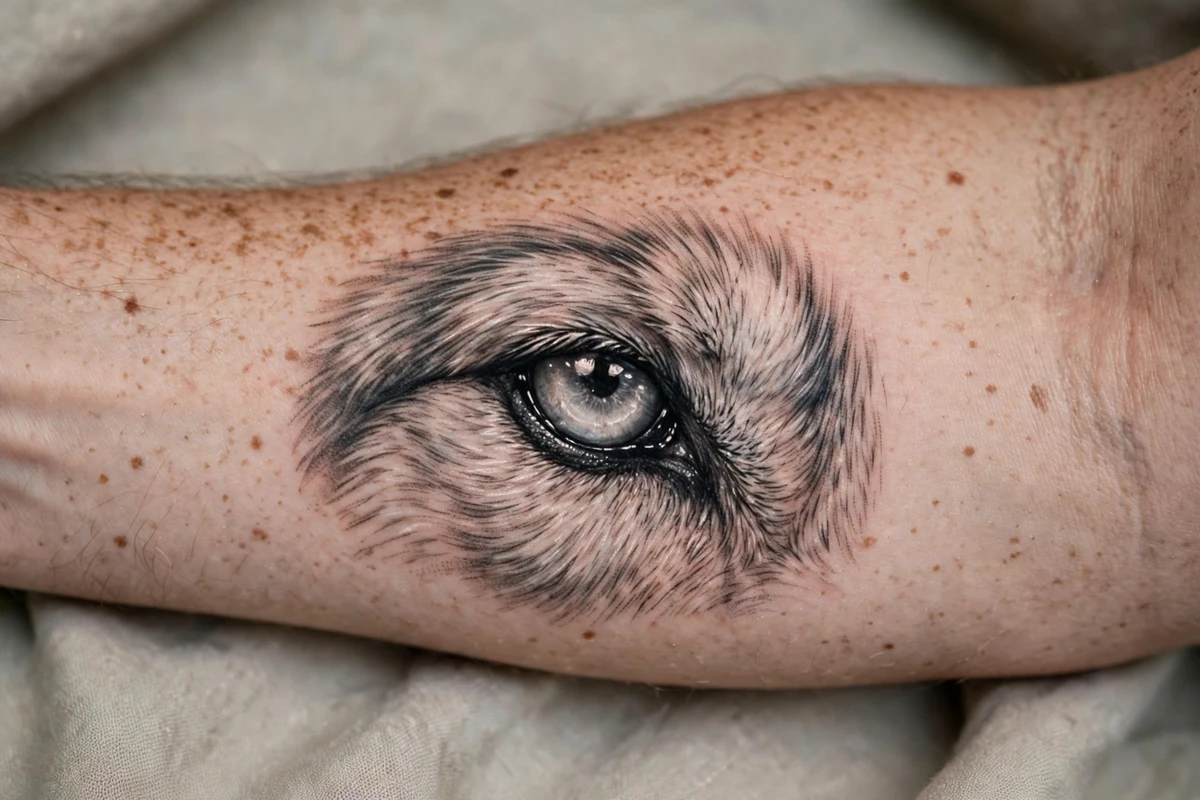
A wolf’s eyes are its most striking feature — pale, steady, and direct. A close-up of a single eye, or a pair of eyes staring out from a shadowed face, makes a tattoo that is intense without needing the whole animal.
This design depends on detail. The eye has to be drawn well, with the light in it and the fur around it, or the whole thing falls flat. It is a job for an artist who is confident with small-scale realism, and it is worth paying for that skill.
A wolf eye is a good choice if you want something bold but compact. It carries the feeling of being watched over — or of watching carefully yourself — in a space no bigger than a few inches.
Placement: Inner forearm or shoulder blade, where the detail can be appreciated up close.
21. Tribal-Inspired Wolf
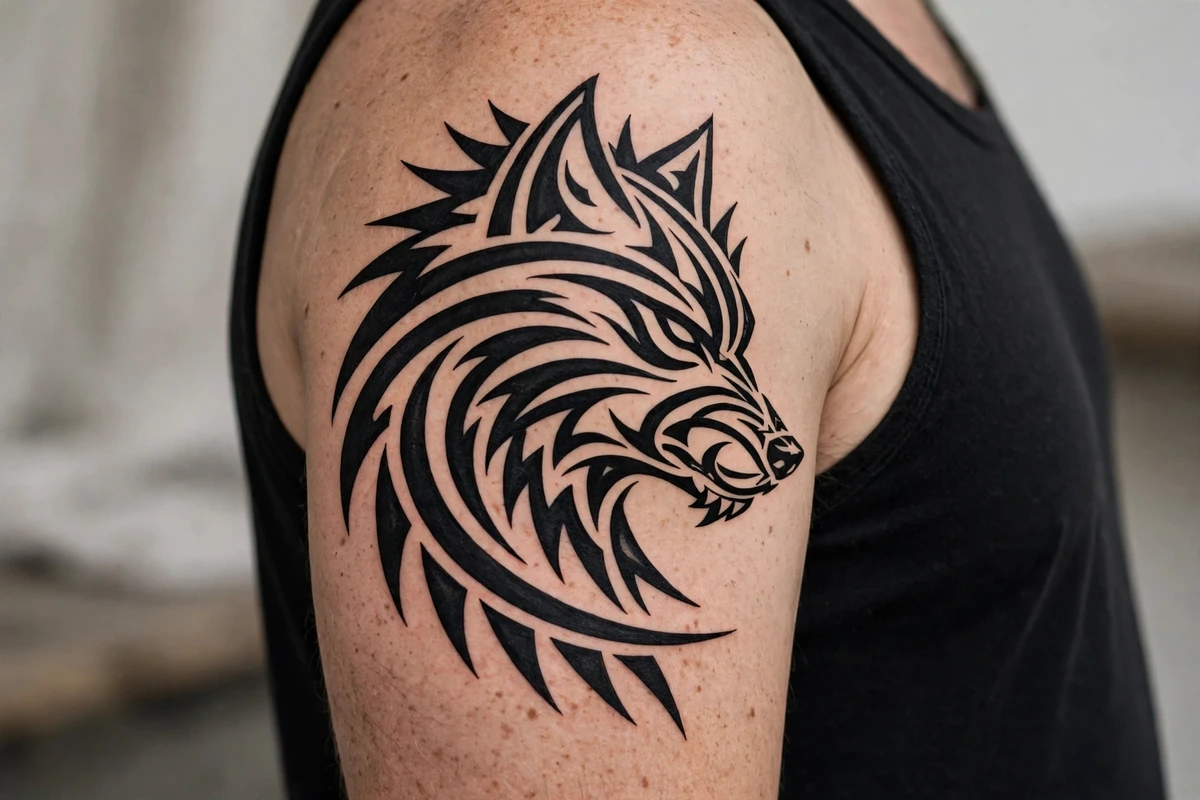
Tribal-inspired wolf tattoos draw on bold, flowing black patterns to shape the animal. The wolf might be built entirely from curved bands and sharp points, or a realistic head might sit inside a tribal frame. The style is graphic, powerful, and unmistakably a tattoo.
It is worth saying plainly: tribal patterns come from real cultures with real meaning, so if you choose this style, do it with respect. Work with an artist who understands the difference between borrowing a look and honouring a tradition, and keep the design your own rather than copying a sacred pattern.
Done right, a tribal-inspired wolf is a strong, timeless piece. The bold black shapes age well, and the flowing lines suit the shape of the body beautifully.
Placement: Upper arm, shoulder, or across the upper back.
Closing
A wolf tattoo is never just a picture of an animal. It is a choice about what you want to carry with you — loyalty, freedom, strength, family, or the courage to walk alone. The style you pick changes how that meaning reads, from the quiet lines of a minimalist design to the full drama of a back piece.
Take your time with the decision. Find an artist whose work you trust, talk through the size and placement, and let the design settle before you book. A good wolf tattoo will be with you for life, so it is worth getting it right. If you want more animal inspiration, take a look at our 21 owl tattoo ideas and 21 dragon tattoo ideas for designs with a different kind of power.