Introduction
Dragonflies spend most of their lives underwater as nymphs before emerging, shedding their old skin and taking to the air with shimmering wings. That single transformation is why so many people choose them as tattoos. A dragonfly marks a moment of change — a new chapter, a recovery, a decision to live differently — without needing a word of explanation.
The symbolism runs deeper than change alone. Dragonflies are light, fast and precise, able to hover, dart and change direction in an instant. In many cultures they stand for adaptability and living in the moment, a reminder not to get weighed down by what has already passed. Their wings catch the light in blues, greens and golds, so even a small tattoo can feel alive and full of colour. That mix of meaning and beauty is what keeps dragonfly tattoos popular year after year.
There is also a practical reason they work so well. The dragonfly’s long, slender body and wide wings suit almost any placement — a forearm, a shoulder blade, an ankle, the collarbone — and the design scales from a tiny fine-line piece to a large back tattoo. These ten ideas cover the full range, so you can find the one that matches what the dragonfly means to you.
10 Dragonfly Tattoo Ideas
1. Realistic Dragonfly with Detailed Wings
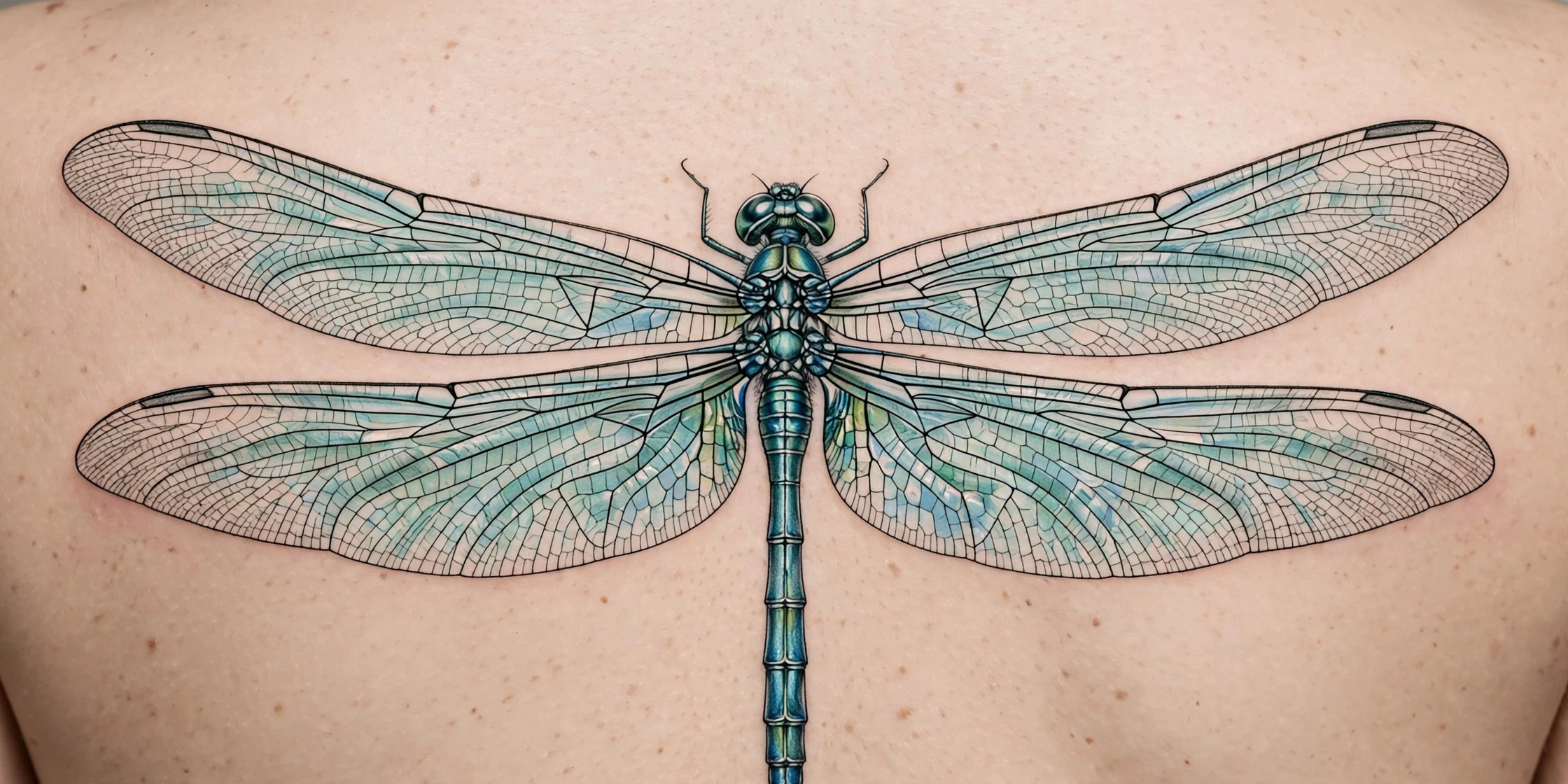
A realistic dragonfly tattoo is all about the wings. Fine lines trace the network of veins across each wing, while soft shading gives them a glassy, almost transparent look. The body is kept slender and segmented, often in deep blue or green with a hint of metallic shine, so the finished piece looks like a dragonfly that has just landed on the skin. It is the design to choose if you love nature and want a tattoo that rewards a closer look.
This style needs a skilled artist and a little more space than a minimal design, because the detail is what makes it work. A forearm, shoulder blade or calf gives the wings room to spread without the lines blurring together over time. Done well, it is a striking piece that suits anyone who wants a small piece of the natural world, carried with them.
Placement: Forearm, shoulder blade or calf, where the wings have room to spread.
2. Watercolour Dragonfly
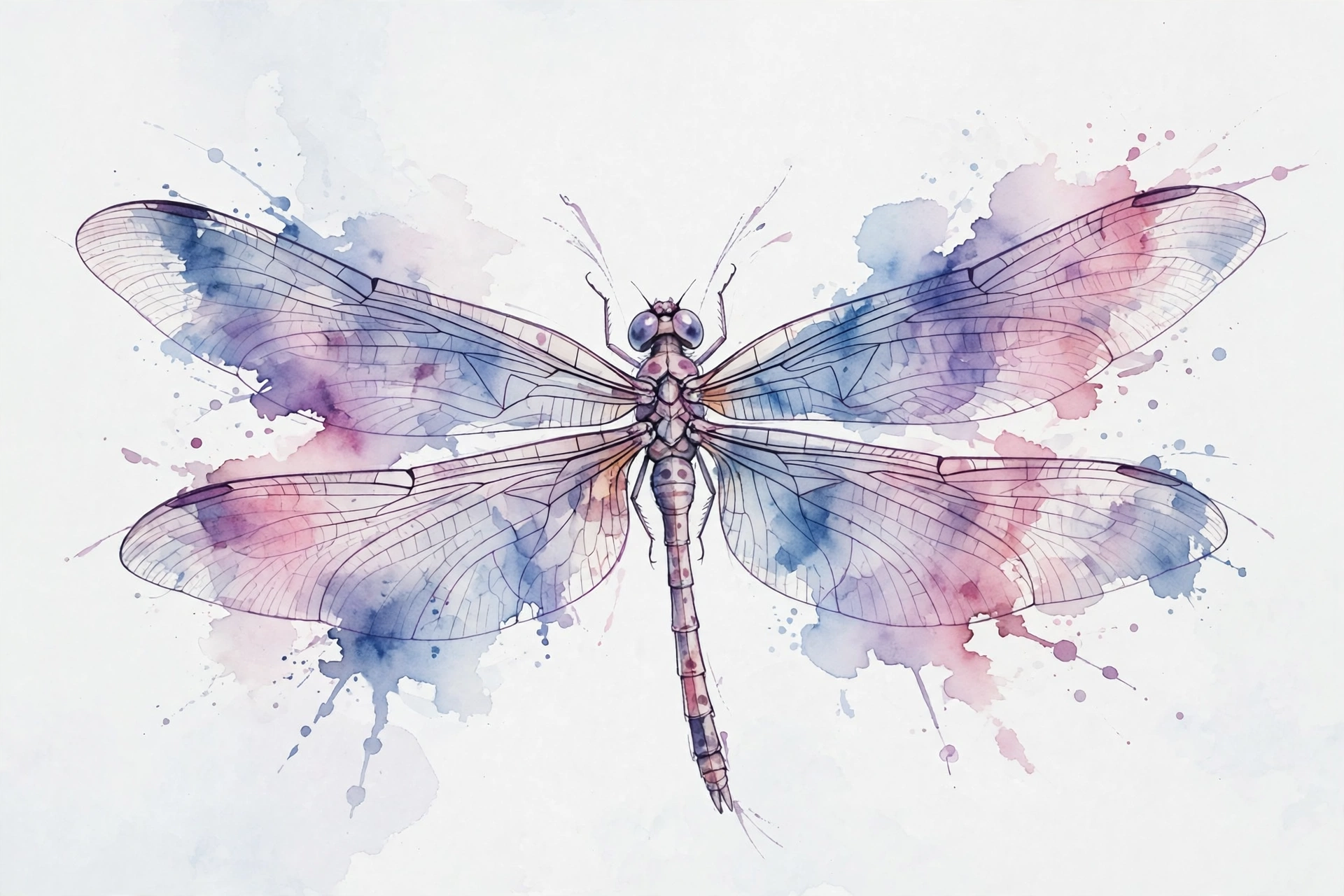
A watercolour dragonfly trades sharp outlines for soft washes of colour that bleed gently into the skin. Blues, purples, pinks and greens flow across the wings and trail off like paint on wet paper, with a few darker lines to hold the shape of the body. The result feels light and dreamy, more like a painting than a traditional tattoo, and no two watercolour pieces ever look quite the same.
This is a good choice if you want colour without a heavy outline, and it works best at a medium size where the washes have room to blend. Watercolour softens and fades faster than blackwork, so a good artist will build in enough contrast to keep it readable years later, and sunscreen plus the occasional touch-up will keep it vivid.
Placement: Shoulder, upper arm or thigh, where the colour washes have space to blend.
3. Minimalist Line Dragonfly
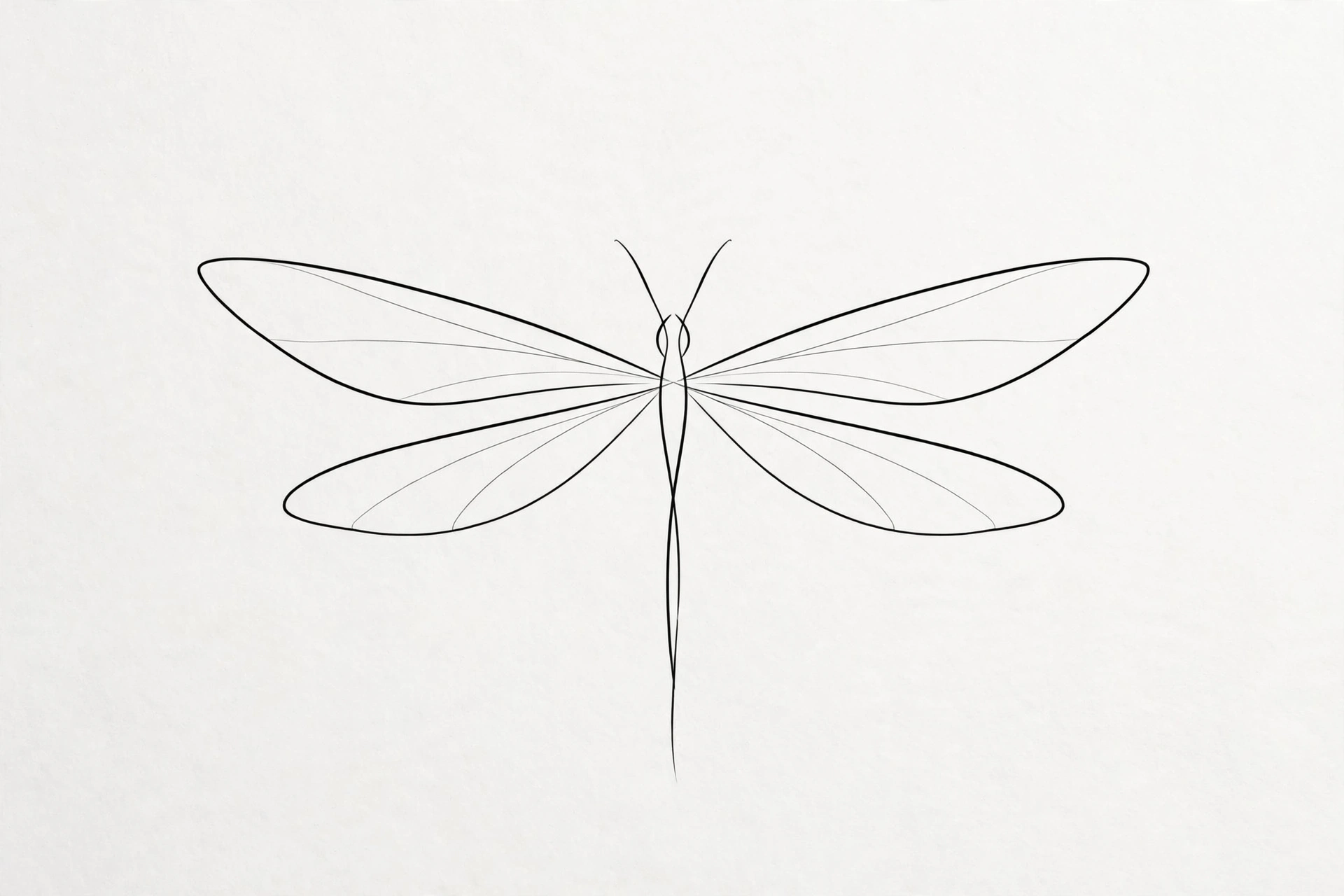
A minimalist line dragonfly is made from a few clean, unbroken lines: two wings, a slim body, a pair of antennae, and nothing else. There is no shading and no colour, just the essential shape of the insect, drawn with confidence. Its simplicity is the whole point — it is quiet, elegant and easy to wear, and it suits people who prefer tattoos that whisper rather than shout.
Because the design is so light, it works at a very small size and heals quickly, and it is one of the most forgiving choices for a first tattoo. If you ever want to build on it later, a small flower, a dot or a word can be added without disturbing the original lines.
Placement: Wrist, ankle or behind the ear, for a small and subtle piece.
4. Geometric Dragonfly
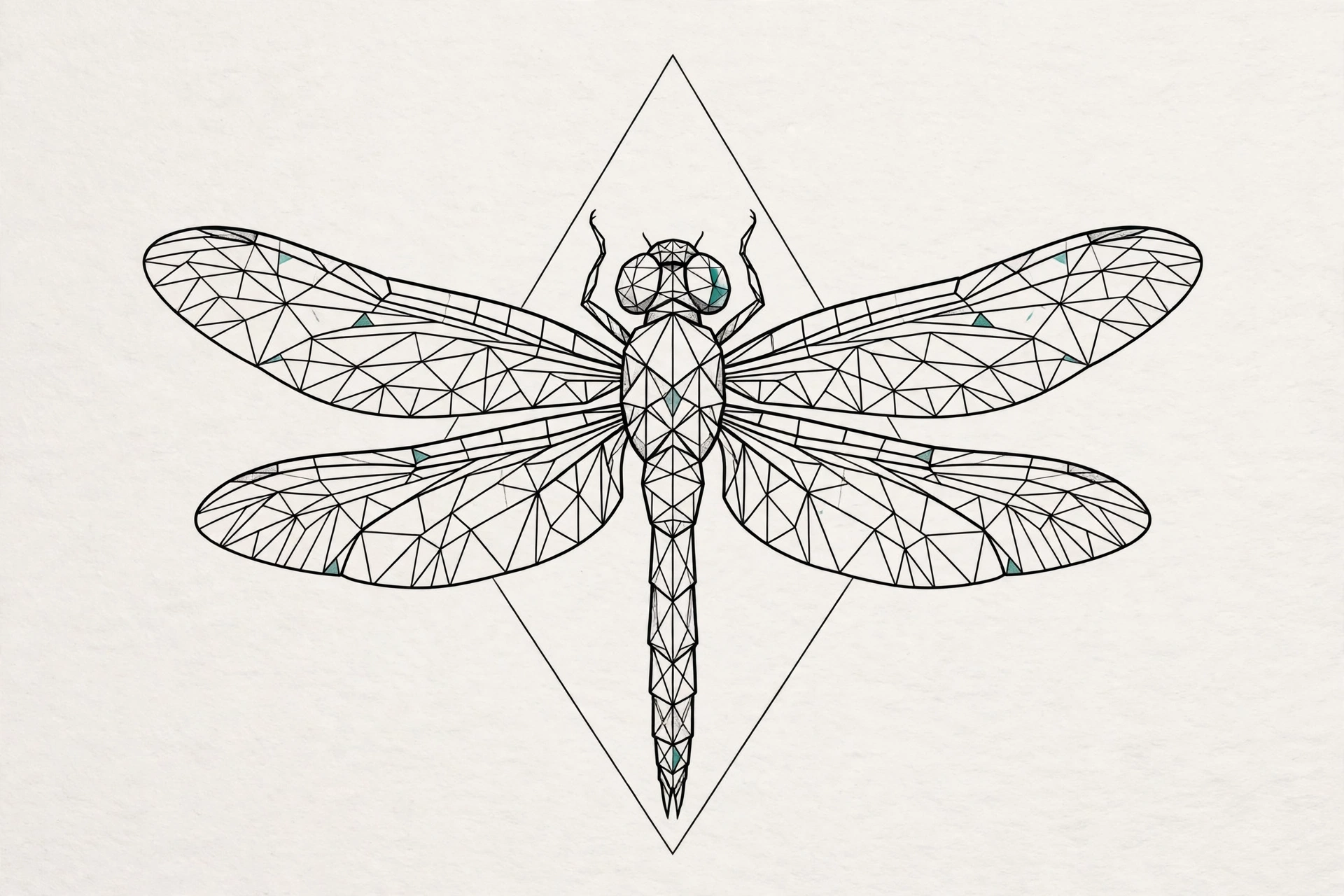
A geometric dragonfly breaks the insect down into triangles, lines and shapes, turning a creature of nature into something precise and modern. The wings become sharp facets, the body a series of clean segments, and the whole design often sits inside a triangle or circle that frames it like a piece of jewellery. Black ink keeps it crisp, though a single accent colour — a touch of teal or gold — can lift the whole piece.
This style suits anyone who likes structure and symmetry, and it pairs well with other geometric tattoos if you are building a sleeve or a collection. The bold shapes hold their definition well over time, so ask your artist to keep the angles sharp and the spacing even.
Placement: Upper arm, chest or back of the neck, where the symmetry can sit centred.
5. Dragonfly and Lotus
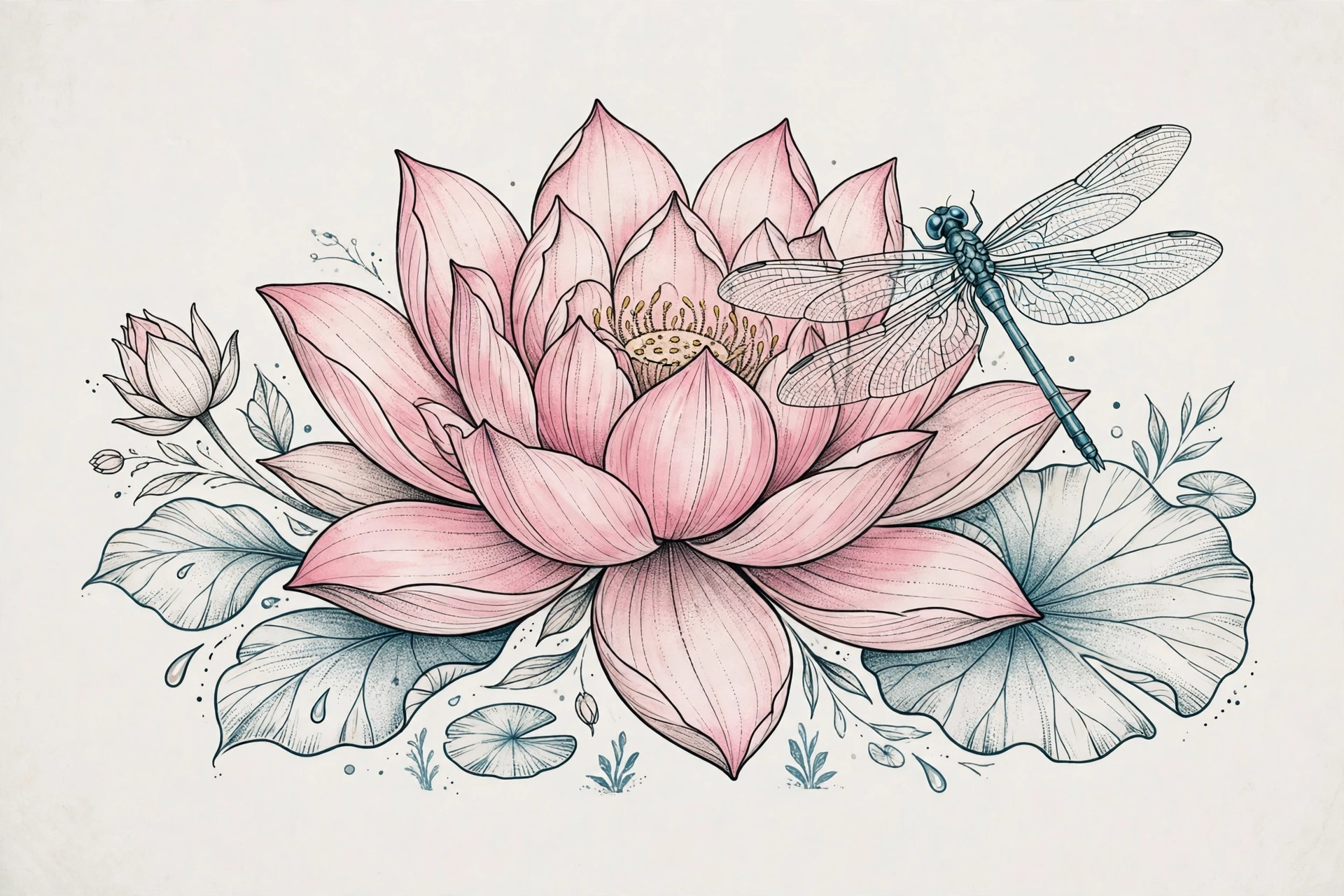
A dragonfly resting on a lotus flower brings two powerful symbols together. The lotus grows through muddy water to bloom clean on the surface, a long-standing symbol of purity and rising above difficulty, while the dragonfly stands for change and lightness. Together they tell a story of coming through something hard and reaching a calmer place, which is why this design is so often chosen after a difficult period in someone’s life.
The lotus gives the dragonfly a natural anchor: the broad petals balance its thin body and wide wings, and the design can stay simple in black ink or be filled with soft pinks and greens. It reads best at a medium to large size, where the petals can open out fully.
Placement: Shoulder blade, thigh or upper back, where the lotus petals can open out fully.
6. Dragonfly and Flowers
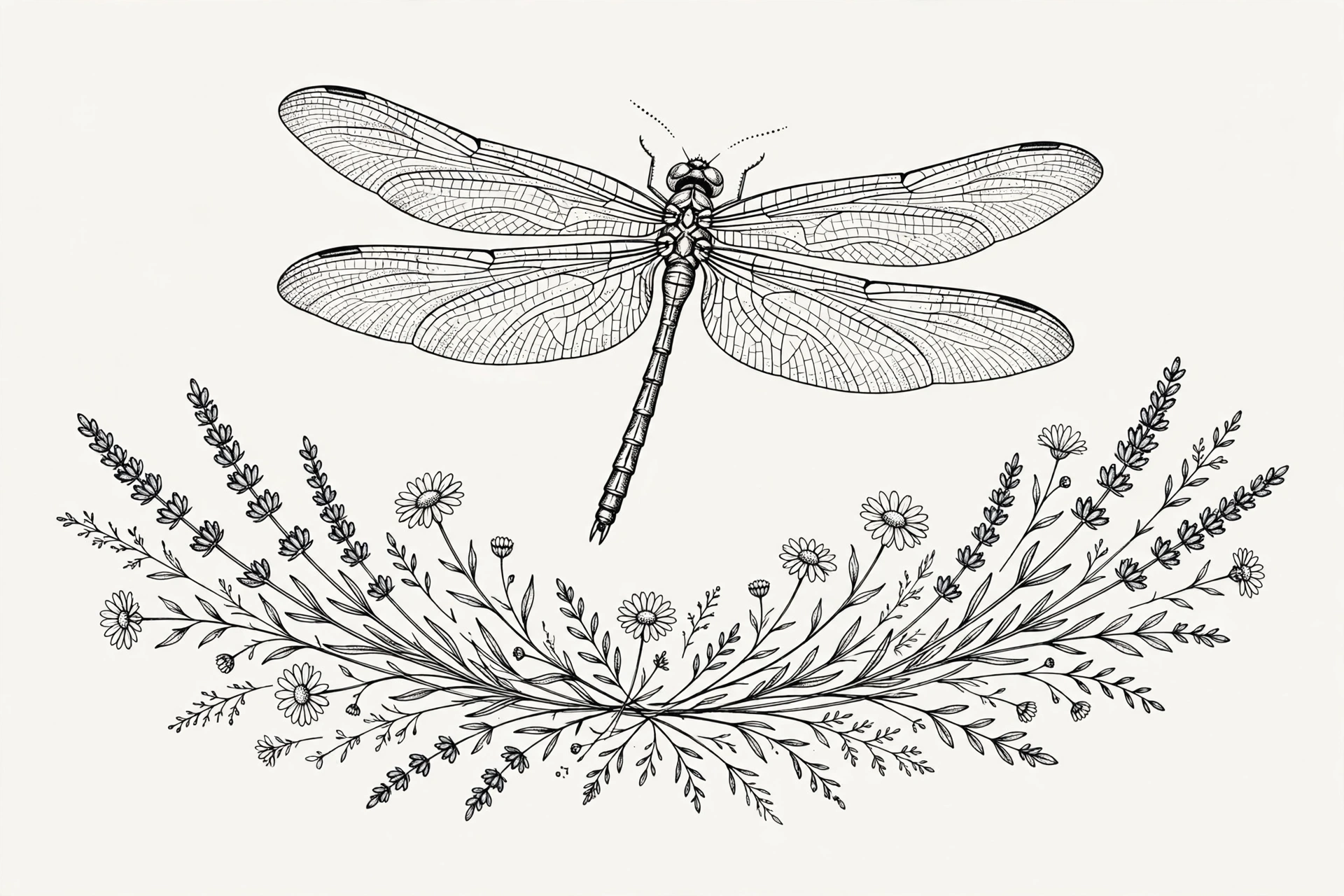
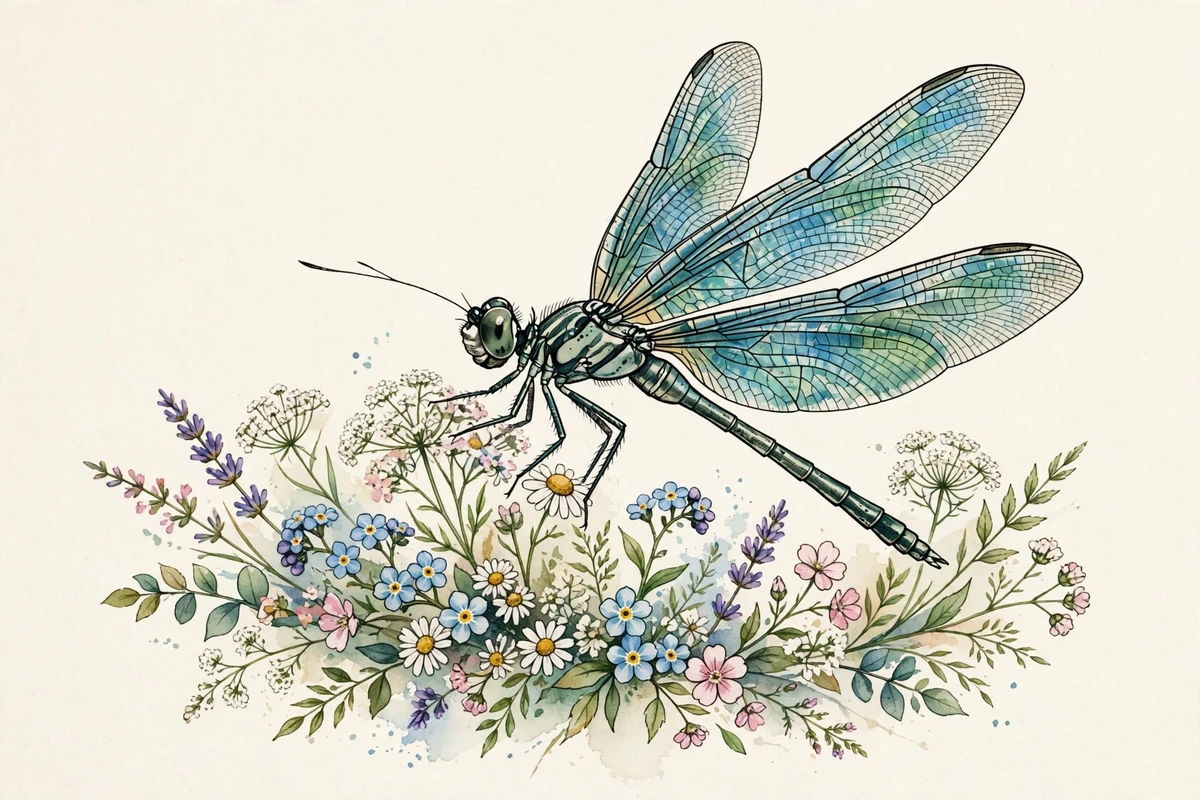
Flowers soften a dragonfly and give it a setting, turning a single insect into a small scene. Wildflowers, lavender sprigs or a single bloom tucked beneath the wings all work, and the choice of flower can add its own layer of meaning — lavender for calm, a daisy for new beginnings, a rose for love. The dragonfly stays the focus, but the flowers make the tattoo feel fuller and more personal.
It can be delicate and fine-line, with thin stems and tiny buds, or bold and colourful, with full blooms in rich shades. It also suits long, narrow placements, since a stem can follow the line of an arm or leg while the dragonfly rests at the top. Bring a flower that means something to you, and the design becomes yours in a way no flash sheet can match.
Placement: Forearm or along the spine, following the natural line of a stem.
7. Black-and-Grey Dragonfly
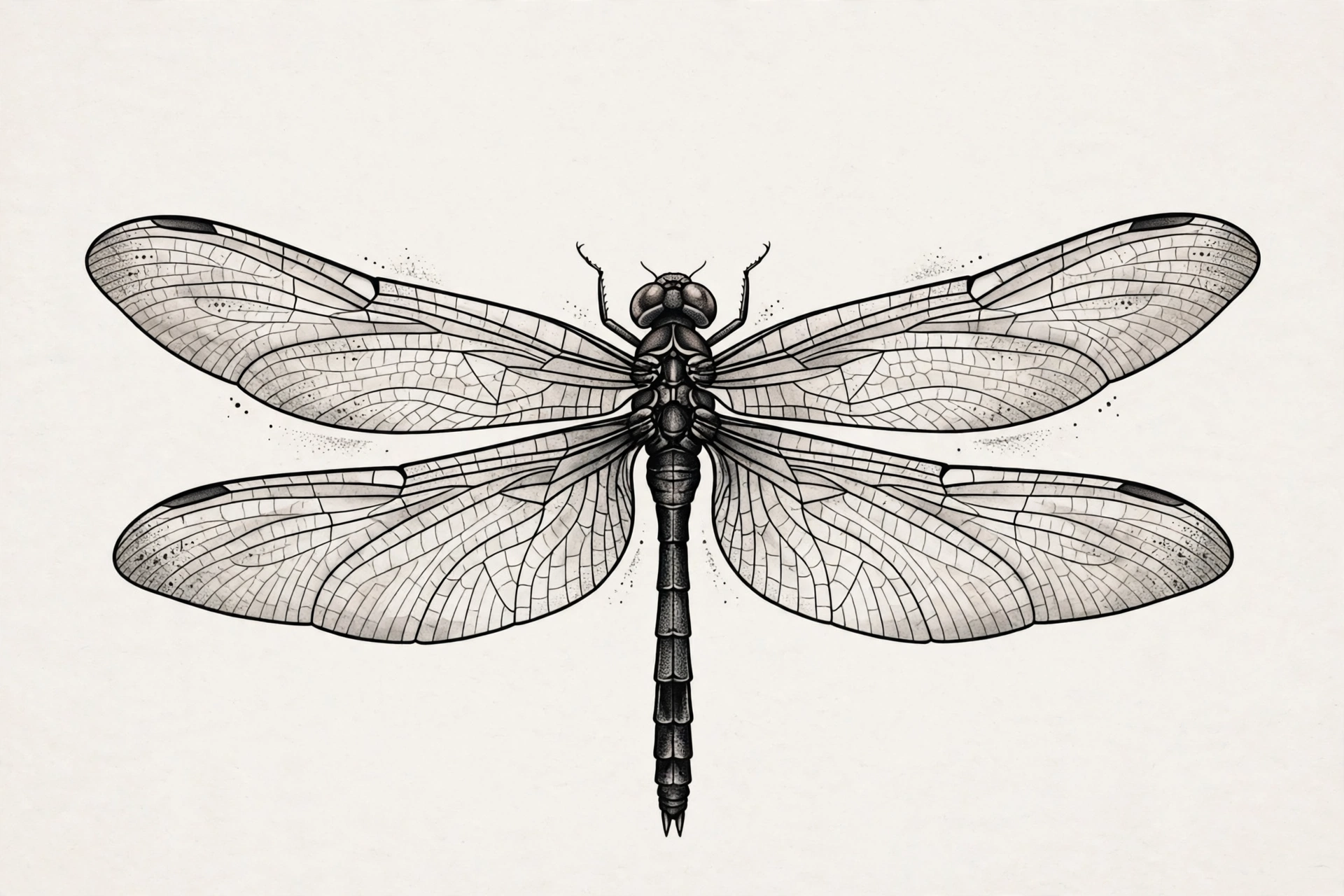
A black-and-grey dragonfly relies on shading rather than colour to create depth. The wings are built up with soft grey gradients that suggest transparency, while the body is shaded dark enough to stand out against them. Without colour to lean on, the quality of the shading does all the work, and a good artist can make the wings look almost wet with light.
Black and grey hold up better over time than bright colour, and the design suits almost any skin tone. It fits easily into an existing blackwork collection, and looks just as good large on a thigh as small on a wrist. Keep the wings light and the body dark, and the contrast will carry the whole piece.
Placement: Thigh, upper arm or wrist, where the shading can be appreciated up close.
8. Small Dragonfly on the Collarbone
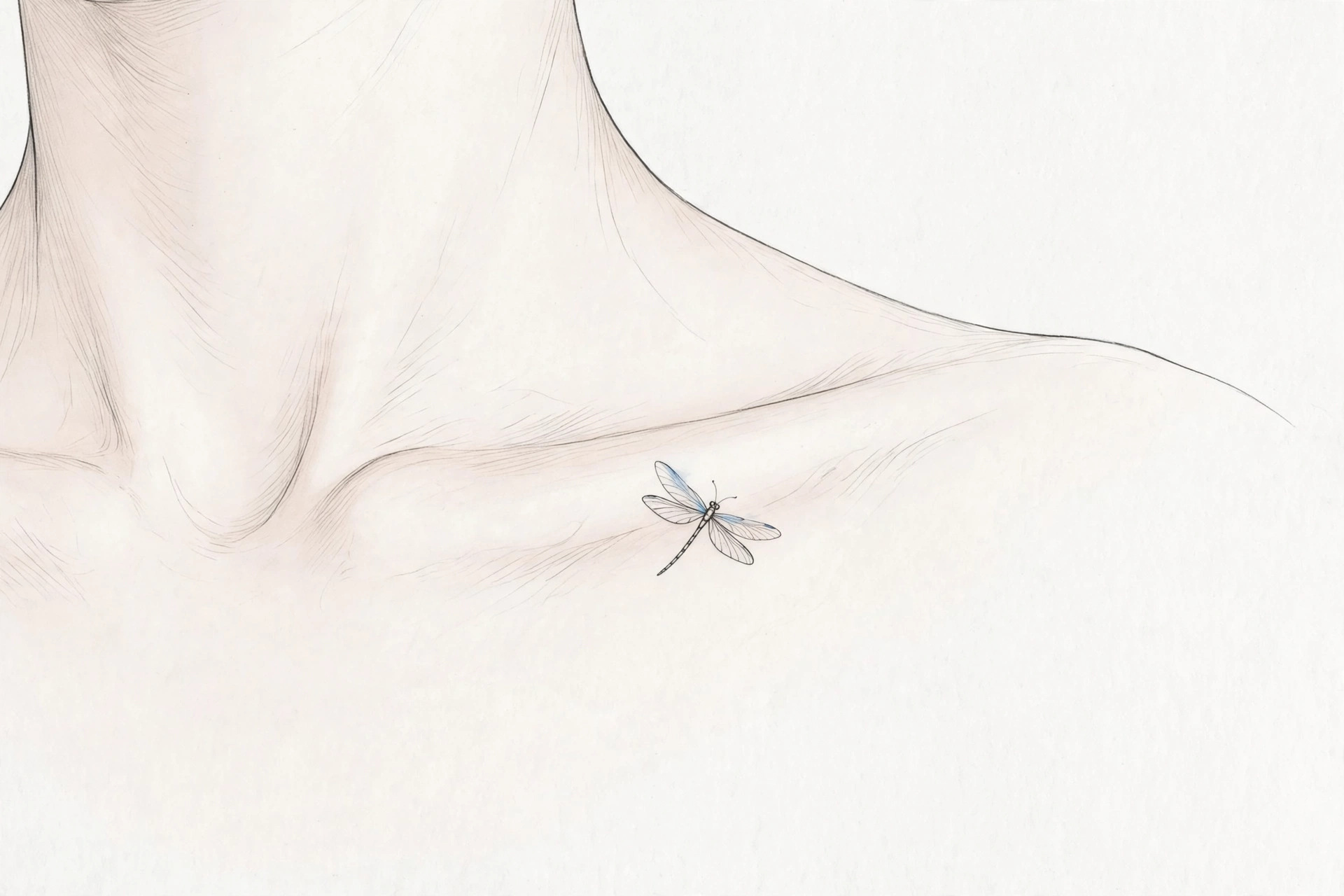
A small dragonfly on the collarbone is one of the most elegant placements a dragonfly can have. The insect sits just above the bone, its wings following the gentle curve, visible with an open neckline and easy to cover with a higher collar. The design is usually fine-line, sometimes with a single colour accent on the wings, and it takes very little time in the chair.
The collarbone is bony, so expect it to sting a little more than a fleshy spot, but the piece is small and the session is short. The skin there moves less than on a joint, so fine lines tend to hold well. It is a popular first tattoo, and one you can choose to show or hide.
Placement: Just above the collarbone, following its natural curve.
9. Dragonfly and Moon
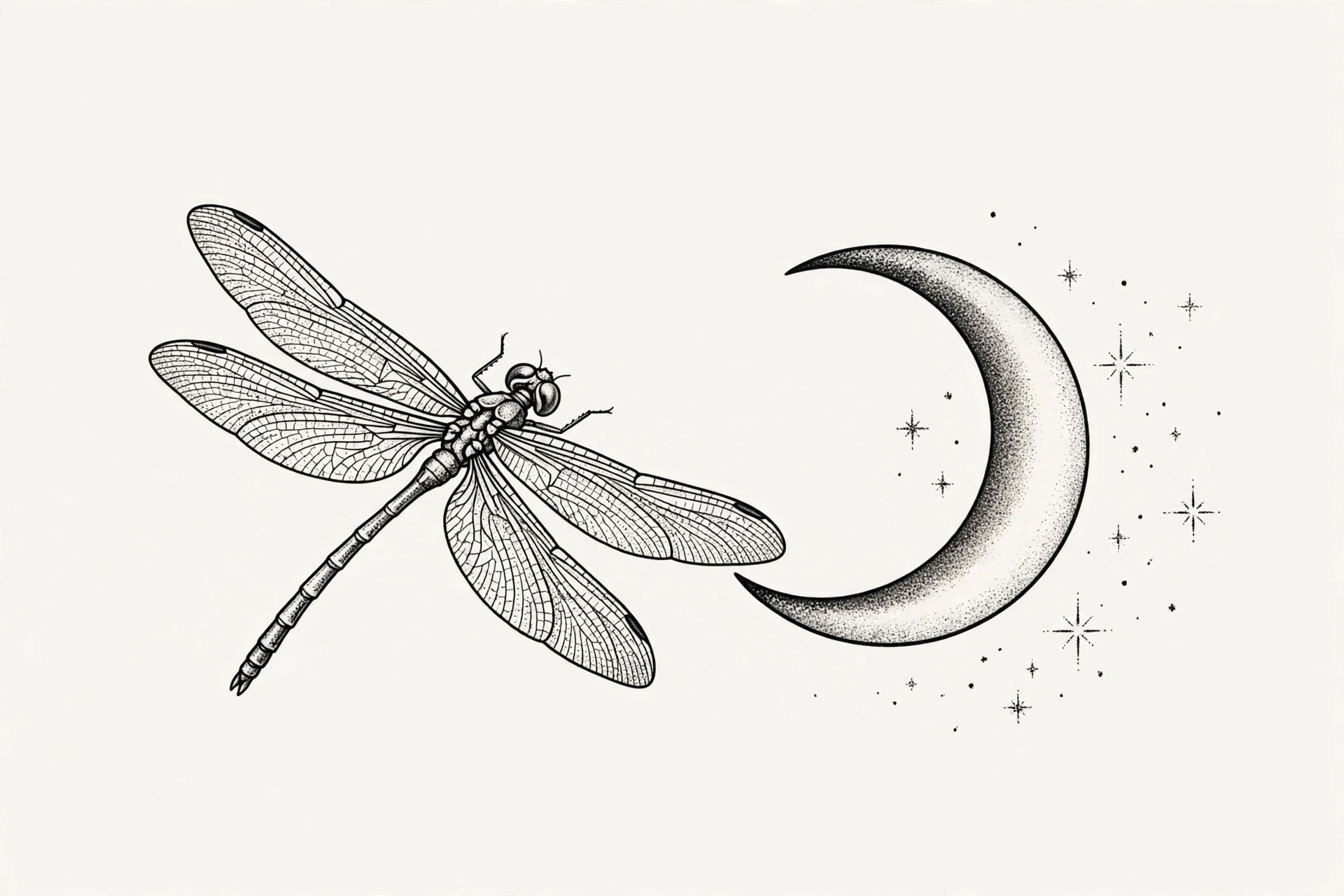
A dragonfly with a crescent moon turns the design into something quiet and a little mysterious. The moon, often shaded or filled in, sits behind or below the dragonfly, and the contrast between the dark moon and the light, open wings gives the tattoo a calm, night-time feeling. Some people add small stars or dots around the pair, which keeps the composition from feeling empty without adding clutter.
The moon adds meaning, too: cycles, intuition and the parts of life that change in their own time — a natural partner for a creature defined by transformation. It works well in black and grey, but a deep blue or purple wash on the moon can make the whole piece glow.
Placement: Shoulder, back of the arm or ribcage, with the moon framing the dragonfly.
10. Dragonfly on a Branch
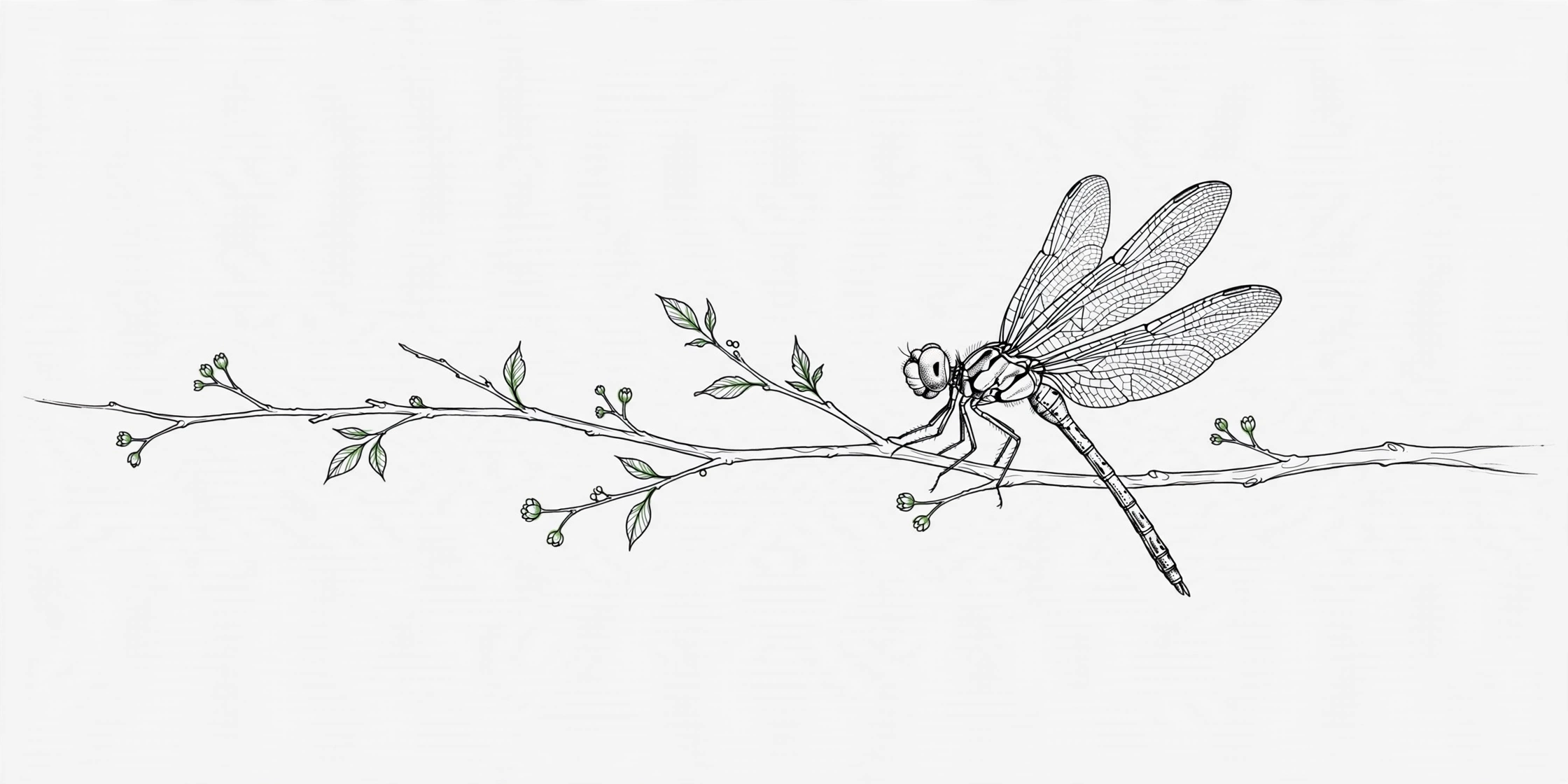
A dragonfly perched on a slender branch is a small scene rather than a single image, and it is one of the most natural-looking designs a dragonfly can be part of. The branch gives the insect a place to rest, and a few leaves or tiny buds along the stem add balance without taking attention away from the wings. Done in fine black lines with a touch of green, it feels like a sketch from a field notebook.
What makes this design work is its stillness. Dragonflies are always in motion in real life, so catching one at rest feels special, like a moment held still. The branch can also be extended later without reworking what is already there. Like feather tattoos, it belongs to the family of light, nature-inspired designs that carry a lot of meaning in very little ink, and it suits anyone who wants a tattoo that feels calm rather than loud.
Placement: Forearm or shin, where the branch can run vertically.
Closing
A dragonfly tattoo can be many things: a mark of a change you have already made, a reminder to stay light when life gets heavy, or simply a beautiful insect you have always loved. These ten designs show how much range one small creature offers, from a single fine line to a full watercolour scene.
Take your time choosing. Look at artists who specialise in the style you want, check how their work has healed, and talk through the placement before you commit. Pick the version that will still mean something to you years from now, and it will be worth every minute in the chair.