
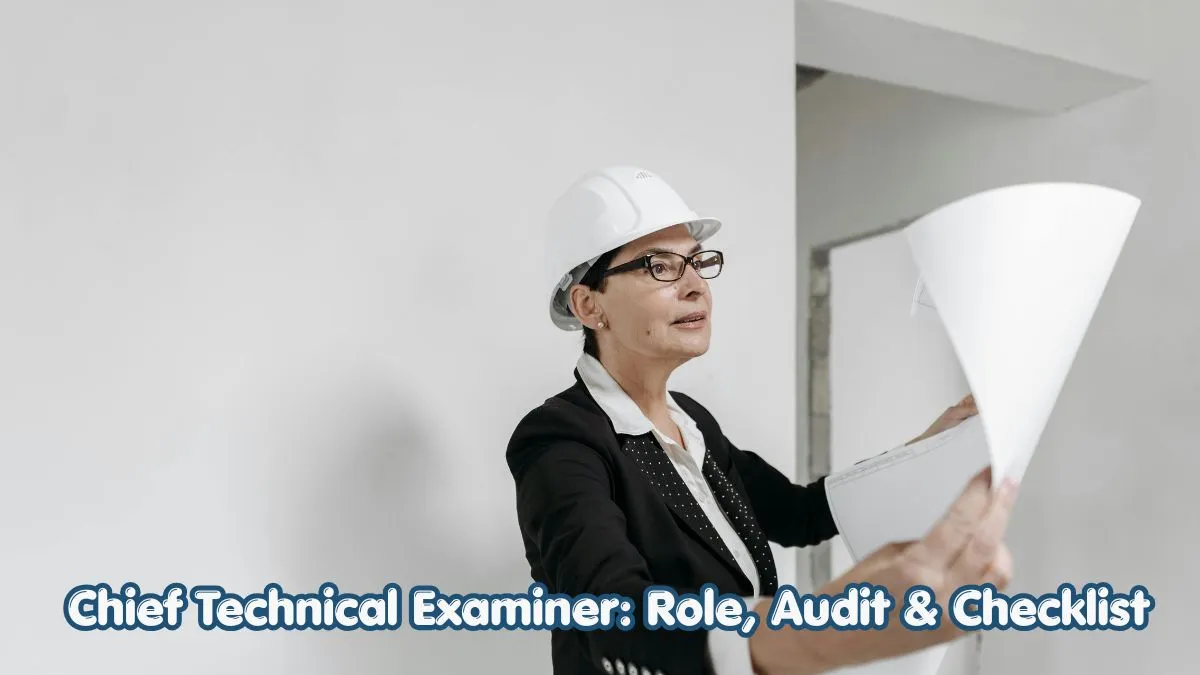
Public infrastructure projects are really deals that cost a lot of money and have many people working on them. They also have to meet high standards. If something goes wrong it can be very expensive. The construction might not be good. Sometimes it can even lead to corruption. That is why the chief technical examiner is so important.
The chief technical examiner is like a referee who makes sure that public projects are done the way they are supposed to be. They check to see if the projects meet the standards follow the rules and are financially sound.
Nowadays everyone wants to know how the chief technical examiner does their job. This includes government departments, contractors and engineering companies. The chief technical examiner helps with all kinds of projects like roads and bridges, hospitals and government buildings. Their main goal is to make sure that public money is used correctly and that projects are finished without any fraud or technical problems. The examiner plays a role in ensuring that public infrastructure projects are done right and that is why the role of the chief technical examiner is so important, to public infrastructure projects.
What Is a Chief Technical Examiner (CTE)?
A examiner or a CTE is an important person who checks on government projects to make sure they are done correctly. The chief technical examiner usually works with the Central Vigilance Commission, which’s like a watchdog group. They do checks to make sure everything is okay.
The main job of a technical examiner is to look at projects from start to finish. A examiner checks things like plans what people are bidding, the quality of materials, measurements, how well contractors are doing and the final bill. This is different from the people who are actually working on the project because the chief is not part of the team so they can give an opinion. This makes the whole process fair and honest.
A chief is usually someone who has a lot of experience as an engineer and knows a lot, about construction buying things, contracts and managing works. The chief technical examiner has to know about all these things to do their job properly like checking on construction projects and procurement projects. The examiner is very important to make sure that government-funded projects are done correctly.
Why the Chief Technical Examiner Role Exists
The chief is an important job because big public projects can have a lot of problems. These problems can be things like costs that’re too high bad materials work that takes too long and money being used in the wrong way. If there is no one to check on these projects the people, in charge might okay their own mistakes.
The chief technical examiner helps stop these problems by looking at every part of the project. The chief technical examiner makes sure that the company doing the work does not get paid much money that the project is done according to the rules and that the finished work is what was originally planned.
The chief technical examiner also helps keep money safe. If something is not right it can be found out early. The government does not lose extra money. That is why the examiner is such a role when it comes to public projects and buying things.
Qualifications and Expertise of a Chief Technical Examiner
A chief technical examiner is a senior engineer. They have a lot of experience in things like works and project management. Most of the time examiner officers are from places like CPWD, Railways, MES, highways, irrigation or big engineering organizations.
To become a technical examiner you need to have some things. These are:
- Strong knowledge of engineering
- Experience with managing projects and supervising sites
- You need to understand the laws about contracts and how things are bought
- You need to know the rules that the Central Vigilance Commission makes and the regulations about money
- You need to be able to find problems with things like when something’s not done correctly or when money is not used properly
A chief also needs to be very good, at analyzing things and making reports. This is because every time they find something they need to have facts and measurements and technical evidence to support what they are saying about the technical examiner job. The chief technical examiner has to be very careful when they are doing their job as a technical examiner.
Core Responsibilities of a Chief Technical Examiner
The chief technical examiner does a lot of things when a project is going on. One of the things a chief technical examiner has to do is look over the project estimates and make sure the technical stuff is okay. Another thing they have to do is check the documents to make sure everything is fair when people are bidding on the project.
When the construction is happening the chief goes to the site to check some things, including:
- Material quality
- Site records
- Measurement books
- Progress of work
- Safety and technical standards
The c examiner also makes sure the contractor is using the amount of materials like cement and steel and other things. When the project is all done the chief technical examiner checks the bills and the certificates that say the project is complete and the reports that talk about the quality of the work before they pay the contractor. The examiner has to do all these things to make sure the project is done correctly and the examiner is, in charge of this.
Stages of a CTE Audit Process
A chief technical examiner audit usually happens in four steps.
Pre-Tender Stage
At this point theexaminer reviews the DPR, project scope, estimates and approvals. The examiner makes sure the cost is realistic and that no extra items are included. The chief checks everything carefully.
Tender Stage
During evaluation the chief checks if the eligibility criteria are fair. The chief also makes sure no contractor is being favored with conditions.
Construction Stage
This is the crucial stage for a chief. The examiner conducts site inspections to compare the work with approved drawings and specifications. The examiner checks measurements, work quality and how well the work is done.
Post-Completion Stage
After the project is completed the examiner reviews the records, bills and certificates. This ensures that no extra payment is made and that the project is ready, for use. The chief technical examiner audit is now complete.
The Chief Technical Examiner Audit Checklist
Every examiner follows a checklist when they do an inspection. This checklist is really helpful for the examiner to find technical and financial problems fast.
The main things that are included in a technical examiner checklist are:
- Administrative approval and technical sanction
- Tender documents and contract agreements
- Material test reports
- Measurement books and site registers
- Bank guarantees and insurance documents
- Running bills and final payment records
- Completion certificates and defect liability records
By using this checklist the chief technical can do their job more easily. The chief technical examiner uses this checklist to make sure everything is okay. The chief technical checklist is very important for the chief technical examiner to do an inspection.
Common Red Flags Found in CTE Audits
A examiner usually sees the issues in different projects. The examiner finds things like estimates that’re too high bad materials being used fake numbers and paperwork that is not complete.
The chief technical examiner may also come across:
- rates that were not approved properly
- Test reports that are missing
- Design changes that were not allowed
- Measurements of quantity that’re wrong
- Delays that do not have a good reason
When the chief sees these problems with the chief technical examiners projects it is a concern. The chief technical has to look at these problems, with the technical examiners work and figure out what is going on. The chief has to check the work of the technical examiner to make sure everything is okay.
Real Examples and Case Studies
The chief reports have shown some problems with public works. For example a chief found out that a company that builds roads said they used asphalt than they really did. The department. Got back the extra money they paid.
There was another case where the examiner saw that the rules for a job were written to help one company get it. Because of the technical examiner report they cancelled the job and started over with fair rules.
These cases show that the examiner does a lot of things. The examiner finds problems. Also makes things more transparent and fair for everyone, which helps to increase competition, among companies and the chief technical examiner makes sure that everything is done correctly.
How Organizations Can Prepare for a CTE Inspection
Companies should not wait for a examiner notice to start making their records better. The best way to get ready for a technical examiner inspection is to keep all documents up to date all the time.
To get ready for a technical examiner visit project teams should do the following things:
- Keep the measurement books updated so they are always current
- Maintain site registers
- Conduct regular material testing to make sure everything is okay
- Record every variation and delay that happens
- Keep copies of approvals and contracts in a safe place
A company like any other organization should always be prepared for a chief technical examiner inspection by keeping their records in order. Chief inspections can be tough. It is very important for companies to maintain good records and be ready for a chief visit, at any time. Chief technical examiner visits are a deal and companies need to take them seriously.
Best Practices for Passing a CTE Audit
To do well on a technical examiner audit you should make following the rules a part of your daily work. Do not just get ready for the audit make sure your project team does things every single day.
Some good ways to deal with a technical examiner are:
- Keep records every day
- Be honest with your billing
- Test materials the way
- Check the quality of your work yourself
- Teach your engineers about the rules they need to follow, like the ones, from CVC
When you do these things the chief will probably give you a report. This is because you are showing that you take the technical examiner audit seriously and you are doing things right. The chief technical examiner audit is important. Following these steps will help you pass the examiner audit.
Technology Transforming the Chief Technical Examiner Role
Technology has really changed how a chief does their job. A chief used to have to rely on paper and do a lot of math by hand. Now things are done on computers. It is a lot quicker and more accurate.
The chief uses a lot of tools like:
- Electronic Measurement Books, which are also called e-MBs
- Pictures that have location information, which are called geo-tagged photographs
- mapping systems that use computers, which are called GIS mapping systems
- Software that helps manage projects, which is called project management software
- Computer programs that can look at documents and understand what they mean which are called AI-based document analysis
With these technology tools the chief can do their job better. The chief can use these tools to make sure everything is done correctly and on time. The chief technical examiner has to stay up to date with the technology, like Electronic Measurement Books and AI-based document analysis to do their job well.
The Future of the Chief Technical Examiner
The future of the technical examiner is changing. It is going to be, about using technology. The chief technical examiner will use computers to do things that’re hard for people to do.
In the few years the examiner may use artificial intelligence and machine learning to figure out which projects are going to have problems. Theexaminer will look at the technical examiners projects and try to find the ones that will have quality or money problems.
The chief technical examiner may also use a kind of computer system. This system is called blockchain. It helps keep project records. People cannot. Delete these records. This makes everything more open and honest. It also helps stop people from doing things.
Governments are spending money on smart cities, renewable energy and digital infrastructure. This means the examiner will have work to do. The chief technical examiner will keep getting more important as time goes on. The examiner will be a part of making sure these projects are done correctl
Conclusion
The chief technical examiner is really important when it comes to infrastructure and procurement. They make sure that public money is used correctly that projects are of quality and that every project follows the rules, both technically and financially.
If you are someone who works on projects, like a contractor or an engineer or if you are a consultant or a government officer it is an idea to know what the examiner does. This can help you avoid making mistakes and make your projects better. The examiner is going to be more important as technology keeps getting better and changing the way we do things the examiner will play a big role in this.
FAQs
What does CTE stand for?
CTE means Chief Technical Examiner.
Who appoints a technical examiner?
The Central Vigilance Commission or a similar authority usually appoints a technical examiner.
What projects does a chief technical examiner inspect?
A chief inspects roads, bridges, railways and government buildings. They also inspect water supply systems and other public works projects.
How does a chief technical examiner inspect a project?
A chief checks on projects, at times. They do this during tendering, when the work is being done and when its finished.
Why is a chief technical examiner important?
A chief is important because they help stop corruption. They also help make sure construction is quality and that we don’t lose money unnecessarily. A chief plays a role in ensuring that public works projects are done correctly.